Rate-hike debate ignited by Fed officials as CPI comes in hot
Published in Business News
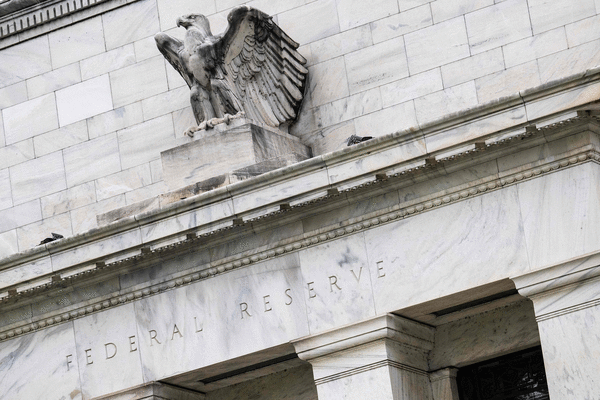
Federal Reserve officials opened the door to more aggressive interest-rate increases over the coming months, after faster-than-expected inflation in October injected a new sense of urgency into the central bank’s bid to tame prices.
Governor Christopher Waller warned on Tuesday that a half-percentage-point rate increase by the Fed in December may be needed. That was followed by a speech by Dallas Fed President Lorie Logan, who backed at least two additional quarter-point rate increases, adding those may be needed at a quicker pace than policymakers have moved this fall.
The combined commentary provides the clearest signal yet that policymakers are seriously contemplating the need to deliver more than one quarter-point rate hike in the next two policy meetings.
In a speech delivered in London before the release of October’s consumer price data, Waller said he would support a rate hike in December and warned that if inflation continued to accelerate he would support a half-percentage-point increase to protect the central bank’s credibility.
That warning came just before data showed consumer prices rose by more than expected, with core inflation rising 0.3% from a month earlier, meeting the threshold Waller said would fuel the need for a larger sized rate hike.
Waller’s outlook that rates may need to be jacked higher in one meeting is so far an outlier among his colleagues. Close observers of the central bank said although Waller’s speech doesn’t cement the case for a 50 basis points move next month, it will fuel expectations for a faster pace of hikes. Several Fed officials, including Vice Chair Philip Jefferson and New York Fed President John Williams, are slated to speak later this week.
Treasury yields spiked on Tuesday on the remarks from Waller and Logan alongside the hotter-than-expected inflation data. The two-year rate rose 19 basis points on to 4.75%, its largest rise since President Donald Trump’s tariff announcements roiled global markets in April 2025. The U.S. dollar was up against all of its major peers.
Investors also responded by pricing in more aggressive rate moves from the Fed in coming months, but didn’t appear convinced policymakers would deliver a half-point hike in December.
Federal funds futures pointed to a quarter-point move in December, with additional quarter-point hikes in January and possibly April. Previously investors had anticipated increases in December and March.
“This is not a print that screams out the need to go 50, but certainly provides ammunition to the argument to do so,” said Christopher Hodge, chief U.S. economist at money manager Natixis.
Tom Porcelli, chief economist at Wells Fargo, said he anticipated the Fed’s policy committee would unanimously support another rate hike, though he agreed the size remained up for debate.
“This locks it down,” Porcelli said, referring to the likelihood of at least a 25-basis-point hike, while opening the door for discussion on a larger move. “With Waller introducing that idea, the market is going to run with it in the face of this firm print.”
In her speech delivered after Waller and the inflation release, Logan didn’t back an outsized rate increase, but pointed to the pace at which increases may be needed.
“It remains clear to me, given the current outlook, that the FOMC needs to implement at least two more 25-basis-point rate increases,” Logan said Tuesday in prepared remarks for a conference in Houston, referring to the rate-setting Federal Open Market Committee on which she votes this year.
Fed officials raised rates by a quarter-point in September to a target range of 3.75% to 4%, and then held steady in October.
Christopher Phelan, chairman of the White House Council of Economic Advisers and a former adviser to the Minneapolis Fed, said there’s no case for a half-percentage point move in December.
“I’ve always followed the Revolutionary War doctrine of don’t shoot until you see the whites in their eyes,” Phelan told Bloomberg Television. “The whites in their eyes for a 50 basis point increase, as far as I’m concerned, isn’t there yet.”
More rapid pace
While the pace of hikes will depend on economic data and financial conditions, Logan added, “It may be possible to move more rapidly this winter than the FOMC has moved so far this fall.”
In his speech, Waller described the economy as strong and the labor market as stable but said inflation remained too high.
“If, as I expect, the monthly rate of inflation improves in October, I am leaning toward supporting an increase in our policy rate of 25 basis points,” Waller said.
“But if the October CPI inflation data out later today are similar to the past two monthly readings — with core CPI inflation around 0.3% or even higher — then a stronger policy move may be needed,” he said. “In that case, I believe a 50 basis point hike in the policy rate should be considered at the December meeting.”
Under that scenario, Waller added, moving rates by the conventional quarter point would do little to win confidence that the Fed is tackling inflation.
“Hiking only 25 basis points would put our credibility at risk, a risk I am not eager to take,” he said.
Hot CPI
Data released just hours later by the Bureau of Labor Statistics showed October’s consumer price index, excluding food and energy, rose 0.3% from a month earlier. Overall prices climbed 0.4%.
Several policymakers speaking since the meeting have touted the need for additional rate hikes.
Data last week showed jobs growth surged in October and the unemployment rate edged lower. Fed officials will receive one more jobs report and a full slate of inflation data before they gather again in December.
In a Q&A with Bloomberg’s Francine Lacqua following the speech, Waller said the Fed does not want to “slam the economy down.”
“It’s not that we’re going to jack up the policy rate 150 basis points or 200 basis points,” he said. “We are looking forward and saying we need to do something; at a minimum, probably take back the three insurance cuts that we put in last year.”
Waller added that policy has not been “nearly as restrictive as I thought it was.”
Kansas City Fed President Jeff Schmid echoed that sentiment Tuesday afternoon, saying the central bank’s benchmark rate was not weighing on growth. “I didn’t think our rate was restrictive last year and I believe today it’s fairly accommodative,” Schmid said at an event in Houston.
Fed Governor Michelle Bowman also signaled she could support an interest-rate hike at the central bank’s December meeting amid persistently elevated inflation.
“Today I am seeing signs that inflation pressures are persisting, while labor market conditions appear to be firming,” she said Tuesday in Washington. “This indicates that there is still work to do to bring inflation closer to 2%.”
(With assistance from James Hirai, Andrew Ackerman, Tom Rees and Greg Ritchie.)
©2026 Bloomberg L.P. Visit bloomberg.com. Distributed by Tribune Content Agency, LLC.


Comments