Henry Payne: Behind the wheel of Chinese, US and global models at World Car of Year
Published in Business News
PASADENA, California — At the North American Car, Truck, and Utility Vehicle of the Year awards each year in Ann Arbor, we jurors pick from three familiar categories and a menu of 46 Korean, Japanese, German, Italian, and U.S. brands.
But for the 2027 World Car of the Year, how do you choose between eligible competitors like a Changan Nevo Q05, Hyundai Bayon, MG4 EV Urban and Volkswagen Atlas?
At the WCOTY jury test in Pasadena, it seemed daunting to pick the best world car among over 150 eligible brands because the world’s 140-plus regional markets are so different. Europe is forcing a transition to electric vehicles. Crowded Japan sports wee kei-cars unseen in the rest of the world. The sprawling United States is so rich its compact car-to-pickup truck segment diversity is unique. And forced-labor China is determined to flood every market with the world’s cheapest models.
World Car tries to make sense of all this by nominating vehicles that play in at least two major global markets (China, U.S., Europe, India, Japan, Korea, Latin America). That means no kei-cars or, ahem, full-size pickup trucks.
WCOTY nominees give insight into major global trends including electrified powertrains, consumer demand, and the relentless advance of Chinese brands.
Let’s start with the latter.
The Chinese
From China’s boiling cauldron of over 100 car brands, 21 are represented for World Car of the Year — more than the rest of the world combined.
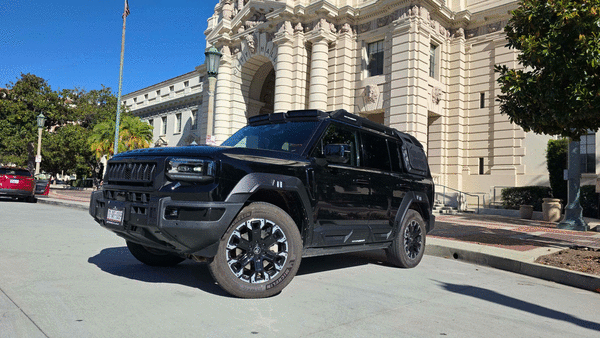
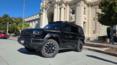
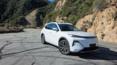
In Pasadena we had access to five Chinese vehicles from four brands shipped from Mexico, where they are sold. The lineup ranged from the subcompact Geely EX2 to the off-road-focused, truck-frame Jetour G700 to the outrageous, self-driving, ultra-luxury Zeekr 9X with rotating rear seats and 17-inch rear-seat jumbotron.
Like Japanese and Korean brand entries 35 years ago, they are derivative of established brands in western markets.
EX2 design mimics cute Ford Fiestas, the Geely Starray EX5 EM-i looks like a fourth-gen Toyota RAV4, the Jetour is a mash of Land Rover and Mercedes G-Wagen, and Zeekr 9X steals its grille off a Rolls Royce. Beneath their facades, Chinese manufacturers have learned lessons from western automakers that they have either bought or done joint ventures with.
Then, with cheap labor and rich government subsidies, they’ve undercut western competitors with steep discounts. Take the two Geely models I tested at World Car.
The WCOTY-nominated, battery-powered, subcompact, $18,000 (in U.S. dollars) EX2 sells against fellow nominee $31K Kia EV2 in Europe. On west Los Angeles’ twisty Angeles Crest Highway, the Geely’s handling was noticeably less refined than the Kia, and its cabin lacked comparable amenities like wireless smartphone charging.
But with a tasteful interior sporting a Volvo-like infotainment tablet (Geely owns the Swedish brand), Apple CarPlay/Android Auto connectivity, and more rear legroom than the Kia, EX2 should be plenty appealing to an entry-level buyer at $13,000 less.
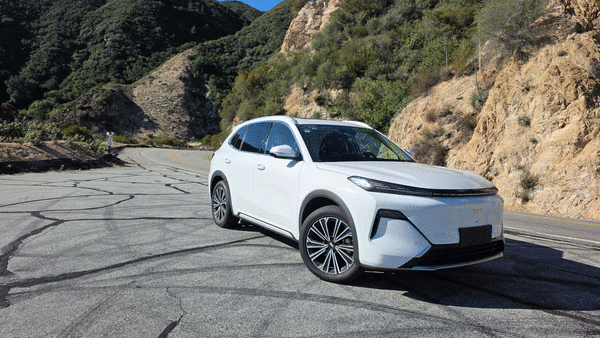
The Geely Starray plug-in hybrid’s Volvo influence was even more pronounced. Sporting a spare, Scandinavian-inspired interior with a square steering wheel and digital displays ripped out of the Volvo EX60 (also a WCOTY nominee), the tasteful Sino-model goes head-to-head with the $52K Toyota RAV4 plug-in hybrid in Mexico.
For, ahem, just $33K.
EVs, PHEVs and ICEs, oh my
With a corner on 80% of the world's battery production and 60-90% of the world's refined battery materials, China encourages EV sales with home market share at about 43%. As Europe has mandated EVs over the last decade, Chinese brands have made big market inroads, undercutting European brands like Volkswagen.
But other global markets are hardly as uniform, and Chinese brands offer a diversity of internal-combustion-engine, hybrid and EV powertrains to compete. The Geely Starray plug-in hybrid is one example.
Indeed, of the five Mexican-market Chinese models at our Pasadena test, four were gas-electric hybrids or plug-in hybrids.
Other models like the 2027 Lexus ES sedan are built on a so-called multi-energy platforms so they can satisfy the tastes of markets as diverse as China and the United States and Japan, where EVs are in less demand.
The U.S. is the biggest single market for Mazda, Hyundai, Kia, Nissan, Infiniti and Lexus and their World Car offerings aimed at the U.S. (and Japanese) markets were ICE and gas-hybrid models.
U.S. market
With the richest per capita income (by far) among major economies and the least-regulated consumer market, the U.S. has long marched to the beat of its own drummer (see the 250th birthday celebrations of the Declaration of Independence).
It defied the global, government-favored trend towards diesel-power in the 1990s-2000s and is defying EV fashion today.
Its model diversity is unmatched, from compact cars to hulking, heavy-duty pickup trucks to supercars (the U.S. is the largest market for both the German-made Porsche 911 and the Kentucky-assembled Corvette). Yet so rich is the American customer that global makers don’t export their most affordable subcompact models here.
Of the six wee candidates for the World Urban Car sub-category this year, only one — the Mercedes GLA — is sold here (not including the six Chinese cars prohibited from sale here).
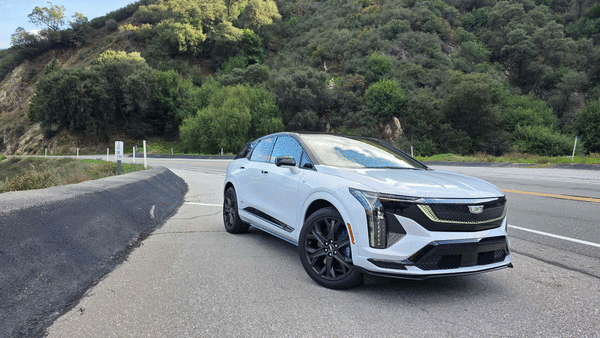
Concurrently, few Detroit brand vehicles are offered outside the U.S. market (e.g., pickup trucks). The only American brand vehicle on the 2027 WCOTY list is the Lincoln Corsair. Among the World Urban, Luxury and Performance subcategories, only the Cadillac Optiq-V, Chevrolet Corvette ZR1 and Corvette ZR1X were nominated.
Tesla and Cadillac
Yet, despite the dearth of U.S. brands on the WCOTY list, Caddy and Tesla models are at the cutting edge of global tech.
Of the 33 WCOTY nominees available to test in Pasadena, only the Optiq-V could drive itself hands-free on LA highways. Its 33-inch curved screen (which debuted on the 2023 Lyriq) was an industry pioneer, and its 3.5-second 0-60 mph sprint was the quickest of any vehicle under $100K in Pasadena (only the exotic, six-figure Porsche Cayenne Electric, 2.4 seconds, and Mercedes-AMG GT Electric 4-Door Coupe, 2.0 seconds est., were quicker).
Despite being the best-selling EV in the world for six years, the Model Y has never won WCOTY. Un-nominated for 2027, the Model Y L is a rare compact SUV with three rows of seating and Full Self-Driving software that is the most advanced in the market.
Though the Zeekr 9X — its hands-fee driving only available in Chinese markets — may soon have a say in that.
____
©2026 www.detroitnews.com. Visit at detroitnews.com. Distributed by Tribune Content Agency, LLC.










Comments