Florida deregulated nursing schools. Scam colleges and failing students followed
Published in News & Features
ORLANDO, Fla. -- Alarmed by a growing shortage of nurses, Florida lawmakers in 2009 eased regulations on the schools tasked with training them, inviting new institutions to enter the market.
The results were swift: Within five years, the number of Florida nursing programs more than doubled. But many were for-profit institutions that churned out students whose pricey degrees left them ill-prepared to enter the field.
Among the newcomers was Ideal Professional Institute, a suburban Miami school that in the next decade produced more than 2,300 graduates. Just 13% of those graduates passed the national exam for registered nurses on their initial attempt, however, an abysmal rate for a test that nearly 90% of first-time test-takers nationwide master.
Within six years of its opening, the state’s Board of Nursing voted to shut down Ideal’s registered nurse program, but allowed it to remain open for years longer while it fought the decision.
Then in September, an Ideal administrator was accused of selling fake degrees, part of a yearslong FBI investigation dubbed “Operation Nightingale,” which led to federal charges against more than a dozen Florida nursing school operators. The scandal put an uncomfortable national spotlight on the Sunshine State’s nursing schools.
While Ideal’s record is jaw-dropping, in many ways the school exemplifies the type of nursing program that proliferated in Florida after the 2009 change. In sharp contrast to established programs, such as those at Seminole State College and Florida Atlantic University, these new programs often charged students tens of thousands of dollars in tuition and graduated would-be nurses who couldn’t pass the exam required to enter the profession.
As a result, Florida’s nursing education system is now among the lowest-performing in the nation, as measured by exam passage rates. In part because of that dismal performance, the state still projects a need for 60,000 more nurses by 2035. And patients are left with spotty assurances that the nurses they encounter in hospitals or homes are properly trained.
So far, state leaders have failed to tackle the problem. Florida’s lawmakers passed legislation last year to modestly tighten oversight of nursing schools, but Gov. Ron DeSantis vetoed it. The Legislature will try again this year.
“We have got to do something about our nursing programs here in Florida,” said state Sen. Gayle Harrell, R-Stuart, who has sponsored legislation to address the issue, during a committee meeting in November.
Prior to 2009, the Florida Board of Nursing set the rules about how schools gained approval to train future nurses in Florida.
But lawmakers were frustrated with a mounting need for new nurses and a limited number of seats in existing nursing schools.
They also argued the nursing board’s rules were too restrictive and sometimes trivial. Applying schools, they said, could be turned away if their walls were painted the wrong color.
So legislators took much of the decision-making power away from the board. The state’s Department of Health warned the result could be “inadequately trained” nursing school graduates, according to a Senate staff analysis of the legislation provided to lawmakers, but they voted unanimously to pass it.
The goal was to quickly get new nursing programs up and running, and it worked. Within 18 months, more than 60 new nursing schools were approved. Since then, the number of nursing programs ballooned from about 180 to more than 500. The number of annual graduates has skyrocketed, too, from roughly 11,000 to 25,000.
The board judges would-be schools based on criteria like faculty credentials and clinical experiences for students. But it’s not hard to get the board’s stamp of approval, and most of the schools accused of fraud by the FBI obtained it shortly after the new law was passed.
“I don’t recall a program being denied,” said Joe Baker Jr., who served as executive director of the nursing board from 2010 until his retirement in 2024.
Once a new school opens, the board’s oversight authority is minimal and the process of closing a poor-performing school can take years, even if its students struggle to pass the national Nurse Council Licensure Exam, or NCLEX, needed to work in the field.
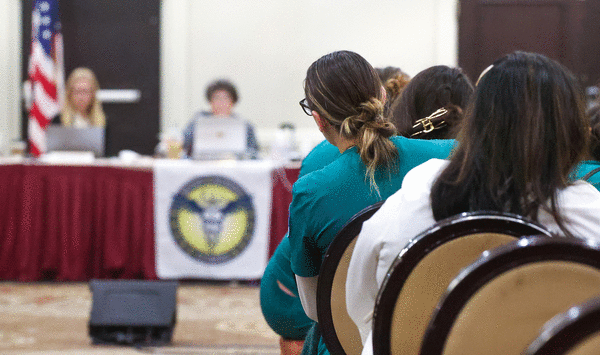
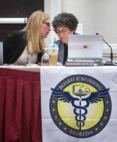
“Once they turn in the application and say they’re going to do this and they get approved, the only person that looks over them is themselves,” said Christine Mueller, now the board’s vice chair, at an August meeting.
The law created “unintended consequences,” admitted Denise Grimsley, a former nurse and lawmaker who sponsored the 2009 bill.
Problems with the new schools cropped up quickly.
“There were some programs that were charging exorbitant amounts of money and some of the graduates weren’t able to pass the NCLEX exam,” said Grimsley, a Republican from Sebring who served in both the House and Senate.
Florida’s NCLEX passing rate is now among the worst in the country. That rate dropped to below 70% in some recent years, compared to a national average of 80% or more. It rose in 2024 to 85% but there were fewer test takers from for-profit schools as scrutiny of them has increased, and it still trailed the national rate of 91%.
Roughly 57% of would-be registered nurses who attended for-profit colleges like Ideal passed the exam on the first try during the past five years, compared with 86% of their peers from public schools, according to a report published last year by the Florida Center for Nursing.
The current law for holding schools accountable is “insufficient,” said Rep. Toby Overdorf, R-Palm City, during a committee meeting in March where he pushed for changes to the 2009 law. “Not only does it fail to address our nursing shortage, it leaves students who are unable to pass the NCLEX exam with high student loan debt and no ability to earn income.”
In response to early problems, the Legislature passed another law in 2014 requiring new nursing schools to become accredited within five years, meaning they needed approval from an outside agency that judges school quality.
But schools that fail to gain that outside approval can remain open for years after getting extensions.
Under the 2009 law, schools also can be put on probation, or face closure, if their exam passage rates are persistently more than 10 percentage points below the national average. Nearly two dozen programs for would-be registered nurses are currently on probation.
Ideal, the struggling school in Miami, failed to get accredited but didn’t shut down right away, though the nursing board voted in 2019 to close it.
Federal prosecutors would later report that an Ideal administrator began selling fake diplomas in 2018 in a scheme that lasted until 2022.
The nursing board’s key power is to prevent students from taking the NCLEX if members decide their school has failed to meet the state’s nursing education requirements. Most nursing school graduates are routinely approved to take the test — but some get stopped.
That enforcement-at-the-end process means students could be thwarted from a nursing career after paying thousands of dollars for a nursing education that was state approved. The process often plays out in great detail at the nursing board’s bimonthly public meetings, where students can appeal a decision to block them from the exam.
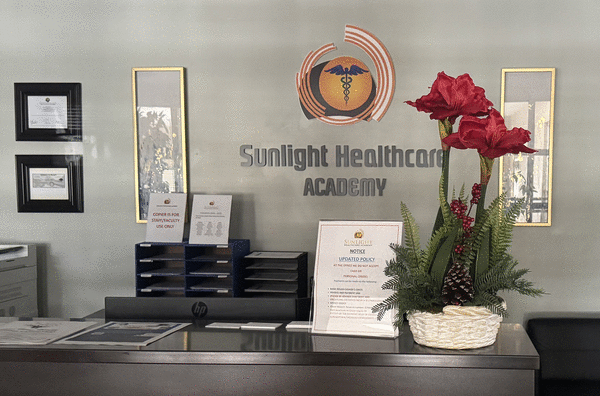
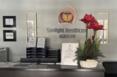
Last month, the board barred a student from taking the NCLEX who’d studied at Sunlight Healthcare Academy in Longwood, a for-profit school that is on probation and has NCLEX passing rates below 50%. The school is tucked away on the second floor of an aging commercial complex on State Road 434, with little signage.
Board members questioned the transcript Sunlight provided, saying it failed to note when classes were taken and to document if the student had clocked the required clinical hours.
Mueller even pulled up the school’s website on her laptop during the meeting and said it looked “really bad.”
“There’s no catalog online that I could find,” Mueller said. “There’s nothing I could compare this transcript to.”
Sunlight’s registered nursing program was approved by the state board in 2019 and remains in business.
Executive director Fleurette Sunjic declined to comment on the nursing board’s recent refusal to allow a Sunlight graduate to take the NCLEX but said the school’s programs are designed to meet state requirements.
“Our efforts are focused on strengthening program quality, enhancing compliance processes, and improving student preparedness,” she wrote. “These initiatives are reflected in Sunlight Healthcare Academy’s improved 2025 NCLEX pass rates, and we remain committed to sustaining this positive trajectory.”
State records, which reflect school passage rates through September, show three Sunlight graduates took the exam for registered nurses in 2025 and all of them passed.
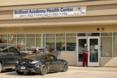
A year earlier, a graduate of Brilliant Academy Health Center in Orlando, where tuition and fees run nearly $27,000, was also told she could not take the NCLEX. Her nursing classes were taught online, in violation of state rules, and she did not complete enough clinical hours with real patients rather than simulation dummies, the board decided.
During the discussion, board member Jose D. Castillo III decried the “unsatisfactory performance of some of these schools of nursing” the board approved in prior years.
Blocking nursing graduates from taking the test is a way to prevent poorly educated students from becoming licensed nurses, he said.
“We are the gatekeepers for this profession, so the public, your parents, my parents, my kids, my grandparents, my relatives are safe. That’s our role,” Castillo added.
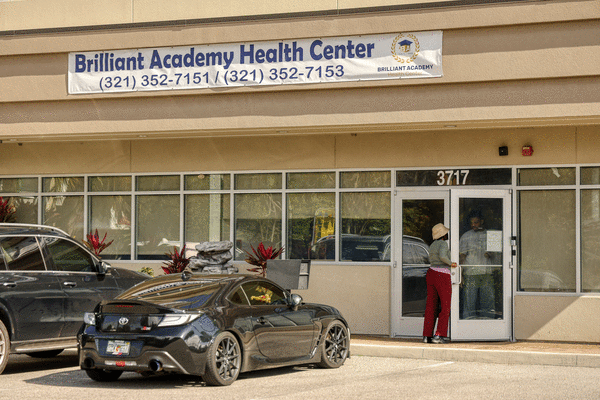
The board approved Brilliant’s registered nursing program in 2018. It is also on probation but still advertising for students, with a large sign facing a busy stretch of Conway Road near Orlando International Airport. Administrators for Brilliant, a for-profit school, did not respond to an email and phone call seeking comment.
The nursing board’s members are appointed by the governor, and all of the current members are licensed nurses.
All nine members who sat on the 13-member board while much of the FBI investigation became public either declined requests for interviews from the Orlando Sentinel or did not respond to phone calls and emails from a reporter. Board staff members also did not respond to emailed questions from the Sentinel.
But board members’ comments during public meetings over the past three years — as the FBI investigation made national headlines – suggest many of them believe the group needs more power to hold nursing schools accountable.
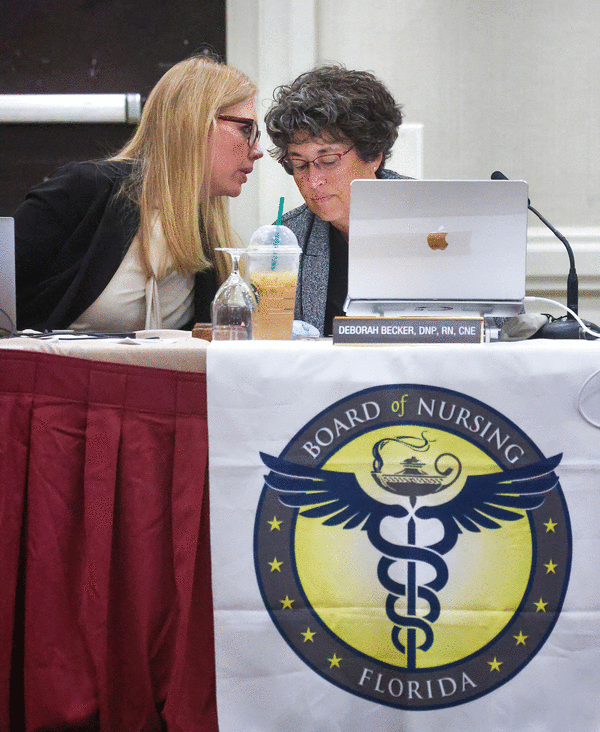
“If we could have been checking on these schools, I feel like we could have prevented some of this, possibly,” said Deborah Becker during a 2024 meeting. “We could have had our thumb on the pulse of what was going on. I have experience with other boards of nursing outside of this state, and they have the authority to look at the schools, monitor the schools yearly, have visits.”
Current law says the board may conduct on-site evaluations of new schools seeking state approval. The department has not typically visited schools after opening because state law does not explicitly allow such visits, Baker said.
Federal investigators laid bare how the state’s lack of scrutiny of its nursing programs attracted bad actors when in early 2023 they announced charges against the operators of three south Florida programs.
Those school administrators were accused of selling more than 7,000 phony degrees to students for $10,000 to $20,000 each. The investigation was dubbed Operation Nightingale in a nod to Florence Nightingale, the founder of modern nursing.
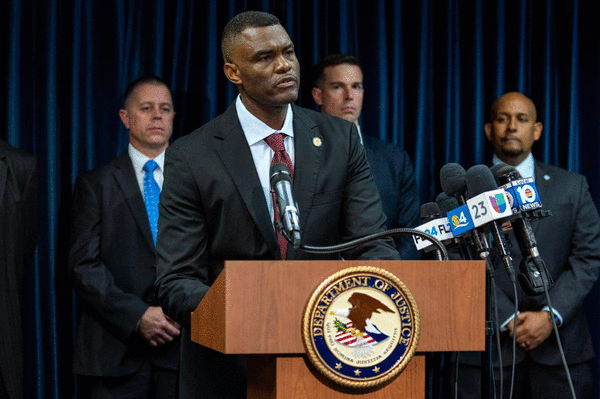
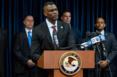
“When we talk about a nurse’s education and credentials, shortcut is not a word we want to use,” then-U.S. Attorney Markenzy Lapointe said during a press conference in January 2023. “When we take an injured son or daughter to a hospital emergency room, we do not expect, really cannot imagine, that the licensed practical nurse or registered nurse treating our child took a short cut around the educational licensing requirements.”
He said about 30% of the people who bought fake diplomas passed the NCLEX, perhaps because they had some previous medical training, and some ended up employed in healthcare facilities across the country.
“Not only is this a public safety issue, it actually tarnishes the reputation of the nurses who did the hard clinical and coursework required to get licenses and jobs,” Lapointe said.
The investigation later expanded and now more than 30 people, working for the dozen Florida schools, have been charged.
Most of the campuses selling fake diplomas were in South Florida, though the leaders of two in Central Florida – Med-Life Institute in Kissimmee and Wheatland Institute in Orlando – were charged, too.
In November, former Ideal administrator Joel Lubin pleaded guilty to selling fraudulent diplomas to students and raking in more than $7 million. Some people with those fake diplomas later found work as nurses, his plea deal noted.
While some students of the schools at the center of Operation Nightingale may have realized they were purchasing diplomas they didn’t earn, others seem to have pursued their degrees honestly.
Lechell Bailey found Ideal after an online search for nursing programs and called the state’s nursing board to confirm it was legitimate. Yes, she was told. The board approved it in 2013.
But more than five years after Bailey started classes at the now-closed school, paying a total of $15,000 in tuition to obtain her degree, she’s no closer to becoming a nurse.
She failed the NCLEX in 2024 and now, because of the criminal charges against Lubin, the board won’t let Bailey try again to pass the test. Though her diploma was not flagged as one that was bought, board members don’t think the school provided her and other graduates with a proper education and don’t think Ideal graduates should be seeing patients.
“I 100% don’t blame you,” Mueller told her at the board’s Dec. 3 meeting. “I blame the school.”
Board members acknowledge students from Ideal and other Operation Nightingale schools took the test and obtained licenses before the FBI operation became public. But now that they know what happened, Mueller added, “we are looking at this from a patient’s perspective” and acting in the public’s interest.
In Bailey’s view, the state has let her and other would-be nurses down.
“They’re letting us go to school and then when we’re finished, they find problems,” Bailey said. “But it’s their job to make sure the schools are legit.”
Florida lawmakers now will try for a third consecutive year to bolster the nursing board’s oversight, hoping to protect future students like Bailey and boost nursing school quality.
A pair of proposals introduced for the legislative session that starts Jan. 13 focuses on preventing bad schools from opening and weeding them out when they do. Both bills, for example, would allow Department of Health employees to conduct nursing school site visits at any time.
The House version also requires programs with NCLEX passage rates of less than 30% to refund the tuition of any student who fails to pass the exam, while the Senate version requires the Board of Nursing to deny applications from schools that have been revoked or put on probation in other states.
Baker, the nursing board’s former executive director, said if lawmakers had not stripped much of the power from the nursing board in 2009, the Operation Nightingale scandal and the proliferation of low-performing schools might have been prevented.
“If the board doesn’t have sufficient oversight authority, we’re not going to end up with properly educated nurses who can pass the NCLEX and join the workforce where they are so desperately needed,” he said.
While the 2026 bills would not restore the sweeping authority the nursing board wielded before, they would help ensure students are getting the education they need, Baker said.
“That legislation is a step in the right direction,” he said.
But the governor could be an obstacle again.
When DeSantis vetoed last year’s bill, one similar to the one under consideration in the House this year, he wrote in a veto message that he feared it would “undermine the progress that has been made to bolster the state’s nursing workforce.”
“These policies will deter programs from accepting students, encourage them to focus on test preparation rather than training students to work in healthcare, and will hinder the state’s ability to recruit and maintain nursing programs and directors in the first place,” DeSantis wrote.
Bob Harris, an attorney who spoke on behalf of the Florida Association of Independent Nursing Schools during several committee meetings in 2025, also opposed the legislation. His organization represents private schools that produce more than half of Florida’s nurses, and some of those schools would close if the bill passed, he said.
“If you are in support of fewer nurses in the state of Florida, then vote for this bill, because that will be the impact,” Harris told lawmakers in March.
The institutions Harris represents largely serve nontraditional students who are older than the typical college-goer, he said, and many juggle their schoolwork with family responsibilities and jobs.
Because Florida’s public programs are so selective – the University of Central Florida’s nursing school routinely rejects qualified applicants every year – they enroll only strong performers, buoying their NCLEX passage rates, Harris noted.
The private schools that are less choosy have lower NCLEX rates, he said, but also provide an important avenue to help more students launch nursing careers.
But several professional organizations say the proposed laws, and more oversight of Florida’s nursing schools, are needed.
Predatory school operators have realized that a lot of people want to be nurses and since 2009 have been “lying in wait” for students turned away from high-performing schools, said Willa Hill, the executive director for the Florida Nurses Association. “So many people want to become nurses, it’s a cash cow.”
But the schools that recruit those students do them and the state a disservice, she said.
“You’re not solving the nursing shortage if people can’t pass the test,” Hill said, “and you don’t want them working if you can’t pass the test.”
anmartin@orlandosentinel.com
©2026 Orlando Sentinel. Visit orlandosentinel.com. Distributed by Tribune Content Agency, LLC. ©2026 Orlando Sentinel. Visit at orlandosentinel.com. Distributed by Tribune Content Agency, LLC.






Comments