Green or not, US energy future depends on Native nations
Published in News & Features




The Trump administration’s drive to increase domestic production of fossil fuels and mining of key minerals likely cannot be accomplished without a key constituency: Native nations.
The U.S. has 374 treaties with 574 governments of sovereign nations inside the United States’ borders, governing 2.5% of the country’s territory, predominantly west of the Mississippi.
Native American tribal lands contain 30% of the nation’s coal, 50% of its uranium and 20% of its natural gas. And they contain materials critical for advanced technologies, including renewable energy: copper for electric grids, lithium and rare earth elements for batteries and electronics, and water for agriculture and power generation.
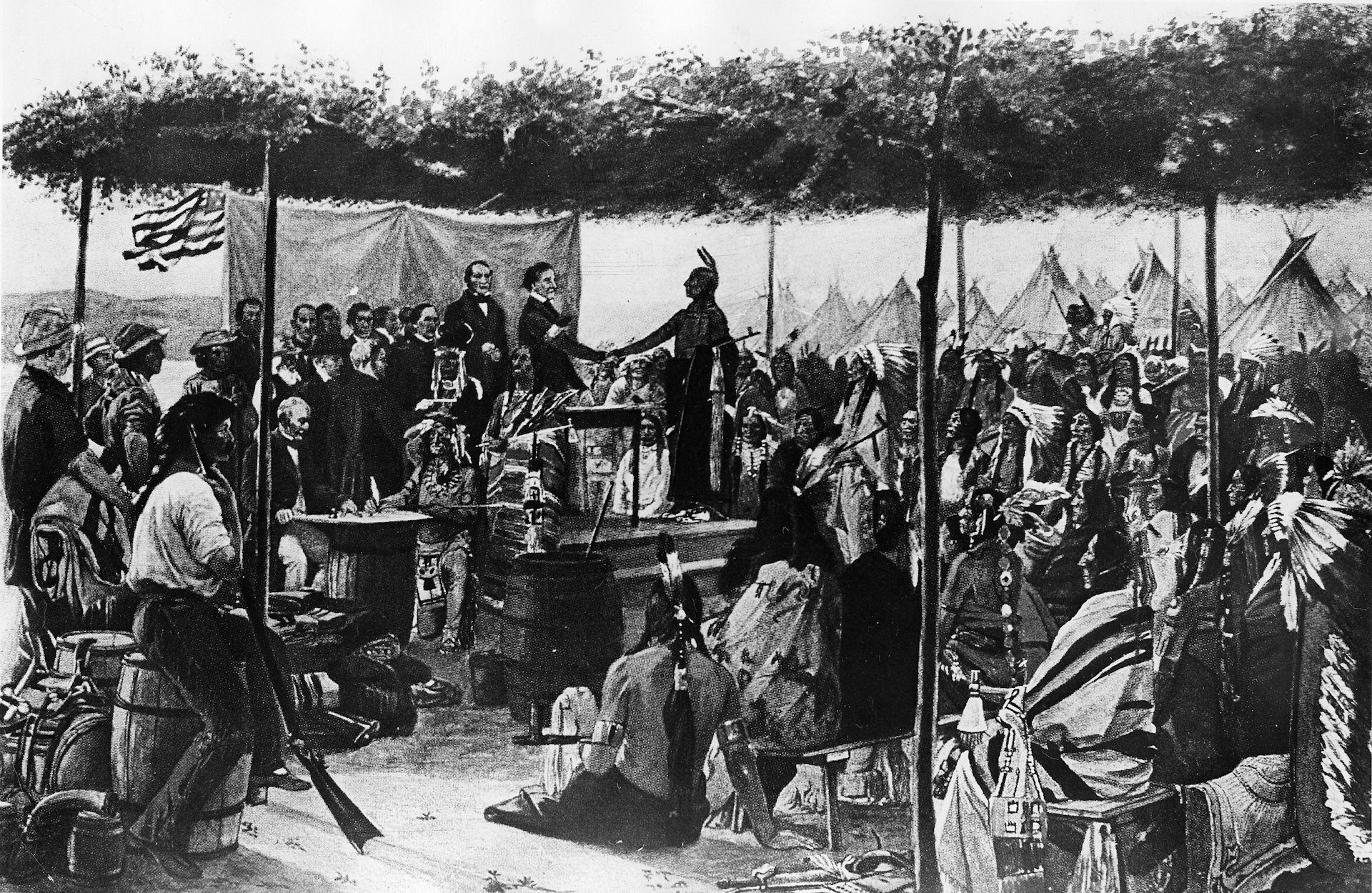
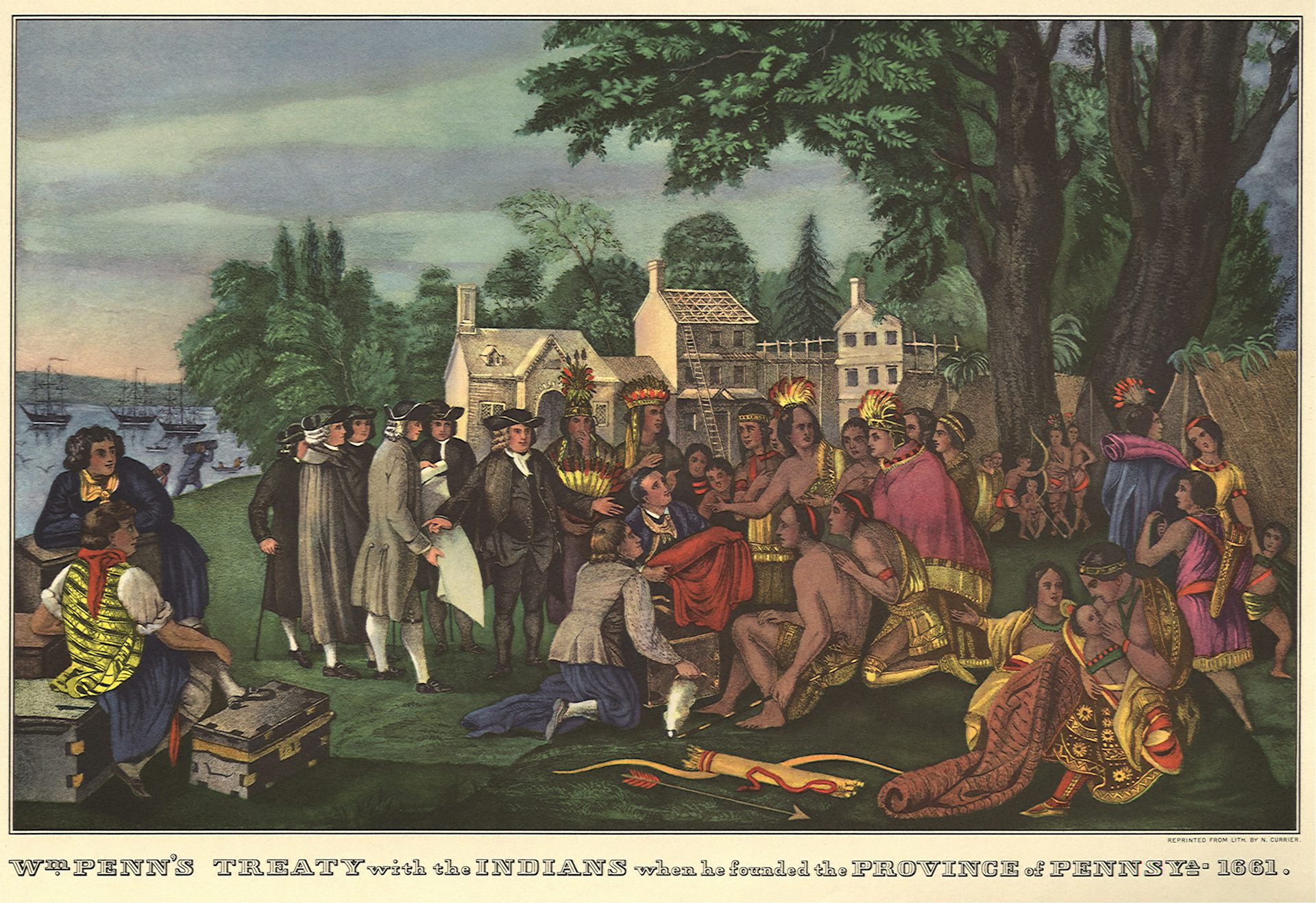
Significantly expanding domestic access to fossil fuels, critical minerals and water will require the U.S. government to work with Native nations. Their rights to resources on their lands are enshrined in long-standing treaties whose legal power is on equal footing to the U.S. Constitution itself. I study these agreements, negotiated from the late 18th to the late 19th centuries and ratified by the U.S. Senate. They are not mere historical artifacts but rather key documents at the center of modern conflicts over drilling, mining, pipelines and energy infrastructure.
For Indigenous nations, access to natural resources is more than a matter of economic opportunity or environmental sustainability. Managing these lands is inseparable from questions of sovereignty, sacred land and treaty enforcement.
Under the U.S. Constitution, treaties are ranked as “the supreme Law of the Land” right alongside the Constitution itself.
Federal Indian Law, largely codified in Title 25 of the U.S. Code, defines the relationship between the United States and tribal nations, including recognizing tribes as possessing and exercising “self-government.” Supreme Court decisions sometimes recognize tribes as sovereign political entities, but that sovereignty is constrained by congressional authority and overlapping state jurisdiction.
The treaties have long been seen as instruments that allowed settlers of European descent to annex Native territory. But they also sanctioned activity on land the tribes never officially gave up. One treaty with the Eastern Shoshone permitted “mining settlements” on lands reserved to the tribe, while another allowed “prospecting” for “minerals and metals.”
But in recent decades, Native nations have used the treaties as grounds for reasserting their sovereign status, restoring the documents to their original purpose as an organized set of nation-to-nation relationships deeply rooted in North American diplomatic history.
In particular, Indigenous activism and litigation since the 1970s have revived treaty claims as tools to protect land, water and cultural practices. Treaties once dismissed as instruments of dispossession are increasingly invoked as binding legal commitments – and as relevant to, and capable of, shaping contemporary energy policy.
The tribes are demanding the federal government protect sacred lands, ecosystems and community health when evaluating proposals for mining and other developments.
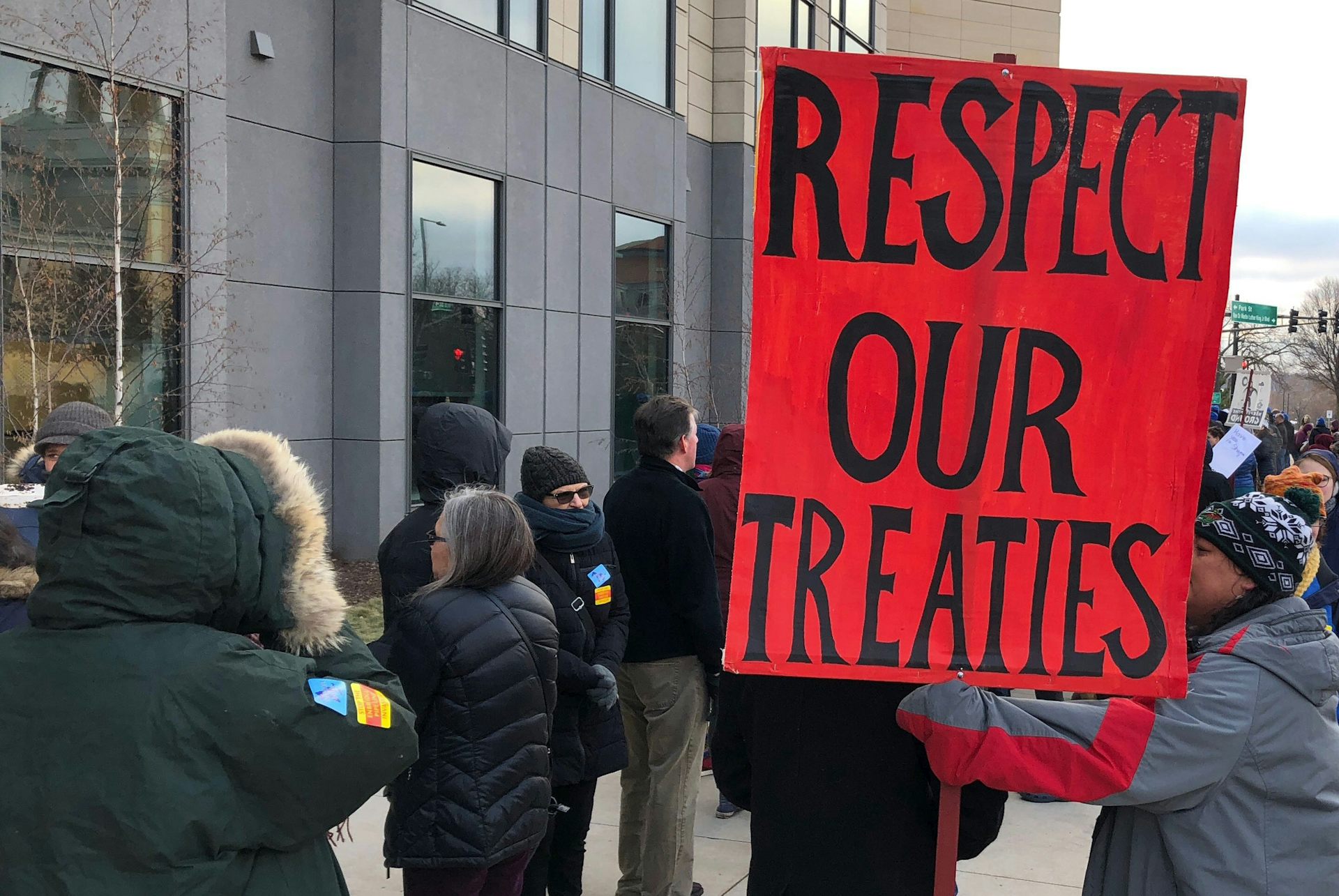
Native-led protests and lawsuits are a common feature of large infrastructure projects that cross their land or threaten their resources. In 2021, the White Earth Nation sought to block the expansion of the Enbridge Line 3 oil pipeline. The route was planned to run underneath a spiritually significant Minnesota lake where it and other tribes had treaty-protected rights to water, hunting and fishing.
In its effort, which was ultimately unsuccessful, the tribe cited treaties from 1837, 1854 and 1855. The tribe argued that these treaties required the federal government to protect their rights to hunt, fish and gather – a position supported by a 1999 Supreme Court ruling.
More successful was a 2024 move by the Navajo Nation to get the Federal Energy Regulatory Commission to reject a proposed hydropower project on Navajo lands.
In late January 2026, however, the commission approved a similar hydropower project on a sacred and treaty-protected area of Yakama Nation lands in the state of Washington. The Yakama Nation and other tribes and local groups are asking state courts to block the project.
These cases expose a long-standing tension in U.S. law between the federal government’s treaty-bound responsibility to protect tribal resources and the authority claimed by the federal and state governments over land and development.
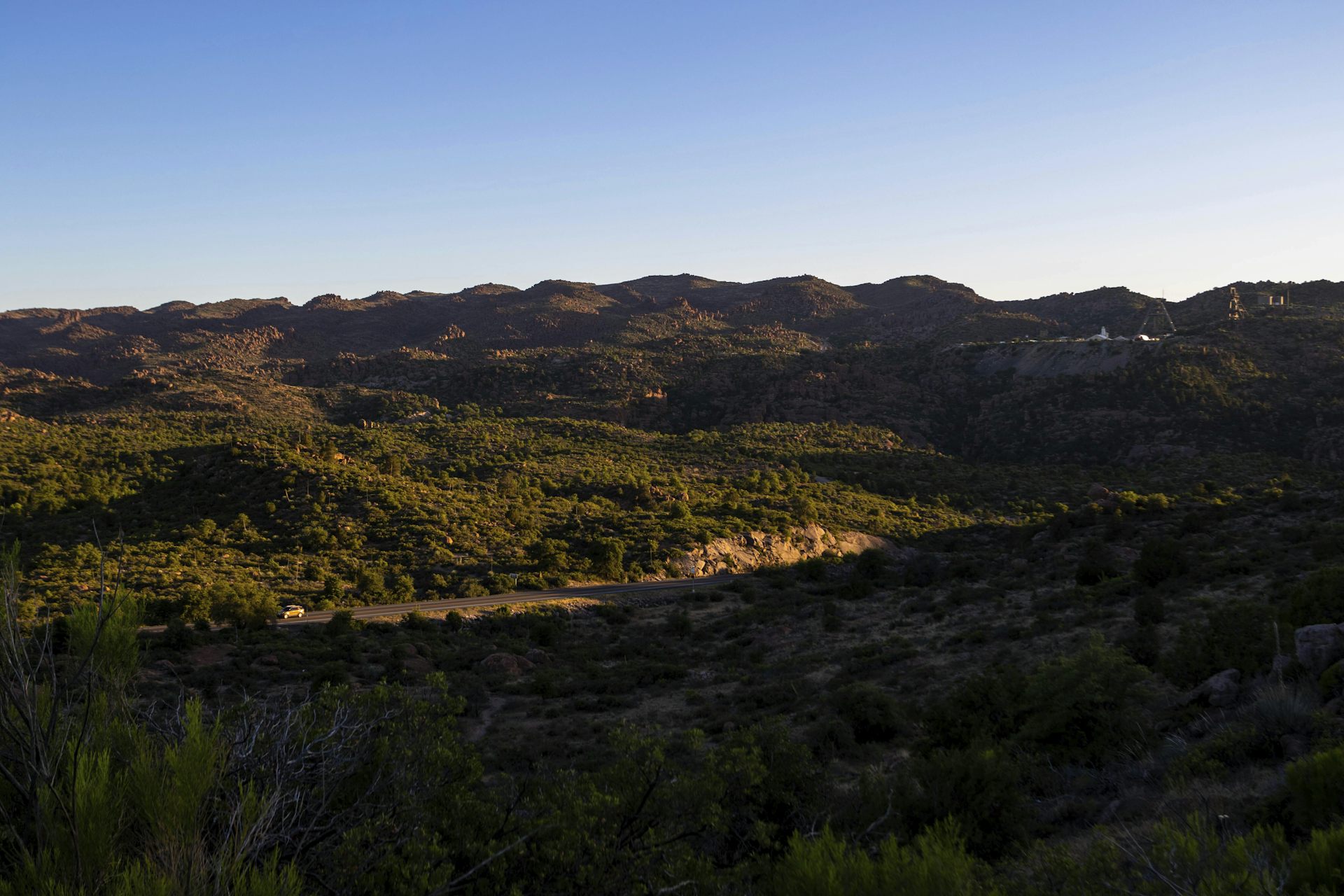
One of the most significant current disputes involves the proposed Resolution Copper mine at Oak Flat in Arizona. Known to the Western Apache as Chi’chil Biłdagoteel, Oak Flat is a sacred site used for ceremonies central to Apache religious life.
In 2014, Congress authorized the transfer of around 2,422 acres of federally protected land in Tonto National Forest to the mining company through the Southeast Arizona Land Exchange and Conservation Act, embedded in a defense spending bill. If allowed, the underground mining proposed on that land presents a risk of subsidence and potential collapse of the site.
In 2021, the Apache-led coalition Apache Stronghold sued the U.S. government, arguing that the land transfer violated the Religious Freedom Restoration Act and provisions in the 1852 Treaty of Santa Fe that required the government to respect tribal lands.
The courts have so far sided with the federal government on the grounds that Congress, rather than the states, has ultimate authority in what federal law calls “Indian country.”
First, a U.S. District Court denied an injunction to stop the transfer. In March 2024, the justices of the 9th U.S. Circuit Court of Appeals issued a split ruling upholding that decision and finding that the project did not impose a “substantial burden” on the Apaches’ religious rights.
In May 2025, the U.S. Supreme Court declined to hear the case. However, Justices Neil Gorsuch and Clarence Thomas wrote that they wanted to hear the case. They warned that by not hearing it, the court was allowing the destruction of a sacred religious site.
The Apaches tried again in late 2025, but the Supreme Court denied that request, too, leaving intact the 9th Circuit ruling, which allowed the land transfer to the mining company.
Even so, the conflict is not over. The Apaches took additional claims to the 9th Circuit in a different legal form, and the court issued temporary restraining orders in late 2025, which paused aspects of the land transfer while litigation continues.
The Oak Flat dispute highlights the limits of existing legal protections for Indigenous sacred sites, even when treaties and religious freedom are clearly at stake. It also shows how congressional control over use of federal land can override Indigenous objections in the name of energy security and critical minerals.
This and comparable disputes also show how treaties, federal law and the Constitution can be used to slow, reshape and sometimes halt extractive projects, forcing states and corporations to reckon with Native sovereignty, even where Congress or the executive branch claims the last word.
For Native nations, treaties remain central tools for asserting sovereignty and shaping energy futures. Tribal governments and Indigenous corporations are increasingly active in renewable energy and mineral markets, seeking development on their own terms. In April 2025, Buu Nygren, president of the coal-rich Navajo Nation, called for energy developments that honor tribal sovereignty and secure Indigenous nations’ place in global supply chains.
Treaties are not relics of the past. They continue to shape how energy, law and sovereignty intersect in the United States today.
This article is republished from The Conversation, a nonprofit, independent news organization bringing you facts and trustworthy analysis to help you make sense of our complex world. It was written by: Charles Prior, University of Birmingham
Read more:
As federal environmental priorities shift, sovereign Native American nations have their own plans
Thanksgiving stories gloss over the history of US settlement on Native lands
US citizenship was forced on Native Americans 100 years ago − its promise remains elusive
Charles Prior receives funding from the Leverhulme Trust (Major Research Fellowship, 2024-27).







Comments