FDA cracks down on weight-loss drug alternatives as thousands sickened in Maryland
Published in News & Features
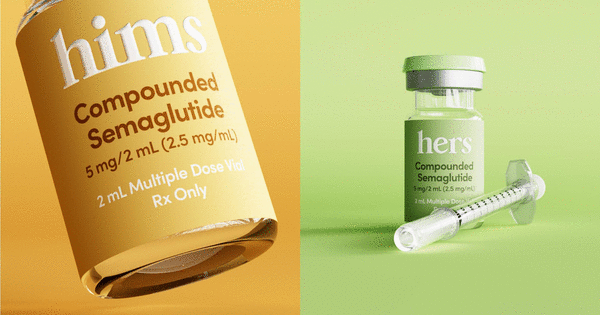
BALTIMORE — Popular weight-loss drugs, including Ozempic, Wegovy, Trulicity and Mounjaro, produced by independent pharmacy labs, sickened some 8,000 or more Marylanders a year by 2024. The Food and Drug Administration announced this month that it will crack down on compounded versions of GLP-1 drugs, including the popular Hims and Hers brand.
The FDA made the right call, Dr. Rozalina McCoy, a practicing adult endocrinologist and researcher at the University of Maryland School of Medicine, told The Baltimore Sun. These compounded drugs complicate her efforts to treat patients for diabetes and obesity.
“Compounded products are not the same thing as FDA-approved medicines. It’s not a generic version,” McCoy said. “What compounding pharmacies do is try to make that medicine in their own lab.”
As many as 12% of Americans are taking some form of glucagon-based drugs, according to a Rand news report. A national shortage caused by that popularity may have passed in early 2025, but the drugs’ prices still spur some to seek cheaper alternatives, McCoy said. In 2025, the Maryland Poison Center reported a 1500% increase in calls related to compounded GLP-1 medications since 2020.
Compounding exists in a sort of gray area for drug regulation, McCoy explained. For patients who need to take a drug through a feeding tube, only available in tablet form, the compounding pharmacy can fill that prescription. Due to shortages in national production, the FDA temporarily allowed compounding of the popular weight loss and diabetes drugs, which reduce appetite and regulate blood sugar.
“After a stark increase in popularity,” the Maryland Poison Center reported, “unauthorized compounded (GLP-1) products began to appear from med spas, clinics, and online retailers. This presents safety concerns related to therapeutic errors, lack of FDA regulatory oversight, and unauthorized products that are available without a prescription.”
Common side effects of the compounded weight loss drugs include nausea, severe abdominal pains, vomiting, diarrhea, and food intolerance, the center reported. Due to its long half-life, symptoms can persist for multiple days, and more serious adverse effects include dehydration, electrolyte imbalances, vitamin deficiency, and possibly low blood sugar.
McCoy said complicated production processes of these protein-based medicines and issues with absorption leave compounding pharmacies guessing at many solutions, like trying to bake a cake from a picture.
“We just don’t know what the patient is getting when they get it from a compounder,” she said. “We don’t know how effective it’s going to be. It may have other side effects or harms, but we just don’t know. Many patients, especially with obesity, have other conditions and are already taking other medications, where there could be negative interactions.”
Compounding the situation, the drugs cost anywhere from $150 to $1,000 a month, McCoy said, and many insurers won’t cover them for weight loss.
“We need better access, and we need medications to be more affordable,” she added, “but we absolutely need these compounds to be safe.”
_____
©2026 Baltimore Sun. Visit baltimoresun.com. Distributed by Tribune Content Agency, LLC.






Comments