Ketamine, prostitution and money: Details of a secret DEA probe of Jeffrey Epstein
Published in News & Features
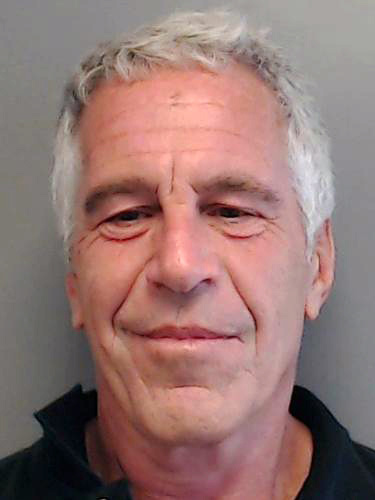
The Federal Drug Enforcement Administration opened an investigation into Jeffrey Epstein and a dozen other individuals in 2015 that centered on allegations of money laundering, drug trafficking and the procurement of Eastern European prostitutes for high-profile clients, according to five people familiar with the case.
The investigation, which grew out of a longstanding probe into organized crime, was conducted by a secretive intelligence and law enforcement unit of the DEA and a transnational crime-fighting task force. It began after an informant told authorities that Epstein was involved in the illicit funding and distribution of so-called club drugs, including ecstasy, ketamine and methamphetamines, according to the people, who asked not to be named to discuss sensitive law enforcement matters.
The individuals named in a document related to the investigation, according to the people, included Epstein’s accountants, attorneys and European women who worked as his assistants or fashion models. The DEA investigation also named two businesses.
None of the individuals were charged with any offenses as a result of the investigation. It’s unclear how long the investigation remained open and what authorities ultimately learned from it because the complete case files have not been released. Yet descriptions of the DEA probe add to questions about what federal authorities knew about Epstein before they arrested him in 2019. By that time, he’d victimized more than 1,000 people, the U.S. Department of Justice has said.
Initial information about the 2015 investigation surfaced in January in a heavily redacted document that was released by the DOJ. These new details about the investigation deepen the mystery surrounding the serial sex abuser, and reveal a striking level of scrutiny into him that extended beyond the federal sex-crimes probe that has captured international attention for years. They also reflect a pattern: As Epstein famously cultivated high-profile connections with Wall Street executives, politicians and royalty, federal authorities secretly kept their eyes on him.
Beginning in 2009, when Epstein was released from state custody in Florida after pleading guilty to charges that included soliciting a minor for prostitution, at least eight U.S. government agencies, including the Federal Bureau of Investigation, the DEA, the U.S. Treasury Department and the State Department’s Diplomatic Security Service, conducted their own investigations into Epstein, according to various documents that the DOJ released in January.
The documents show that law enforcement agencies kept tabs on Epstein by tracking his movements, building dossiers on his connections and following his money as it moved through offshore accounts. Foreign governments did likewise. The U.S. Secret Service’s White House division and Harvard University’s campus police conducted background checks on Epstein years after he was released from custody in Florida.
Chain Reaction
In December 2010, long before Epstein or anyone in his circle surfaced in their probe, the DEA and the FBI started investigating a drug trafficking operation in nightclubs in New York, New Jersey, Nevada, Florida, South Carolina, and Mexico, according to the five people familiar with the case. One person who’d been arrested in connection with the probe had attempted to ship a package to Florida containing ecstasy tablets and ketamine, a drug known to facilitate date rape.
The following year, the DEA requested the help of the Organized Crime Drug Enforcement Task Forces, a Reagan-era Justice Department division made up of hundreds of prosecutors and thousands of intelligence and law enforcement personnel from across the federal government. OCDETF, as it’s called, worked jointly on investigations with other agencies to combat illicit finance and take down transnational criminal networks. Getting OCDETF’s buy-in unlocked additional funding and resources — including access to its fusion center, which the DOJ called “the single largest repository of federal and foreign investigative reporting throughout the federal government.”
Last year, as Bloomberg News first reported, OCDETF was defunded and shut down amid the Trump administration’s cost-cutting spree, sparking alarm among law enforcement officers given the task forces’ achievements over the decades, which included a leading role in the 2019 capture of Sinaloa Cartel leader Joaquin “El Chapo” Guzman. The administration transferred various responsibilities, including 5,000 existing cases, to a new set of task forces under the Department of Homeland Security that are focused mainly on immigration enforcement.
In May 2011, OCDETF formally launched an operation called Chain Reaction. Over the next four years, federal authorities targeted and prosecuted nearly a dozen people in New York, including associates of the Genovese crime family, on various racketeering charges including loan sharking, drug trafficking and running an illegal gambling business. They brought charges against a police officer in Suffolk County, New York for extortion, narcotics distribution and counterfeiting. At least two of the cases involved the distribution of ketamine.
Around January 2015, the lead DEA agent on Operation Chain Reaction wrote in a status update that he expected the case to wrap up in a few months after all the defendants were sentenced, the five people familiar with the investigation said. But in a twist, one suspected drug trafficker became an informant and told federal agents that Epstein had been involved in the funding and distribution of ecstasy, ketamine and methamphetamines, the people familiar with the matter said. The informant also said that Epstein ran a prostitution ring.
A few months later, on April 28, 2015, the DEA requested that OCDETF’s fusion center prepare a “target profile” on Epstein, 12 other individuals and two businesses. A target profile is typically a compilation of information on individuals and entities that includes biographical details, border crossings, financial information, and any criminal histories. A DEA agent told OCDETF the agency needed the information to support an investigation into money laundering, drug trafficking and the procurement of Eastern European prostitutes for high profile clientele, the people familiar with the matter said.
The investigation was led by the DEA’s Special Operations Division, a unit that works in concert with 34 agencies including the Central Intelligence Agency, FBI, National Security Agency, Department of the Treasury and the intelligence partnership between the United States, the United Kingdom, Canada, Australia, and New Zealand.
The next month, OCDETF responded with the target profile. An analyst at the fusion center wrote in the 69-page document that the DEA’s investigation involved “illegitimate wire transfers which are tied to illicit drug and/or prostitution activities occurring in the U.S. Virgin Islands and New York City,” according to a heavily redacted copy released by the DOJ. (CBS News first reported on the existence of the redacted document. Last month, Democratic Senator Ron Wyden asked the DEA to provide an unredacted copy of the document and additional details about its “mystery investigation.”)
The 12 individuals and two businesses were redacted from the document the DOJ released. Bloomberg has learned their identities from the people familiar with the matter. They include Epstein’s lawyer, Darren Indyke; his brother, Mark; and his accountants, Bella Klein, Harry Beller and Richard Kahn. Indyke and Kahn are co-executors of Epstein’s estate. Epstein died while in federal custody in August 2019.
The two businesses are Wagging Tail Entertainment and Ossa Properties Inc. Peggy Siegal, an entertainment publicist and friend of Epstein’s, did business under Wagging Tail, according to multiple emails in the DOJ’s Epstein documents. Ossa is a real estate company owned by Mark Epstein. Anthony Barrett, who was an executive at Ossa Properties, was also named in the target profile. Some of Epstein's victims have said in civil lawsuits that they were sexually abused in a building managed by Ossa Properties.
A representative for Siegal said she was never questioned by the DEA or FBI, is no longer affiliated with Wagging Tail and was never aware of any investigation. Siegal wasn’t one of the named targets in the OCDETF document.
In an interview, Mark Epstein said he was not aware of the DEA investigation and never spoke to any investigators about illegitimate wire transfers, illicit drugs or prostitution. He added that he would not answer any additional questions unless it was about the circumstances of his brother’s death. Jeffrey Epstein’s manner of death was ruled a suicide. Mark Epstein maintains that his brother was murdered.
Daniel Weiner, an attorney for Indyke and Kahn, said neither of his clients was “ever aware of any DEA investigation.”
Klein, Beller and Barrett didn’t respond to requests for comment.
Bloomberg is not revealing the identities of six women who were also named as targets by the DEA either because they could not be located or because publicly available information indicates that they could be considered victims of Epstein’s sex-trafficking operation.
Suspicious financial transactions
For years government agencies have been trying to follow Epstein’s money through his sprawling network of offshore investment vehicles and shell companies to determine how his sex-trafficking operation was funded and whether he was also involved in other criminal activity.
As early as 2007, federal prosecutors launched a money laundering probe alongside a sex-crimes case. But when Epstein, who fiercely resisted scrutiny into his finances, signed a controversial non-prosecution agreement with federal authorities in 2007, that investigation ended. (The agreement allowed him to plead guilty to Florida state charges that included procurement of a minor to engage in prostitution.)
After he was released from state custody in 2009, Epstein frequently enlisted assistants and accountants to wire funds to women around the world, at times without a stated business purpose, according to emails released by the DOJ. He’d also coach staffers on how to respond if financial institutions asked questions about the transfers, according to emails and other documents.
In October 2012, Klein, one of his accountants, sent Epstein an email saying Western Union canceled a $2,600 wire to a woman for “security purposes” and would not authorize a separate wire for about $4,000 to a modeling scout, unless she could answer detailed questions about the purpose of the wire transfer.
“Just say a friend wanted to borrow money,” Epstein wrote, according to the email, which was in the DOJ’s cache of Epstein records.
Intelligence gathering
OCDETF amassed a wide range of intelligence and financial data on Epstein and his associates from seven federal agencies that fed information to the fusion center, as well as the FBI’s National Information Crime Information Center, according to the OCDETF target profile.
The document says that Epstein and the 12 other individuals were the subjects of a combined 40 suspicious activity reports, or SARs, totaling nearly $50 million that banks sent to the Treasury Department’s Financial Crimes Enforcement Network, or FinCEN, between 2010 and 2015 and 37 currency transaction reports between 2010 and 2014 totaling $1.2 million. (Banks are required to file SARs with FinCEN whenever their compliance departments spot signs of money laundering, wire fraud or other financial crimes. They’re required to file currency transaction reports when a cash transaction exceeds $10,000 in a day. Neither is evidence of a crime.)
One agency that the fusion center pulled information from was the State Department’s Diplomatic Security Service, which protects the Secretary of State and also investigates transnational organized crime and visa fraud. A portion of the report lists a person whose identity is redacted as the sponsor of a non-immigrant visa for one of the DEA’s targets.
The targeting profile showed that more than a dozen law enforcement agencies in the U.S. and abroad, including Harvard’s police department, the U.S. Secret Service and the agency’s White House division, queried a national crime database 311 times between 2013 and 2015 for information about Epstein.
The query by the Secret Service’s White House division in August 2014 suggests that Epstein may have been vetted because he was expected to come into contact with the agency’s protectees, such as the president, or a protected government site. There’s no public record indicating that Epstein visited the White House that year. A spokesperson for the Secret Service said the agency was unable to track down records related to the query because “records from 2014 fall outside the applicable federal records retention schedule for this category of information.”
A Harvard University spokesperson told Bloomberg News that the campus police’s query occurred on Nov. 6, 2013, a day before a meeting between university officials on whether Harvard would reconsider its position of no longer accepting gifts from Jeffrey Epstein. A 2020 report by Harvard said it did not reverse the ban.
The target profile also included details about Epstein’s border crossings and shows that under a program called Operation Angel Watch, which alerts foreign law enforcement authorities when sex offenders travel abroad, ICE notified Paris officials that Epstein planned to be there in mid-2013. Another document in the files shows that in September 2016, the FBI alerted its legal attaché in Paris that Epstein planned to travel there, underscoring how federal authorities continued to track his movements after his 2008 guilty plea in Florida.
“No action is required,” an FBI analyst wrote in the advisory. “This message is only intended to advise you that this individual, previously convicted of a sex crime against a child, is traveling to your country, and for any follow-up deemed necessary.”
Case closed
Thomas Padden was the acting director of OCDETF until September 2025, around the time the Trump administration began to shutter the unit. He worked for the task forces for 17 years, previously as deputy director, which covered the timeframe of the OCDETF-DEA investigation. Padden told Bloomberg he was not familiar with the probe into Epstein. But after reviewing the redacted version of the target profile, he said that he’s not surprised that Epstein may be connected to a transnational criminal network.
“Money laundering is always a part of it,” Padden said. “And it’s not surprising that it could touch or potentially include Jeffrey Epstein as one of the conspirators. The DEA felt that they needed to inquire about him and connect it into their case. And what that tells me is there's smoke.”
Chain Reaction, which grew to involve other agencies, including the Internal Revenue Service and Homeland Security Investigations, and state and local police, continued for another eight years. The final case from the larger investigation that began in 2011 centered on a member of the Genovese crime family named John Tortora. He was indicted in 2018 and charged with his alleged involvement in a murder-for-hire plot involving the stabbing death of Richard Ortiz in 1997 in Yonkers, New York.
Prosecutors later dropped the murder charge against “Johnny T,” as he was known, and he ultimately pleaded guilty to obstruction and gambling charges in 2020. He was sentenced to four years in federal prison.
On April 4, 2019, a few months before Epstein was arrested and charged with sex trafficking, OCDETF launched a separate operation with the FBI: Trip Knot, a money laundering and human and drug trafficking investigation tied to Russian organized crime that was linked back to FBI and DEA probes in 2017 and 2018, according to the people familiar with the case. Epstein’s name surfaced repeatedly in that case as well, the people said.
Operation Chain Reaction was officially closed on June 16, 2023.
©2026 Bloomberg L.P. Visit bloomberg.com. Distributed by Tribune Content Agency, LLC.




Comments