Vote on mining ban stalls in U.S. Senate as battle brews behind the scenes
Published in News & Features
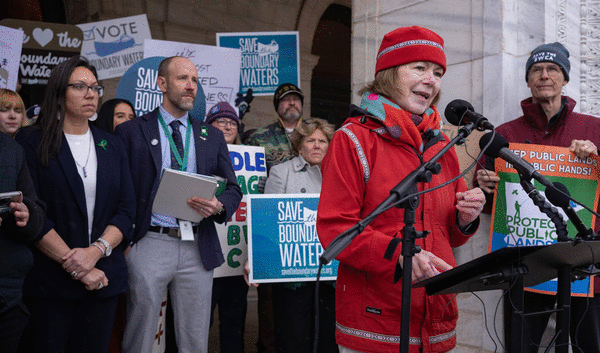
MINNEAPOLIS — In early February, environmental advocates warned followers on social media that a crucial vote to roll back a mine ban next to the Boundary Waters Canoe Area Wilderness was imminent.
“The bill to overturn the 20-year mining ban near the Boundary Waters is heading to the Senate floor THIS WEEK!” read a post from Save the Boundary Waters on Feb. 9.
More than a month later, a vote has yet to happen.
Conservation groups and tribal nations have been applying pressure behind the scenes, lobbying Republican members of the body to tip the balance against the resolution. Failing to do so could mean the removal of a Biden-era ban on mineral leasing in 225,000 acres of Superior National Forest, a move that would provide a lifeline to a copper-nickel mine proposal from Twin Metals.
The prospects of mining near the Boundary Waters have ebbed and flowed in the last decade as mining advocates have repeatedly sought to end federal protections for an area environmentalists and recreationalists consider a jewel.
The current legislation presents the greatest threat to those protections yet, since the mechanism being used could make the future reinstatement of a ban impossible. Failure to advance the resolution would mean a major lost opportunity for mine supporters, because Republicans control the full federal government.
Environmental advocates now have a new refrain: every week without a vote is “a good week for the Boundary Waters,” because their best hope is to run out the clock on the rollback.
The Senate has 60 working days in session to vote on the resolution, placing the deadline at the very end of April, assuming legislative calendars don’t change before then. If the rollback does pass the Senate, President Donald Trump is expected to sign it.
“It’s hard to be sitting in limbo,” said Ingrid Lyons, executive director of Save the Boundary Waters. She spent roughly 10 days in Washington, D.C., talking to lawmakers’ staff from late February to early March and said that for many senators, “taking this vote is not a crystal-clear win.”
A spokesman for Republican Rep. Pete Stauber, who authored the original resolution in the House, wrote simply that “It will be voted on soon and it will pass.”
Stauber has been a staunch opponent of the 2023 “mineral withdrawal” that effectively barred mining in a huge swath of Superior, where waters flow towards the Boundary Waters. The Biden administration studied the potential for a sulfide ore mine there and deemed it too risky, even with measures in place to manage potential acid mine runoff.
Stauber has argued that the move was an attack on the mining way of life in northeast Minnesota, and needlessly blocked a domestic supply of metals, like from Twin Metals.
Twin Metals declined to comment on the status of the Senate vote, but has previously said it appreciated Congress’ efforts after the measure passed the House in late January.
Minnesota’s two Democratic senators are opposing the rollback. Sen. Tina Smith vowed in a news conference weeks ago to do everything she could to defeat the measure, noting then that only four Republicans need to be convinced for the measure to fail.
Those watching the Senate closely think it is unlikely the resolution will come to the floor at all, if Republicans don’t have the votes to pass it. The measure only requires a simple majority to pass the Senate, because Stauber has used the Congressional Review Act (CRA) to force the rollback.
Smith and others in opposition have argued that the use of the CRA is itself a reason to vote against the effort. The law has never been used to unwind a mineral withdrawal like the one in Superior.
“I know Senators on both sides of the aisle have gotten huge amounts of outreach opposing this bill, not just Minnesotans but people across the country who care about public lands and are deeply concerned this unprecedented maneuver opens the door to reversing protections for public lands everywhere,” Smith wrote in an emailed statement late last week.
Some of that outreach has come from unexpected places, like the Republican descendants of U.S. President Theodore Roosevelt. The National Congress of American Indians has also demanded a hearing on the measure, arguing that it could negatively impact treaty rights. The Boundary Waters is part of ceded lands under an 1854 treaty where members of some Ojibwe tribes retain rights to continue hunting, fishing and gathering.
While the battle over the resolution continues behind the scenes, the Senate has been busy. Lawmakers were working for weeks on a bipartisan housing package aimed at making homes more affordable. The war with Iran has been raging in the background. The president is leaning on senators to pass the SAVE Act, which would add unprecedented ID requirements for voters. And the Department of Homeland Security is still partly shut down, without funding since February.
“Their calendars are really full,” Lyons said, adding that it makes sense legislators have not brought up a controversial measure.
Until the clock runs out or senators take a vote, nothing is for certain. Those awaiting the outcome are repeatedly checking the Senate’s calendar, and will have no more than a day’s notice, should the resolution re-emerge.
©2026 The Minnesota Star Tribune. Visit at startribune.com. Distributed by Tribune Content Agency, LLC.






Comments