Federal immigration detainees testify how US government impeded access to attorneys at Minnesota's Whipple Building
Published in News & Features
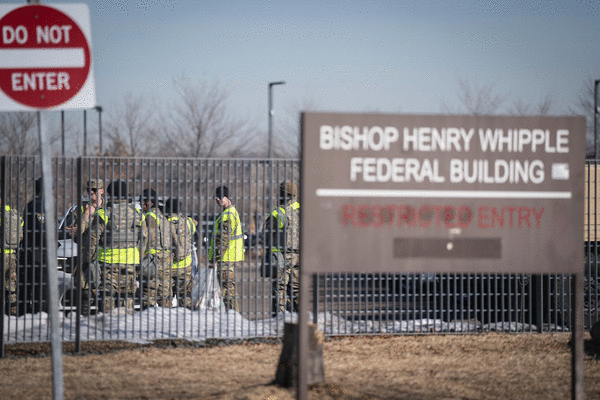
MINNEAPOLIS — During testimony in a Minneapolis courtroom, attorneys and previously detained immigrants revealed more insight into their difficulties accessing counsel at the Bishop Henry Whipple Federal Building, including instances that came after a judge ordered the U.S. government to overhaul how it offered legal services.
In February, U.S. District Judge Nancy Brasel ruled the U.S. government flouted the constitutional rights of detainees taken to the Whipple Building at Fort Snelling during Operation Metro Surge, the Trump administration’s aggressive immigration crackdown that brought thousands of agents to the state. Brasel, appointed to the bench by President Donald Trump in 2018, ordered the federal government to improve access to phones and lawyers and barred the federal government from transferring immigrants out of state during the first 72 hours of detention.
At an evidentiary hearing on Thursday, March 19, two immigrants formerly detained at Whipple testified that federal officers told them at first they could only make one phone call and did not mention they could access an attorney. A man identified only by his initials, J.J.B., said through a Spanish interpreter that a U.S. Immigration and Customs Enforcement officer stood close enough to hear his conversation with his mother. Another woman, identified by her initials, L.H.M., said an agent cut off her first phone call to her sister after less than a minute and a half.
Counsel for the detainees under oath detailed similarly futile efforts to speak to their clients at Whipple in January and February, only to be turned away by the government with little to no explanation. Attorney Hannah Brown said she waited four hours in the waiting room before leaving.
Said another attorney, Kira Kelley: “It was literally impossible to get information to my clients.”
The arguments were made in a lawsuit brought by nonprofit Advocates for Human Rights, which alleges the U.S. Department of Homeland Security and ICE officials were violating detainees’ rights by blocking their access to attorneys. The attorneys for the immigrants are seeking a preliminary injunction that would extend Brasel’s protections to the detainees while the lawsuit proceeds.
Brasel will hear a second day of testimony March 20.
In opening statements, lawyers for the federal government said they intend to show “much has happened” in efforts to improve conditions at Whipple in the five weeks since the judge’s ruling, including improved access to phones. Justice Department attorney Christina Parascandola said the drawdown of federal agents from Minnesota has also thinned the flow of people going in and out of the building.
“Things have returned to a more manageable pace,” she said.
When questioning the accounts of the immigration attorneys, lawyers for the U.S. government appeared to imply the limited access was because of security concerns as the Whipple building became a frequent site for protesters. Justice Department attorney Andrew Abrams, in one moment, questioned Kelley about their awareness of any threat levels at the facility when they tried to visit a client and was denied, or if they saw any agents in riot gear.
In arguing for an injunction, attorneys for the detainees argue that while they’ve seen improvements at Whipple, including immigrants being released much quicker, they described evidence of noncompliance. Attorney Jeff Dubner said logs showed the phones inside Whipple were dead from Feb. 10 through March 5, well after the judge’s ruling.
“Without the right to counsel, all other rights to an inmate are elusive,” Dubner said.
_____
©2026 The Minnesota Star Tribune. Visit startribune.com. Distributed by Tribune Content Agency, LLC






Comments