Measles forges a deadly trail across America, exposing fractured health system
Published in News & Features
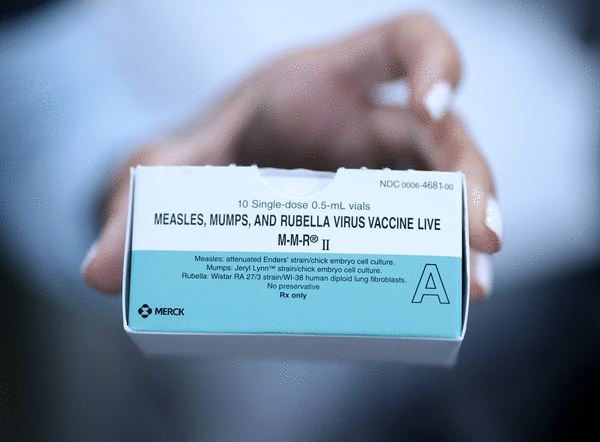
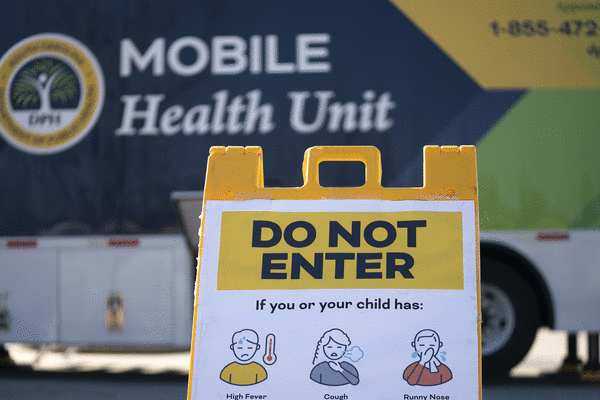

Before this spring, Salt Lake City-based pediatrician Trahern W. Jones had never seen a case of measles in person.
Then he saw a few in one week. One of his patients had a rash and fever that were subsiding, but breathing was a struggle. Because of a swollen airway, the toddler was making a high-pitched squeaking sound, a tell-tale sign of croup, a common complication of measles.
“We didn’t expect to be on the front lines of a historical disease that should have been relegated to the past,” said Jones, 40, who specializes in infectious diseases. “It’s a very unique feeling to feel as if you are stepping into the past, to feel as if everything around you is being pulled backwards in time.”
The U.S. has lost its handle on measles, one of the world’s most contagious diseases. The ongoing spread is straining local health resources and signaling to the world that the U.S. Centers for Disease Control and Prevention, after massive cutbacks, is no longer the gold standard in public health.
This year, the U.S. has confirmed 5,182 measles infections, according to the CDC, breaking records not seen since 1991. Eight people have died, including two infants this month. A group of scientists with the Pan American Health Organization (PAHO) will convene in Washington this week to determine if there has been a continuous chain of transmission of one strain of the measles virus for more than 12 months in the U.S. If so, the U.S. will lose its quarter-century standing as a nation that eradicated the disease.
“Whether or not the U.S. has eliminated measles, we have a huge measles problem in our country,” said Noel Brewer, a public health professor at the University of North Carolina at Chapel Hill and chair of the committee that reviews the CDC’s measles data ahead of the PAHO meeting. “We don't need to wait for PAHO to tell us that we have a problem. We have it, and we know it.”
The U.S. isn’t alone. Measles outbreaks have hit every region of the world in the last few years, including in neighboring Canada and Mexico. But the U.S. has stepped back from its once-leading role in promoting immunizations and combatting the spread of the highly infectious disease, particularly since President Donald Trump withdrew the country from the World Health Organization.
For decades, the U.S. funded breakthrough research and deployed resources to curb the spread of disease around the world. Now, the country's lack of coordination is hindering the ability to fight measles at home, Brewer said. Losing elimination status is likely to prompt travel warnings and vaccine advisories from other nations. States have largely been left on their own to contain outbreaks and get the word out about the vaccine, which at two doses is 97% effective at preventing the deadly disease.
The U.S. achieved the elimination of measles in 2000 after four decades of coordinated national campaigns to promote vaccinations. But in recent years, vaccine hesitancy has been on the rise with parents worried about the shots’ side effects or unfounded concerns about immunizations as a cause of autism. The Trump administration has fanned the flames by questioning the safety of vaccinations, without providing any evidence. Robert F. Kennedy Jr., Trump’s appointee as Health and Human Services secretary, has advocated for unproven remedies.
The Democratic sweep of the midterms signaled trouble for his Make America Healthy Again movement. Voters ushered in a new class of medical and public health experts such as Senator-elect Annie Andrews, a pediatrician in South Carolina who has called Kennedy her “professional archnemesis.” But just after the election, Trump elevated Stephen Miller to chief of staff. On X, Kennedy praised Miller as “the strongest MAHA supporter in the administration.”
Utah’s Lingering Outbreak
When Jones moved to Utah in 2018, he feared it was a prime spot for measles to take hold. The state’s vaccination rate for measles, mumps and rubella (MMR) is around 87% for kindergartners in the 2025-2026 school year, below the level that protects people who are unable to get a vaccine.
This year, Jones has treated or advised on more than a dozen measles patients and helped countless local doctors diagnose the virus. The mother of the child with croup and measles in the spring was deeply regretful of skipping the vaccination, he said.
“Even the best cases of measles are still the sickest that child’s ever going to feel in their childhood,” Jones said.
Since January 2025, there have been measles cases in 45 states, with bigger outbreaks in Pennsylvania, Texas and South Carolina. But it’s the longevity of the outbreak in Utah that will most likely cause the U.S. to lose its elimination status. The state health department recorded 725 cases from June 2025 through Nov. 3, including new cases every week for a year up to August. Wastewater data shows the virus is still circulating.
Measles has struck unvaccinated pockets in the southwestern part of the state, including communities tied to the Fundamentalist Church of Jesus Christ of Latter-day Saints, but the outbreaks haven’t been limited to any one group. That’s because one measles case can infect up to 18 more unvaccinated people.
About 8% of cases have resulted in hospitalization, which puts a financial strain on facilities that need more masks, test kits and oxygen for some of the sickest patients, said Jones. Even with modern treatments for symptoms and state-of-the-art emergency rooms, somewhere between one and three of every 1,000 children with measles will die from respiratory and neurological complications, according to the CDC.
The national vaccination rate for MMR has fallen to 92.4%, below the 95% level considered to grant herd immunity that protects vulnerable and unvaccinated populations, such as infants and people who are immunocompromised.
Harming prevention efforts nationwide, the current White House has regularly cast doubt on vaccinations. Trump said the combined MMR shot could be “quite lethal,” though there’s no such evidence, and said the inoculation should be broken up into three separate components. That would be a difficult and expensive prospect for drugmakers like Merck & Co. and GSK Plc, and separate shots would be more time-consuming for parents to ensure their kids are fully vaccinated.
Kennedy and CDC Director Erica Schwartz “continue to recommend MMR vaccination as the most effective way to prevent measles,” HHS spokesperson Emily Hilliard said in a statement. “HHS and CDC will continue working with states to stop transmission, close vaccination gaps, strengthen outbreak response, and protect Americans from measles.”
The CDC has provided about $100 million in additional funding for prevention and on-the-ground help for measles response.
Deaths in Pennsylvania
The state that has paid the biggest price is Pennsylvania, which has recorded six measles-associated deaths and said 1,505 people have been infected.
Cases have been concentrated in Lancaster County, home to the nation’s biggest Amish community and a large Mennonite population. They live in tight-knit, religious communities, largely apart from the modern world and its influences. They aren’t a monolithic anti-vaccine community; many are unaware of inoculations and opt for home remedies. While schools require vaccinations, parents can apply for religious or moral exemptions.
Pennsylvania has been racing to dole out more vaccinations since the first cases were reported there in April. More than 300 staff in the state health department have been assigned to vaccine drives and contact tracing. With the Amish population not driving cars, the more common drive-thru vaccine tents wouldn’t work. Instead, more than 240 pop-up vaccine clinics have been set up at trusted places like community centers. Nurses also make house calls to administer shots. State healthcare workers administered more than 118,000 in September and October.
At a clinic in an auditorium attached to a New Holland fire station, health department nurses were ready with antiseptic wipes, “ways to stay healthy” kids’ activity books, information sheets about the MMR vaccine and flyers for the next clinic to get the second shot. That day, the state immunized 23 people, including 15 children and eight adults, the majority of whom were getting their first shot. Even just one person coming in for an immunization is worth it for Jennifer Wallace, the medical director for the state’s health centers.
“You have mothers come in that you can just tell they’re tense, they’re worried, and they’ve heard of all these people in their communities that are coming down with measles,” Wallace said while she waited for people to arrive at the clinic. “They walk in with their four or five children, and we get them vaccinated, and you can just see their shoulders relax.”
Amish sisters Sharon, 25, and Mary Ann, 27, decided to get vaccinated this summer as more people in their community became infected. The women, who declined to give their last name for privacy reasons, said they went to one of the clinics with four of their brothers and three other sisters. The only sibling who didn’t get the MMR shots — their 37-year-old brother — came down with measles.
Brain Inflammation, Miscarriages
Measles is incredibly contagious and can infect nine out of 10 unvaccinated people exposed, according to the CDC. It leads to flu-like symptoms and eventually manifests into a rash across the body. Complications include inflammation of the brain, pneumonia and immunity amnesia, where the body loses its ability to protect against other diseases even if there was a previous protection.
The risks are greater for pregnant women, who are more likely to develop complications that require hospitalization and could result in a miscarriage or premature birth. At least 85 pregnant women in Pennsylvania tested positive for measles as of Oct. 30, according to the health department.
Earlier this fall, Sara Lange, an obstetrician-gynecologist at Penn Highlands Healthcare in DuBois, Pennsylvania, got the call that her emergency room had admitted a woman who was 35 weeks pregnant with a possible case of measles.
Lange suited up in full personal protective equipment and wondered if she had read enough about measles to identify the disease in person. The patient had a 103F fever, a red rash from head to toe, red eyes, a dry throat and difficulty swallowing. Her muscles were so weak that she couldn’t lift a glass of water. It was a textbook case.
“Now I know why we vaccinate,” Lange thought as she walked away. “It’s very easy to say that you are against a vaccine if you’ve never seen the disease,” she said.
The sixth death in the state was a 21-year-old unvaccinated woman who had measles and died from childbirth complications, the Jefferson County coroner confirmed.
Pennsylvania issued a health alert in October that provided guidance on vaccinations and risks of an infection in pregnant women. The CDC has not issued an alert with guidance for physicians on pregnant women with measles.
The CDC said it has provided on-the-ground aid at the request of states, including Pennsylvania and New York. Pennsylvania received one person to assist with disease modeling.
States like Pennsylvania say they need the federal government to take the lead in endorsing the MMR shots and better coordinate on the response to outbreaks.
“We can’t do this alone. Diseases don’t know borders,” Pennsylvania Secretary of Health Debra Bogen, a longtime pediatrician, said in an interview. “We need a national plan to really return to that elimination.”
Instead, Kennedy has spread debunked claims about the vaccine and, along with Trump, attempted to alter the childhood vaccine schedule, moves which are tied up in court. Kennedy, who previously led an anti-vaccination organization, also suggested that Pennsylvania fabricated or prematurely tied some deaths to measles, sparking a battle with Governor Josh Shapiro.
The CDC has acknowledged only four fatalities as of Nov. 6 and said it is investigating the others and working to determine what defines a measles death.
A Diminished CDC
Under Trump, the CDC has lost about a third of its staff through cuts and resignations. Schwartz became CDC director in August, the first permanent leader in nearly a year. But her deputy director and chief medical officer, Jennifer Shuford, who helped lead Texas’s response to measles, is stepping down on Nov. 12 after five months on the job.
Some public health officials have criticized Schwartz for not doing more to promote the vaccine for the start of the school year or through social media.
Many people visiting Lancaster County in Pennsylvania and even locals said they were unaware of the ongoing outbreak.
“Honestly, I probably wouldn’t even know about it until some other people started talking about it,” said Travis Armstrong, owner of Uncle Leroy’s Candy Kitchen at the popular tourist destination Bird-in-Hand Farmers Market.
Infections keep spreading at home and abroad. Last week, New York reported that a child died from the virus, the state’s first measles fatality in three decades. The death occurred northeast of Syracuse in Lewis County, an area with active Amish and Mennonite populations. Three days later, Wisconsin announced that an infant had died of measles, the first such fatality in the state since 1990.
Canada lost its measles elimination status last year after more than 5,400 people were infected. In October, the country declared its outbreak had ended after two months with no new cases. It still has to prove to PAHO that it has strengthened its surveillance systems and stopped the spread for a full year.
Mexico is also at risk of losing its measles elimination status. More than 20,000 people have been infected and 50 have died since early 2025, according to health department data.
On his first day back in office, Trump announced the withdrawal of the U.S. from the WHO, which resulted in pulling millions in funding to the global body and 20 CDC experts who were instrumental in leading initiatives, including measles elimination abroad. It’s now much harder for the CDC to coordinate with WHO and greatly reduces the U.S.’s influence over global health policy, according to people familiar with the dynamics.
In the CDC’s Global Immunization Division that coordinated with the WHO, 40% of staff were cut, according to people familiar with the matter who asked not to be named for fear of retribution. At least 80% of the staff deployed on the ground have been pulled, making the goals of measles and polio eradication harder to accomplish, the people said.
“I never thought we would reach this point,” Pennsylvania’s Wallace said. “I hope we can take away from this outbreak learning opportunities that we can apply to prevent further outbreaks and then get that measles elimination status back.”
©2026 Bloomberg News. Visit at bloomberg.com. Distributed by Tribune Content Agency, LLC.





Comments