Pentagon eyes smaller troop cuts across Europe in reversal
Published in News & Features
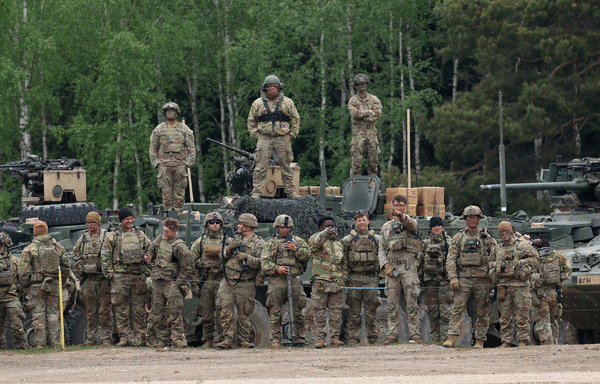
The Trump administration’s cuts to roughly 80,000 U.S. troops across Europe will be lower than the continent’s leaders have feared, according to people familiar with the matter.
European allies had previously feared the U.S. might cut as many as 25,000 troops, but a smaller cut is now more likely because the U.S. has looked favorably on increased NATO defense spending, according to the people, who asked not to be identified discussing private deliberations.
Pentagon leadership has also realized how much the U.S. military relies on forces posted across Europe to project American power in the Middle East, where the Iran war continues to drag on, according to the people.
One of the people said allies now expect an overall reduction of about 5,000 U.S. troops.
The final decision rests with President Donald Trump, who has repeatedly lashed out at European allies for not helping the U.S. and Israel with the war against Tehran.
“We have a lot of assets here that are right where we want them,” Trump’s top envoy to NATO, Matt Whitaker, said earlier this month when discussing possible troop cuts. “I don’t expect anything big.”
Most of the U.S. troop reductions will focus on Germany, where the largest American contingent is stationed. The Eastern flank would be bolstered, with countries that border Russia offering to pay for some of the costs.
A Pentagon official said in a statement the review is ongoing and there is nothing more to announce yet.
Under Secretary of Defense for Policy Elbridge Colby is slated to deliver a formal report to Defense Secretary Pete Hegseth on the proposed changes.
General Alexus Grynkewich, NATO’s supreme allied commander and head of U.S. European Command, delivered a set of potential scenarios to Colby’s team for consideration in September. Hegseth is expected to deliver final recommendations to Trump on Dec. 1.
Allies are under no illusions about the motivation behind the Pentagon’s review, which follows years of bipartisan frustration about the imbalance in the alliance’s contributions to European security.
“America cannot care for — or pay more for — Europe’s defense than our allies do,” Hegseth told NATO allies earlier this year when he announced the review. “Europe can and must take primary responsibility for its conventional defense.”
But as the Iran war has dragged on, U.S. assets in Europe have proved valuable — and occasionally vulnerable — despite tensions between Washington and European capitals earlier in the conflict.
“They are looking at this sort of nakedly through the lens of U.S. interest,” U.K. Defense Secretary Wes Streeting told reporters on a trip to Washington in mid-October. “While sometimes the narrative might be the U.S. is in Europe to benefit Europe, I think the hard reality is the U.S. is in Europe because it benefits the U.S.”
The U.S. war effort against Iran has relied heavily on European bases and the ability to fly over allies’ territory. Even as the administration has called on allies to step up, spending more for their own defense and providing logistical support for U.S. military operations, Trump and his aides have antagonized partners — leading some to question the American commitment to Europe’s defense.
Congress last year passed legislation restricting the Defense Department’s ability to cut troop levels in Europe, barring the Pentagon from dropping below 76,000 troops, divesting bases or removing major equipment without consulting allies and conducting detailed risk analysis of the impact.
The ongoing review incorporates a risk assessment from Grynkewich and detailed feedback from NATO allies — factors the administration could use to argue that it has satisfied the legislative requirements.
But a looming Democratic takeover of Congress after the midterm elections on Nov. 3 — which includes control over government spending — would constrain Trump’s ability to make major cutbacks.
———
(With assistance from Donato Paolo Mancini.)
©2026 Bloomberg L.P. Visit bloomberg.com. Distributed by Tribune Content Agency, LLC.






Comments