DNA evidence renews hope of solving 1989 killing of Johns Hopkins student
Published in News & Features
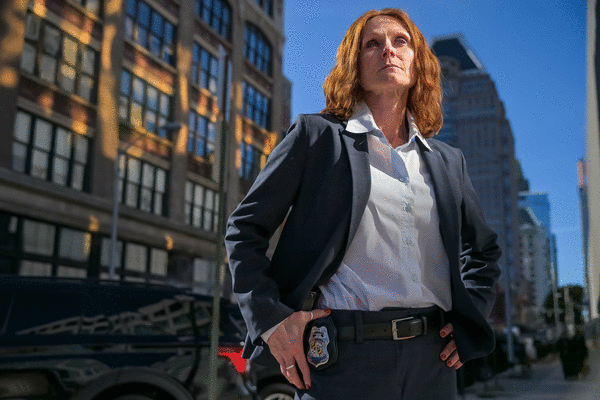
BALTIMORE — Time has not dulled the search for Bridget Phillips’ killer. Thirty-seven years ago, on a cold, wet night in March 1989, the 22-year-old graduate student was brutally murdered upon entering her apartment in the 2800 block of Calvert Street — bludgeoned to death in what police say was a crime of passion.
For decades, Baltimore Police Department detectives, persistent family members and even the FBI have chipped away at the case, determined to find the slayer of the popular young woman, who spoke six languages and who’d arrived at Johns Hopkins University in the fall of 1988 to attend “the school of my dreams.”
In 2024, acting on a tip, authorities exhumed Phillips’ body from her grave in Independence, Kansas. And while the disinterment failed to bring closure, police say it did further their efforts to identify the killer, who had wielded a blunt force instrument — a claw hammer, or the like — to beat her mercilessly about the head.
“The suspect was trying to obliterate her face, which seems very passionate and very intimate,” said Jill Beauregard, a cold case detective for the Baltimore Police. A seven-year veteran of that unit, Beauregard has investigated Phillips’ death since her arrival, intent on solving the slaying of the bright and spirited doctoral student last seen by friends on the front steps of the Hopkins library around 6 p.m. on March 22, 1989.
The next day, Phillips’ body was found just inside the door of her second-floor apartment by a roommate who had been out of town. Phillips had been neither robbed nor raped. Two schoolbags still hung from her shoulders. Defense wounds suggested she’d tried to ward off the blows. A female tenant in the building told police of hearing cries from Phillips’ apartment toward midnight, but did not intervene.
Afterward, the killer lingered to clean up and may have showered; the bathroom drain contained bits of bone and blood. Then the killer left, locking the front door but inadvertently leaving behind a vital clue: a bloody footprint, cloaked by the victim’s knapsack and later identified as that of a Head Edge II athletic shoe, size 8-1/2 to 9.
For years, that stain has driven police, as in a macabre Cinderella tale, to find the footprint’s owner. More recently, Detective Beauregard said, DNA evidence from the crime scene — unavailable at the time of the murder — has offered tantalizing hope to solve the mystery.
“This has become a DNA case,” Beauregard said. “Forensically, things are going on that I cannot (share). But I’d say that we have DNA evidence that I can work with. I am hopeful, and I am optimistic.”
Time and again, the detective has scoured photos of the crime scene and pored over the victim’s personal correspondence in search of answers. Repeatedly, she has pressed Phillips’ family and friends, calling them “exceptionally forthcoming.”
It is, she said, “a very challenging case, but I won’t stop on it. I live with (Phillips) every day; I feel like I know her. I’ve dreamed about the case, and I’ve asked Bridget for help sometimes, like, ‘All right, girl, I’ve gotten us this far but I’m gonna need a little help from the ‘other’ side.’ ”
Beauregard’s legwork culled the list of suspects; forensics has narrowed it to two — both males and one-time international graduate students at the university. One is from England, and dated Phillips briefly; the other, from Japan, had his amorous advances rebuffed. Both left the United States. not long after the murder, and now live in their respective homelands.
The British student owned a pair of shoes identical to the type that left the footprint, Beauregard said:
“Unfortunately, the investigation into (that suspect) was put on the back burner (at the time) and was never fully completed.”
The Japanese student was one of a number of men on campus hoping to catch Phillips’ eye.
“Bridget had a lot of suitors; she was brilliant and beautiful,” the detective said. “This man was infatuated with her. When she went home for the holidays, he sent her a scarf. They never dated but (witnesses said) he took great offense to the fact that she would not sleep with him. He felt she was rejecting him.”
The suspect confronted Phillips, upsetting her to the point where “she told a lot of people,” the detective said. Was he the killer? His shoe size was never determined, and he’s now out of Beauregard’s reach.
“Obviously, I can’t get to Japan,” she said. But the detective is also a task force officer with the FBI, with access to its world contacts. Those wheels are turning, she said.
Phillips’ legacy endures. Her younger sister, Michele Phillips, named her first-born Bridget. At the University of Florida, where Bridget Phillips enrolled at age 16, an annual endowed scholarship in her name goes to a rising senior history major to fund a summer internship abroad. A fellowship effort on her behalf failed to take hold at Johns Hopkins, a school which, in the family’s eyes, had a lukewarm response to the death of one of its own.
Once a month, a group of Phillips’ family and friends, six in all, meet online to talk about the case and to monitor any headway made by Beauregard, whom they call “Detective B.”
“She (Beauregard) knows every detail of Bridget’s life. In a strange way, she has become a part of our family,” said Michele Phillips, of Tampa. “With new technology, the progress we’ve made in a relatively short time has been amazing. I have great hope that there will be some break. I pray that there will.”
Growing up, Michele Phillips said, “Bridget was my biggest cheerleader, always encouraging me, calling me ‘Meesh’ and building me up. Now, at the end of the day, I hear her telling me, ‘Keep going, Meesh,’ urging me not to give up hope.”
©2026 Baltimore Sun. Visit baltimoresun.com. Distributed by Tribune Content Agency, LLC.



Comments