How a simple Amazon item helped create distinctive visual effects for Project Hail Mary
Published in Entertainment News
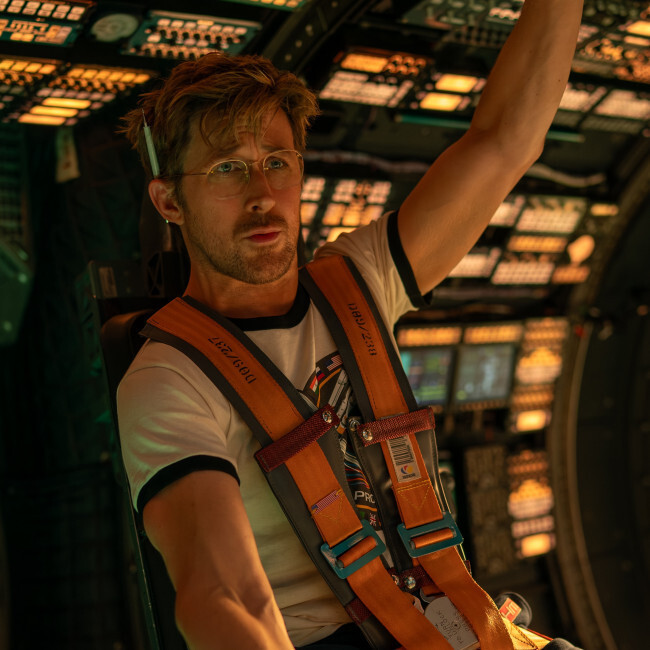
A simple item bought from Amazon helped create the distinctive visual effects for Project Hail Mary.
Cinematographer Greig Fraser revealed he bought a filter from the company as he worked on the complex demands for the production, which he said was "my most challenging film I've ever done, by far".
The film, directed by Phil Lord and Chris Miller, is based on the novel by Andy Weir, and stars Ryan Gosling as Ryland Grace - a science teacher recruited to help save Earth before embarking on an interstellar mission where he encounters an alien known as Rocky.
Speaking to Variety, Greig outlined how the film departs from traditional depictions of space, favouring warmer tones over cold, desaturated visuals, and detailed the technical challenges behind key sequences - including a 70-foot tunnel constructed from a fictional material called xenonite.
Discussing the film's visual language, Greig said: "We had to discover what this thing was. The sun has to come through it, but that provided a couple of challenges because this tunnel was 70 feet long."
He added: "In the past, what people have done to move light is they put a light on a frame and moved it over a window or through something, but we had to have the entire tunnel being hit by the sun.
"The tunnel had a bit of scariness to it at the beginning. It had to feel a little bit like he was going into a well."
The cinematographer explained he drew inspiration from deep-sea submersible footage, before turning to practical solutions using traditional lighting.
He said: "We physically couldn't get enough LEDs to do that. They're all old school tungsten lights, and we pixel-mapped them, so it meant that the sun can rotate around in any sort of configuration that we want."
On the film's signature visual effect, Greig said: "I found this beautiful filter online, on Amazon. It's a rainbow filter, and it causes these beautiful rainbow streaks to the highlights, and that became a theme throughout the film."
Greig also detailed his use of camera techniques, including shooting with an Alexa 65 and altering lens orientation.
He said: "What we did is we shot with an Alexa 65, which is already a wide screen sensor, but we squeezed it the other way. We squeezed it so that it went taller, for our film, it seemed perfect, because what it meant is that all the flares went vertically rather than horizontally."
Working closely with production designer Charles Wood, Greig described balancing light transmission within the tunnel set.
He said: "We worked closely with Charlie to make sure that the finish on the inside of the tunnel allowed enough light through, but not so much light through that it made it look transparent."
Greig added: "If you talk to any DP (director of photography), you'll know that is what we have, we wake up in cold sweats."
Describing the challenge of lighting the alien character, Greig added: "The challenges were compounded. It was front lighting a rock with no face that emoted just through puppetry."
He said: "It wasn't just a challenge. It was a challenge on a challenge, on top of a challenge, under a challenge, through a challenge."










Comments