Ask the Pediatrician: Caring for kids and teens with eating disorders: Pediatric insights on anorexia and bulimia
Published in Health & Fitness
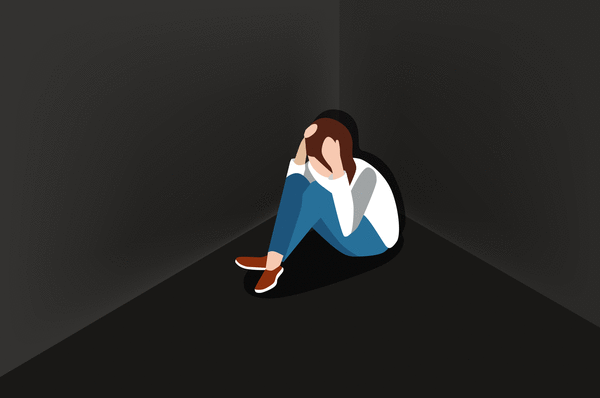
Eating disorders are conditions that occur in people who experience a difficult relationship with food. They may face extreme guilt with eating, a fear of weight gain and an unrealistic body image. These thoughts can disrupt and take over their daily lives.
There is no known cause for eating disorders but there are factors that may play a role. These include a family history of mood disorder or eating disorder, environmental factors, and certain personality traits.
Two of the most commonly diagnosed eating disorders are anorexia nervosa and bulimia nervosa.
Anorexia is an eating disorder that results in unhealthy weight loss. People with anorexia may have a distorted body image; they restrict their calories and/or purge to reach unrealistic weight goals. Calorie restriction often involves increasingly narrow food choices, smaller portion sizes and skipped meals. Guilt about eating can lead to purging through exercise, vomiting or medications such as laxatives. Malnutrition can develop, which can harm typical growth and development.
Although anorexia is more common in females, anyone can develop anorexia. People of all genders, races, ethnicities, ages, and social and economic backgrounds can develop anorexia. People who develop anorexia frequently start with a reasonable goal of wanting to live a healthier lifestyle. However, at some point, obsessive thoughts about dieting, exercising, and losing weight take over. These lead to unhealthy behaviors and excessive weight loss.
People with anorexia use their illness to control their weight. They may restrict their eating to “safe” foods that are usually low in calories/fat, move their food around on their plate to appear as if eating when not taking bites, or distract themselves from hunger by drinking water or chewing gum.
Eating disorders of all types may cause the child to become secretive about their eating and restriction. They can hide the impacts with baggy clothes or avoiding time with loved ones. They may also appear anxious/depressed, get tired more easily or show signs of increased emotion such as outbursts.
Over time, anorexia can cause malnutrition, which impacts the heart, brain, bones, and digestive and reproductive systems. When the body is starved of food, physical and mental changes may happen. Some physical signs include hair loss, brittle nails, dry skin, stomach pains, stunted growth and anemia. Thinner bodies from anorexia also get colder faster as the body loses fat, can succumb to fainting spells and can result in changes in menstruation. Beyond the risk of depression and anxiety as anorexia symptoms, lack of concentration can also occur.
Bulimia is a different eating disorder than anorexia but produces some of the same symptoms. Bulimia presents itself as an eating disorder in which a person eats large amounts of food (binges) and then tries to undo the effects of the binge in some way. Usually, the person rids (purges) the food that was eaten.
During a binge, people with bulimia eat large amounts of food, often in a fairly short time. Binges usually end when there is no more food to eat, the person's stomach hurts from eating or a distraction interrupts the binge. Binges are usually emotionally distressing because the person often feels as if they can't stop and have lost control.
After bingeing, people with bulimia typically feel guilty and are afraid of gaining weight. To ease their guilt and fear, they purge the food from their body by vomiting or other means. They may also turn to extreme exercise or strict dieting. This period of "control" lasts until the next binge when the cycle starts again.
Although most people with bulimia are teenage girls and young adult women, much like many eating disorders, anyone can develop bulimia. People with bulimia aren't happy with their body. Then, in response to anxiety and other emotions, they give in to their impulses and cravings for food by bingeing. People with bulimia don’t all fit a single mold – they may be underweight (slightly), overweight or average weight.
People with bulimia have difficulty controlling their eating behavior, which causes intense feelings of guilt and shame. As a result, they may hide their bingeing and purging sessions. Sometimes, those living with bulimia will schedule their sessions around family meals or avoid activities to ensure they have access to their means of purging. Beyond bulimia, those living with the illness often face other issues such as depression or substance use.
Bulimia causes a host of physical symptoms such as tooth decay from stomach acid in vomit, weight fluctuations, dehydration, damage to internal organs, and a puffy or bloated appearance to the face/throat/stomach. Much like anorexia, those living with bulimia may also experience fainting spells, stomach upset and alterations with menstrual cycles.
Treatment should begin as soon as possible for those living with eating disorders. The earlier an eating disorder is recognized, the higher the chance of recovery. Treatment depends on multiple factors including the patient's willingness to make changes, family support and the stage of the eating disorder.
Successful treatment of eating disorders involves a team of health care professionals who each treat a certain aspect of the disorder. Treatment should begin with a visit to a pediatrician who will assess how the eating disorder has affected the body. If the effects are severe, the person may need to be hospitalized. Treatment of the eating disorder will not be successful if good nutrition and physical health are not restored first.
In treating anorexia, the team helps a person get back to a healthy body weight, a crucial step for successful recovery. If a person refuses to eat, they may need to be admitted to a hospital for nutrition.
In treating bulimia, the team may admit a person to a hospital to treat medical complications, such as dehydration or electrolyte imbalance, or to stop the cycle of bingeing and purging.
Mental health counseling is an important part of treatment and helps a person with an eating disorder manage their unhealthy thoughts, understand how they use food as a way to deal with problems and feelings, and improve their self-image and develop the confidence to take control of their life. Family therapy can be implemented to help family members understand the condition and guides families to use effective approaches for recovery. Nutrition counseling with a registered dietitian can help supplement care given at in-patient settings and allow the child continuation of care.
Living with an eating disorder is difficult on both the patient and their loved ones. Both emotional and physical health are affected and, without help, a person with an eating disorder can have serious health problems or die. However, with treatment, a person can get well and go on to lead a healthy life.
____
Cora Breuner, MD, MPH, FAAP, is chair-elect of the AAP Section on Integrative Medicine and former chair of the AAP Committee on Adolescence. She directs the Adolescent Biofeedback Clinic Seattle Children's Hospital, where she consults on inpatient wards and directs the complementary medicine elective for medical students and pediatric residents. Her research focuses on educating medical students and residents on complementary medicine as part of health care, and including yoga as part of overall treatment for eating disorders and biofeedback for chronic pain.
Dr. Breuner has many publications on safety and effectiveness of integrative and holistic medicine and on eating disorders. She lectures in the United States, Canada and Europe on topics such as integrative and holistic medicine in pediatrics, eating disorders and the adolescent patient and athlete. She has three fabulous adult children, a recently retired partner, a rambunctious golden doodle and loves to travel, play fiddle, teach Zumba, hike and go on adventures.
©2026 Tribune Content Agency, LLC.







Comments