
When it comes to comfort cooking, this slow-braised beef is the perfect recipe
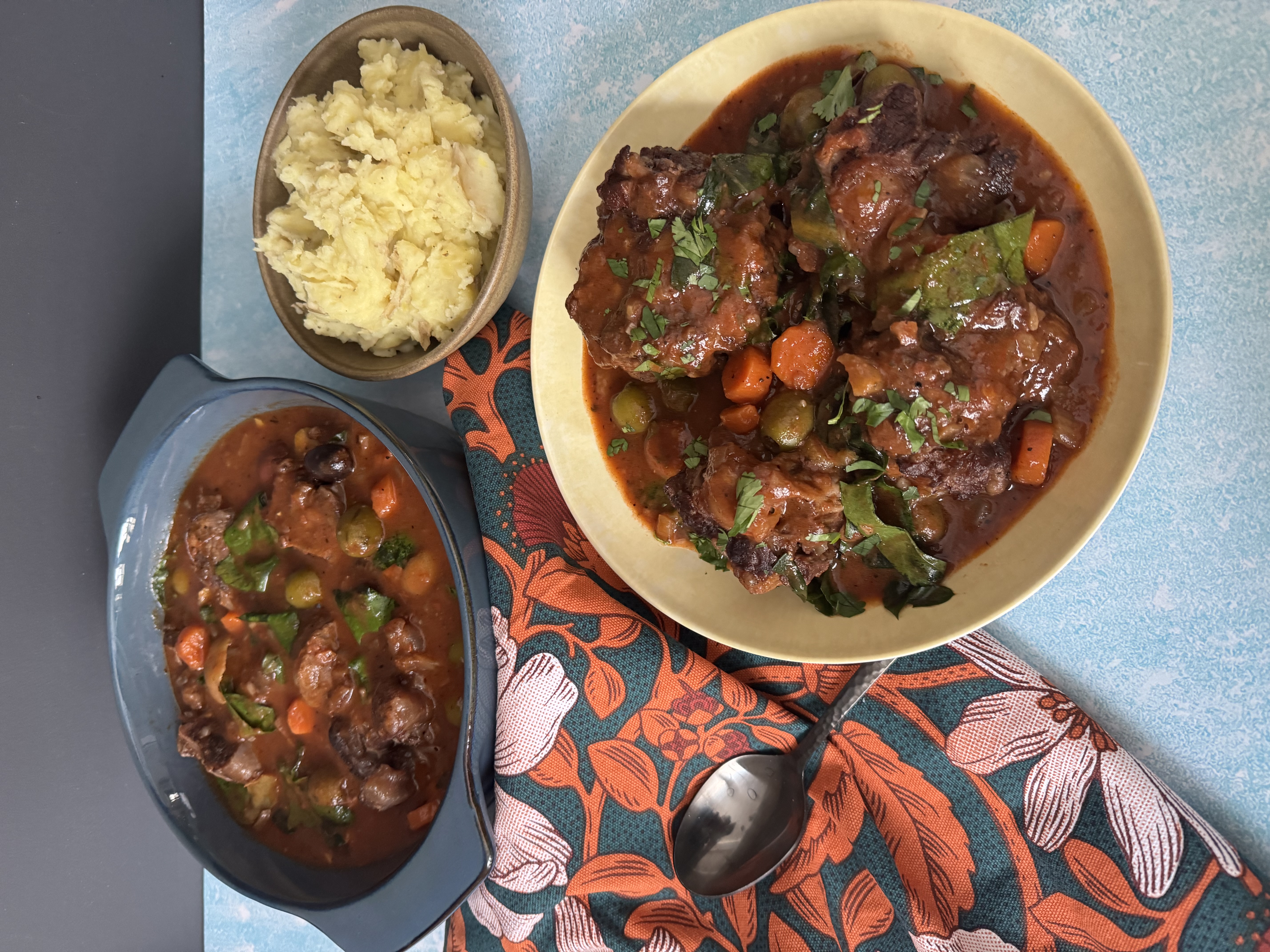
February proves a great time to step away from the protein shakes and render beef protein into a bowl of goodness. A simmering kettle warms up the house and nourishes the recipients.
Our local market offers a remarkable array of beef perfect for long, slow simmers — cuts such as beef shanks, cheeks, short ribs and oxtails. Less expensive than beef steaks, and much less tender, these cuts are packed with collagen, so the slow, moist environment of a covered pot rewards the cook with silky pan juices loaded with flavor.
Beef for braising or stewing should have ample fat and connective tissue that will break down as it cooks. Avoid packages labeled “stew meat,” because that doesn’t offer enough information. Stewing meat from a super lean cut, such as a rump roast or round, will have little flavor and will dry out during cooking. Therefore, it’s preferable to purchase a nicely marbled chuck roast and either ask the butcher to cut it into stew-sized pieces (two inches) or do it yourself.
This winter, beef oxtails, alongside beef shank, have our households vote for a hearty braise. Both cuts take a bit longer to cook than beef chuck, but the taste is worth the wait. Look for oxtail pieces crosscut at least 2 inches thick. The larger the piece's diameter, the more meat it contains and the easier it is to eat.
Slow-cooking offers the opportunity to squeeze a bunch of vegetables into the dish. Carrots, parsnips, celery and fennel all benefit from the time and add flavor and a touch of sweetness to the pot. A couple handfuls of hearty greens, added just before serving, pop the color of the finished dish.
Like most stews and braises, flavor improves when the dish is cooked in advance. Refrigerate covered up to three days. Remove any congealed fat from the surface if you wish. Reheat before serving, then stir in the greens.
In our family, not all eaters enjoy meat served on the bone. Let the stew cool and then use a paring knife to pull the meat from the bones. Cut the larger pieces into bite-sized bits to return to the pan juices.
If you choose to remove the meat from the bones, you can easily stir in cooked pasta, such as rigatoni, for a one-dish meal. Or, serve the mixture over cooked egg noodles, rice, orzo or mashed potatoes. The recipe for mashed potatoes that follows, seasoned with plenty of garlic, sage and lemon, makes a great accompaniment to the braised beef. Make the potatoes shortly before serving so they stay creamy.
Slow-Braised Beef with Green Olives and Greens
Makes 6 servings
Note: Beef chuck roast, cut into 2-inch chunks, can replace the oxtails and/or beef shanks. Reduce cooking time in Step 4 by about 30 minutes. If you choose to cook in a slow-cooker in Step 4, you’ll need about eight hours on the low setting.
2 teaspoons each: salt, freshly ground black pepper
1 teaspoon each, dried: rubbed sage, crushed oregano leaves
4 1/2 to 5 pounds beef oxtails and/or center-cut beef shanks, each at least 1 1/2 inches thick or boneless beef chuck cut into 2-inch chunks
3 tablespoons vegetable oil for high heat cooking, such as expeller-pressed canola oil, grapeseed oil or sunflower oil
2 medium size yellow onions (12 ounces total), chopped
5 medium-size carrots (12 ounces total), trimmed, peeled, chopped
2 ribs celery or fresh fennel or a combination, chopped
4 cloves garlic, crushed or minced
1 cup dry red wine (or more broth)
4 cups low-sodium beef broth or water or a combination
1 can (28 ounces) crushed tomatoes
2 lemons
6 fresh sage leaves or fennel fronds, optional
1/4 cup flour
1 1/2 cups pitted green olives, such as Manzanilla or Castelvetrano
4 to 6 cups trimmed dandelion greens or baby spinach
Mashed potatoes, see recipe, or cooked pasta, for serving
Chopped fresh herbs, such as parsley, cilantro or a combination
1. Mix salt, pepper, sage and oregano in a small bowl. Pat meat dry and sprinkle all over with salt mixture.
2. Heat oven to 300 degrees. Heat a very large (5- to 7-quart) Dutch oven over medium heat until a drop of water sizzles on contact. Add oil, then add meat in a single, uncrowded layer. Cook, turning once, until brown on all sides, about 10 minutes. Remove to a plate as the meat browns and add other pieces to brown all meat. Remove all meat to the plate.
3. Add onions to pan. Cook over medium heat, stirring to scrape up all the browned bits from the bottom of the pan, about 3 minutes. Stir in carrots, celery and garlic. Cook 2 minutes. Stir in wine and scrape bottom of pan well. Heat to a boil, and simmer to reduce wine by half, about 5 minutes. Stir in broth and tomatoes. Use a vegetable peeler to remove the yellow part of the lemon rinds and let them fall into the pan. Stir in sage leaves.
4. Return meat to pan. Be sure to push down into the liquid. Cover tightly and place in the center of the oven. Cook, stirring once or twice, until meat is fall off the bone tender, about 3 1/2 hours.
5. Use tongs to remove meat to a cutting board. You can remove meat from bones and cut it into bite-sized pieces if desired.
6. Heat the pan juices to a boil over medium heat. Dissolve flour in 1/2 cup water. Whisk flour mixture into pan juices. Cook and whisk until thickened, about 3 minutes. Stir in olives. Taste and adjust seasonings with salt and pepper. Return meat to pan. (Cover and refrigerate up to two days, if desired.)
7. Just before serving, stir in greens until wilted. Use a ladle to serve mixture over mashed potatoes. Garnish with chopped herbs.
Mashed Golden Potatoes with Sage and Lemon
Makes 6 servings
3 pounds medium-sized golden potatoes, scrubbed clean
3 cloves garlic, halved
Salt
1 1/4 cups milk, half-and-half or cream
1/2 cup (1 stick) butter, softened
Finely grated lemon rind from 1 lemon
1/2 teaspoon each: rubbed sage, freshly ground black pepper
1. Peel potatoes. if desired. Cut potatoes into 2-inch chunks. Put into a large saucepan and add cold water to cover potatoes by 1 inch. Add garlic and 1 teaspoon salt to pot.
2. Heat to a boil over low heat, reduce heat to medium. Simmer, partly covered, until potatoes are tender when pierced with a fork, about 15 minutes.
3. Drain potatoes, then return them to the pan. Set pan over lowest heat. Make a hollow in the center of the potatoes and add milk and butter. Mash with an old-fashioned potato masher until as smooth as you prefer.
4. Use a fine grater to grate the yellow portion of the lemon rind into the pot. Stir in sage and pepper. Mix well. Remove from heat. Cover potatoes with a piece of waxed paper on their surface. Cover the pot. Potatoes will keep warm up to 30 minutes.
(JeanMarie Brownson is a James Beard Award-winning author and the recipient of the IACP Cookbook Award for her latest cookbook, “Dinner at Home.” JeanMarie, a chef and authority on home cooking, Mexican cooking and specialty food, is one of the founding partners of Frontera Foods. She co-authored three cookbooks with chef Rick Bayless, including “Mexico: One Plate at a Time.” JeanMarie has enjoyed developing recipes and writing about food, travel and dining for more than four decades.)
©2026 JeanMarie Brownson. Distributed by Tribune Content Agency, LLC.









Comments