Colorado ski resorts got some welcome snowfall from Winter Storm Fern, but not enough to turn a dry and warm winter around
Published in Science & Technology News
Winter Storm Fern brought Colorado’s mountain towns a bit of what they’ve spent weeks hoping for.
It snowed 23 inches (58 centimeters) at the Crested Butte ski resort over the weekend of Jan. 24-25, 2026. Aspen Snowmass got 13 inches (33 cm).
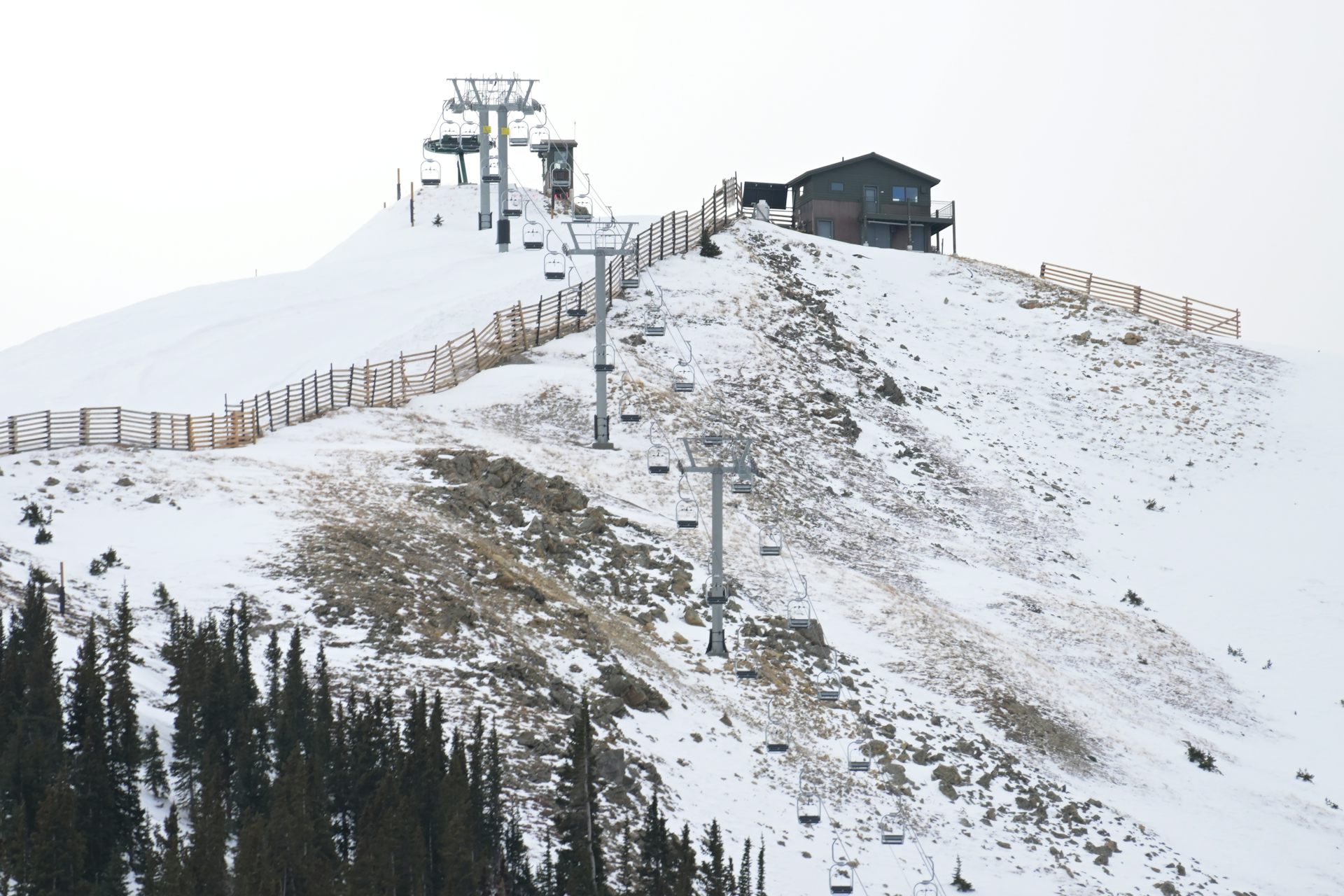
It was a welcome change in Colorado, where the ski season is off to a slow start. By Thanksgiving 2025, Colorado had only about 45% of the average snowpack it usually does at that time of year. Thanksgiving weekend is when many western ski resorts, such as Steamboat and Vail, typically open for the season.
By January 2026, the snowpack had increased only slightly to 57% of average. About half of the runs were open at central Colorado resorts in late January.
On top of a dry fall, Colorado has been unseasonably warm. Denver’s average air temperature for December 2025 was 11 degrees Fahrenheit (6 degrees Celsius) warmer than normal.
This phenomenon is not entirely new. Over the past four decades, Colorado has seen a decline in November snowfall, which is a problem for developing the snowpack base for ski runs. There has also been a decline in March snowpack, which can reduce skier numbers during spring break, when many families and college-age skiers typically flock to the mountains.
In spite of the welcome snowfall, the forecast for the rest of the season, which runs through April, doesn’t look good. It’s expected to continue to be warmer than average across the Colorado mountains.
The warm temperatures and lack of snow in Colorado are a problem for skiers and ski resorts. This has translated into a growing economic impact on the state’s mountain communities.
We are a snow hydrologist and a historian of the ski industry. We’re concerned about how this year’s continuing low snowfall will affect Colorado’s US$5 billion ski industry, the state’s environment and water resources across the western U.S.
The ski industry relies on natural snow falling from the sky. Natural snowfall can be supplemented by resorts making their own snow, often in a race to be the first ski area to open. This year, Keystone opened first after beginning to make snow before Halloween.
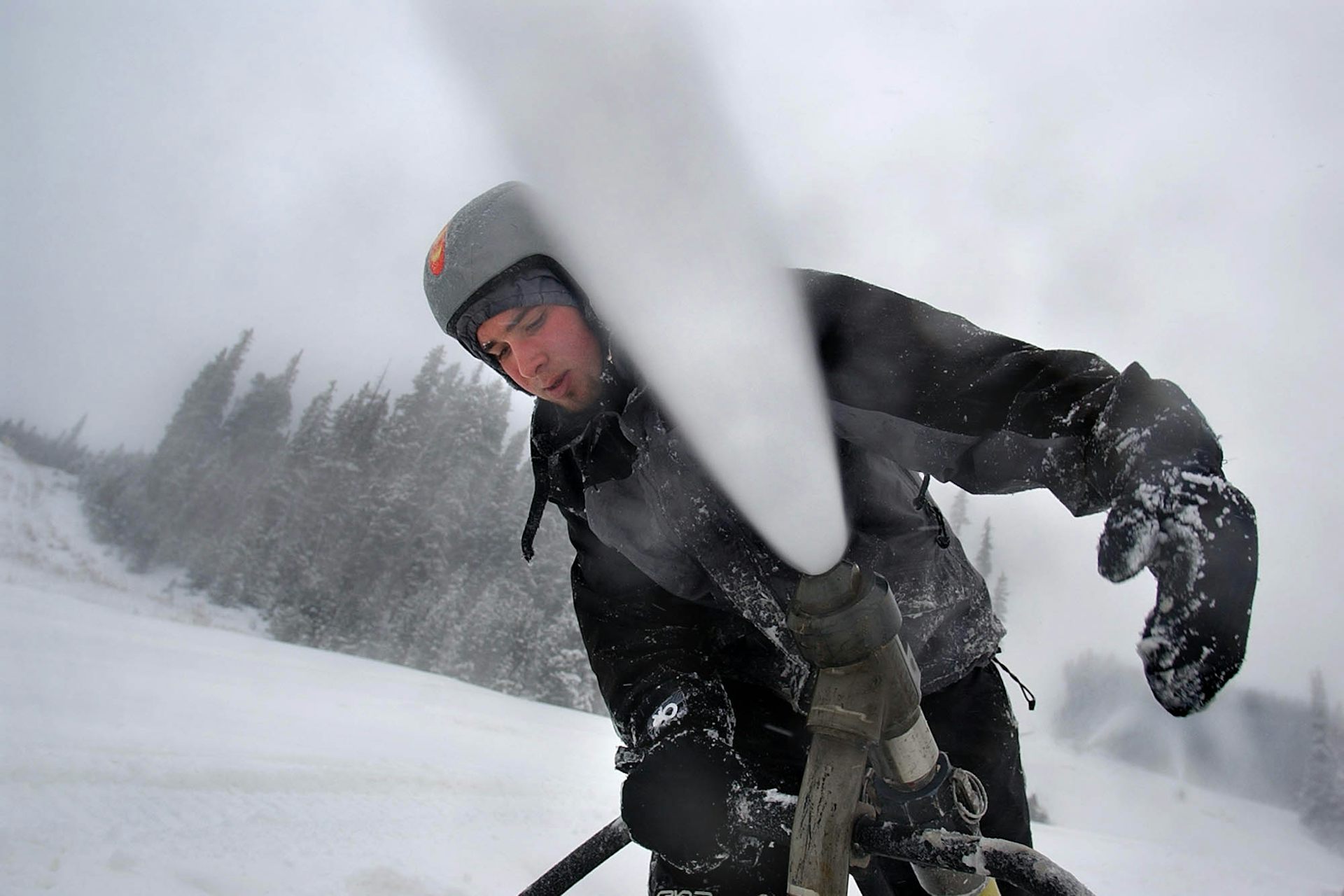
Ski resorts use snow guns that use high-pressure air to blow fine water particles that freeze and form snow. But to make snow, the wet-bulb temperature needs to be colder than 28 F (minus 2 C). The wet bulb temperature is a combination of air temperature, humidity and air pressure.
Snowmaking covers only a fraction of any ski resort in Colorado. Even the most extensive snowmaking resorts like Keystone are only able to cover 40% of their runs with humanmade snow. Other resorts can cover less than 10%. Snowmaking in Colorado provides the base for the ski season to start, but it can’t replace a season with no snow.
By comparison, ski areas in other states, such as Arizona’s Snowbowl, rely on snowmaking throughout the winter. Snowmaking can cover most of a ski resort in the eastern U.S., where resorts tend to be smaller than ones in the West.
Snowmaking has environmental costs. On average, snowmaking accounts for 67% of a ski resort’s electricity costs and consumes billions of gallons of water.
Snow is made using water taken from streams during low-flow condition, or times when less water is available. The water is essentially stored on the ski slope, with about 80% flowing back into the streams when it melts.
Due to water rights legislation unique to the western U.S., a ski resort cannot easily use more water to make more snow without going through an extensive and often expensive legal process.
Regardless of how much snow can be made, Colorado’s ski areas mostly rely on natural snowfall.
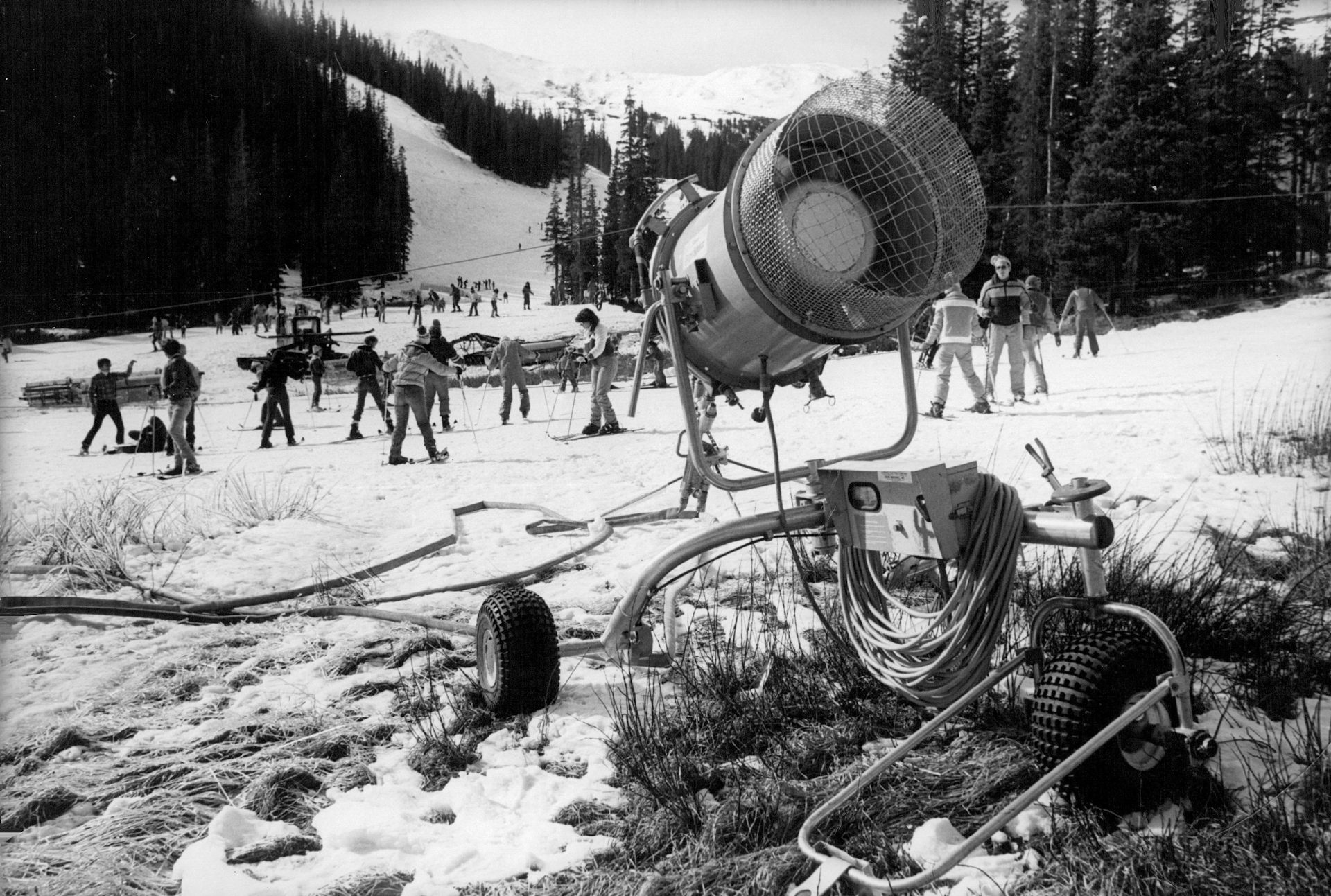
This year is far from the first time Colorado’s ski industry has struggled with a lack of snow. Many areas in the state did not see snow during the winter of 1976-77 until after the December holidays. The lack of snowfall caused skier numbers to drop a staggering 38% from the previous season.
That dry season convinced the ski industry to take matters into its own hands. In the summer of 1976, Winter Park Ski Area made a $1.2 million investment in snowmaking, which saved the following season. Other larger ski resorts followed suit and invested heavily in the technology over the following five years.
Over the past decade, Vail Resorts, owner of 42 ski resorts worldwide, has invested more than $100 million in snowmaking to compensate for marginal snow years.
These investments reflect a broader rivalry within the industry as resorts compete for a limited number of skiers. By the end of the 1990s, snowmaking was understood as essential for ski resorts across the country.
Low snow years are not just a problem for skiing. Colorado has a semi-arid climate, so water stored in the snowpack is a crucial water resource. In Colorado, up to 80% of the water comes from snow, so below-average snowfall usually means there will be a drought during the summer months that follow. Dry winters also lead to more wildfires.
Snowpack also affects summer tourism activities in Colorado that rely on water from snowmelt, such as whitewater rafting, whitewater parks, fishing and related river activities.
Coloradans may hope for snow to change the course of this winter. It’s happened before, like with the March 2003 Colorado blizzard, when 3 feet (1 meter) of snow fell in a day. Or in the winter of 2010-11, which started out drier than average and went on to be the wettest year on record.
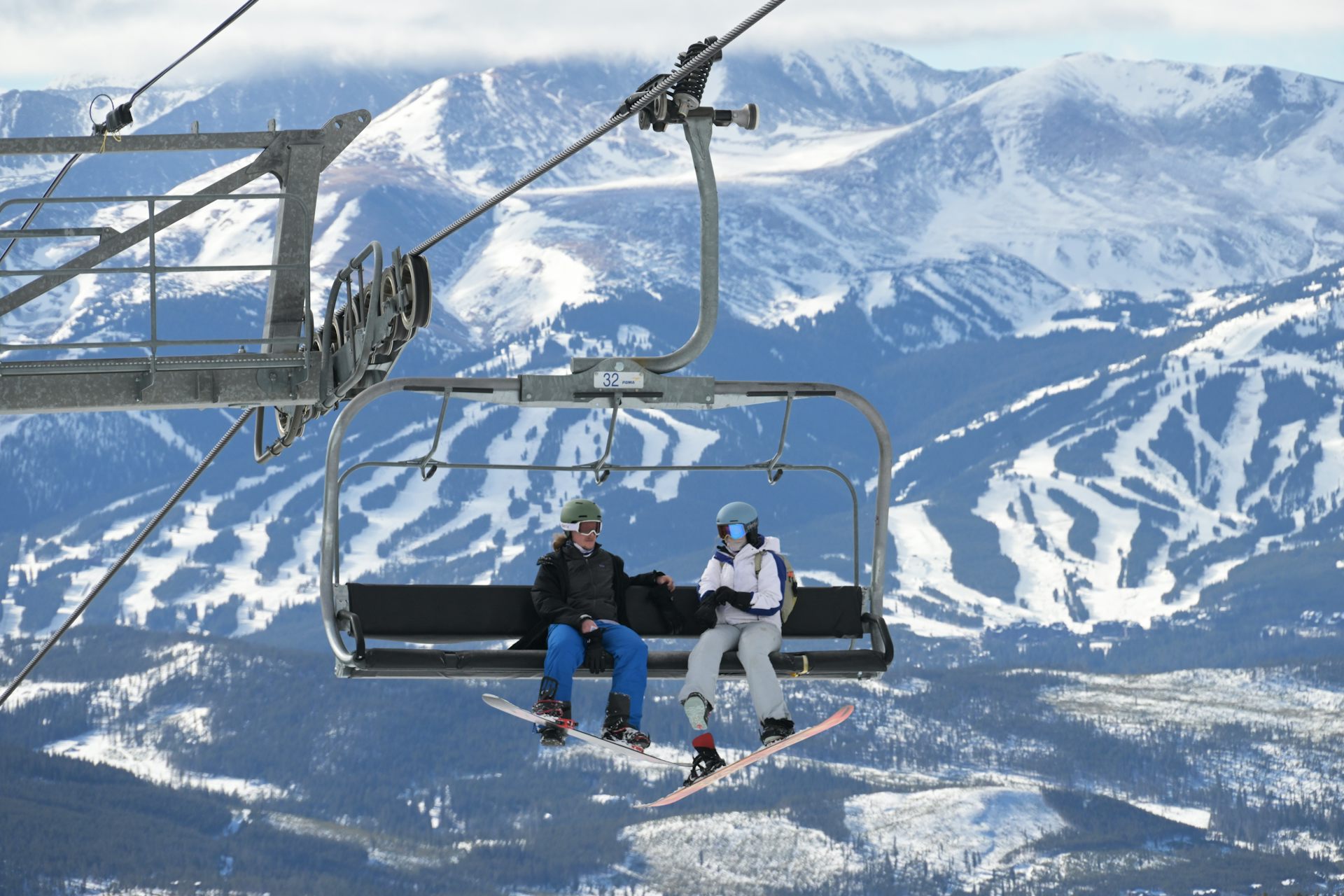
The ski industry has tried to insulate itself from bad snow years through season pass sales and diversifying entertainment options. Vail Resorts and Alterra Mountain Company require skiers and snowboarders to buy their Epic and Ikon season passes by October or spend upward of $300 for a day lift ticket. But the high costs of skiing are making the sport more exclusive.
Numerous ski resorts, such as Winter Park, have invested heavily in summer activities such as mountain biking and music festivals to increase revenue. But you can bet your mittens that people in Colorado’s mountain towns are hoping for another big dump of natural snow – and as soon as possible.
This article is republished from The Conversation, a nonprofit, independent news organization bringing you facts and trustworthy analysis to help you make sense of our complex world. It was written by: Steven R. Fassnacht, Colorado State University and Michael Childers, Colorado State University
Read more:
How climate change threatens the Winter Olympics’ future – even snowmaking has limits for saving the Games
Winter storms blanket the East, while the US West is wondering: Where’s the snow?
Snow can disappear straight into the atmosphere in hot, dry weather
The authors do not work for, consult, own shares in or receive funding from any company or organization that would benefit from this article, and have disclosed no relevant affiliations beyond their academic appointment.







Comments