Francis Wilkinson: MAGA's book bans are coming back with a vengeance
Published in Op Eds
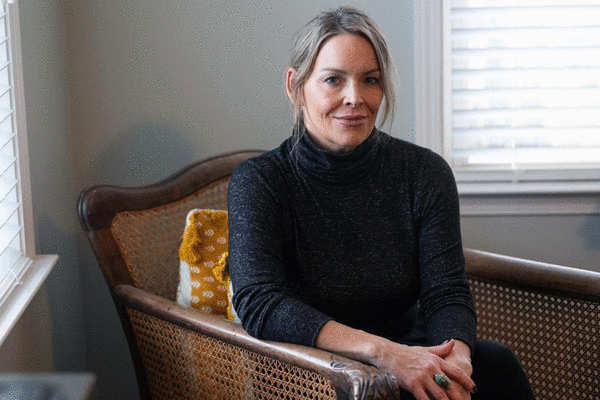
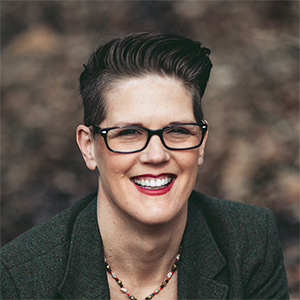
“I’m not really fearful anymore,” Mary Wood told me. Wood, 49, doesn’t dodge uncomfortable topics. But I’m unsure how much to credit this claim. Over dinner in late November at a chain restaurant near her home outside Columbia, South Carolina, she recalled the “constant state of fear” that enveloped her in February 2023 when she was first accused of wayward thought.
Two students in the AP language class that she taught at Chapin High School, a National Blue Ribbon School, had reported Wood, a white English teacher who had graduated from Chapin herself, to a school board recently recast by members aligned with the right-wing Moms for Liberty movement. Wood’s offense was showing two short videos about racial discrimination and teaching "Between the World and Me," a memoir of growing up, and living, Black in America by Ta-Nehisi Coates.
The attack on Wood was not an isolated event: Book bans are back with a vengeance — nowhere more so than in South Carolina, which leads the U.S. in statewide restrictions. This year, PEN America found that 6,870 book bans were enacted during the 2024-2025 school year across 23 states and 87 public school districts. Some 4,000 different titles were targeted, though many bans attack the same books — often those highlighted by Moms for Liberty. The U.S. Supreme Court in December refused to hear an appeal of a court ruling that allowed public libraries in Texas to remove books dealing with content or characters related to sex, race or gender, putting the high court’s imprimatur on a nationwide campaign to restrict access to books and information.
According to a previous PEN America report, between January 1, 2021, and October 1, 2024, 23 states enacted 47 restrictions on K-12 classroom speech and another 10 restrictions on speech in higher education settings. Classrooms across the country face an organized campaign to alter the teaching of history under the guise of protecting the self-esteem of White children or other nebulous goals. In Florida, schools have been prohibited since 2022 from presenting information suggesting a person “must feel guilt, anguish or other forms of psychological distress because of actions, in which the person played no part, committed in the past by other members of the same race, color, national origin, or sex.”
To meet the demand for feel-good alternatives to historical realities, schools in Florida, South Carolina and at least eight other states have adopted educational materials from PragerU, a conservative content factory that offers what it calls “pro-American” content. The state of Oklahoma this year even partnered with Prager to produce an anti-woke test for teachers moving to Oklahoma from states where “anti-American narratives” have been prevalent.
South Carolina had no explicit anti-woke diktats governing schools when Wood was attacked for teaching Coates’ book. But a language of oppression was already percolating among right-wing activists, many of whom transitioned from opposition to masks and Covid protocols to opposition to books. The biological virus was deemed insignificant or fraudulent while the book-borne virus induced panic.
At a 2023 state school board meeting, one man condemned sexual content in books and complained about librarians and teachers propagating their “personal ideologies over the education and well-being of students in our public school system.” Book bans were already spreading through the state’s local libraries and school districts, with some parents challenging dozens of books at a time.
Complaints about pornography have fueled demands for book bans for more than a century. But the current censorship wave curls in a new direction. Right-wing Christian conspiracy culture has been preoccupied with the notion that teachers are grooming children, either for sex or gender transition. Mary Wood said teachers are exhausted by such accusations. “Teachers were like, ‘Can you just shut the hell up’? We’re not indoctrinating your children,” Wood told me. “We are just trying to make it to the end of the day.”
Two South Carolina teachers sued a Hilton Head parent for defamation, charging that he had labeled them groomers. The cases are pending. Another man had sought criminal investigations targeting school district employees. “The school district, the administration and the librarians need to be held accountable for these books in our schools,” he told the Beaufort school board. When the Beaufort school district first pulled dozens of books in response to a complaint, it did so, it said, in order to protect employees from “harassment.”
The current book-ban movement is predominantly White, Christian and MAGA. Fox News, in one of multiple reports devoted to Wood’s case, quoted an anonymous Chapin student who stated that reading Coates’ book posed an emotional burden. “I actually felt ashamed to be Caucasian,” this student said, according to Fox. The article on the Fox website featured a photograph of Coates testifying “about reparations” on Capitol Hill and a headline about Woods “race-shaming against White people.”
Chapin, South Carolina, about 150 miles inland from coastal Beaufort, is a Fox sort of place: a largely White, relatively affluent community in a county that in 2024 gave Donald Trump 66% of its vote, a little more than 16% higher than his national share. According to the National Center for Education Statistics, about 4 in 5 students at Chapin High School are White; only 6% of the school is Black. (One quarter of South Carolina’s population is Black.)
Wood’s AP classes tend to be all or nearly all white. She has made a point to expose her students to international literature and diverse points of view; Between the World and Me fit the bill. The book is the sort of work that educators and pupils might want to know something about. It was #1 on the New York Times bestseller list. It was a finalist for a National Book Award.
Yet faced with a complaint by teens that the book caused them discomfort, and under pressure from parents and board members, the school collected the books, put them on a shelf and left them there for the remainder of the school year — bound and effectively gagged.
Wood was likewise in limbo. Some parents openly demanded that Wood be fired. Others did so quietly. The chair of the county GOP publicly complained about her. R.J. May, a Republican state legislator who was honored as Moms for Liberty’s “legislator of the year” in 2023, showed up at a board meeting for Lexington-Richland school district 5 to object to people being viewed in classrooms as oppressors or oppressed “because of the color of their skin.”
Wood defended her lesson, but no one in a position of authority seemed much offended by the notion that she should be fired for it. South Carolina’s Department of Education soon signaled its preference for the easy-listening version of history by eliminating access to AP African American Studies in all its high schools.
Still, the effort to drive Wood from her profession faced an obstacle. AP Language is explicitly intended to prepare students to handle controversial topics. What’s more, Wood’s AP students had a strong record of success on AP tests. A passing grade not only helps some students get into college, it also helps defray costs: Students who pass typically receive college credit. Despite all the public agitation, there was no explicit policy prohibiting using a book about race by a celebrated Black author. Wood seemed to be operating within school district guidelines and doing a good job as well. It was hard to identify exactly what she had done wrong. But plenty of people seemed convinced she should be punished for it.
A Federal Blunderbuss
On January 29, 2025, the White House issued a 2,300-word “Presidential Action” to compel the nation’s 98,000 public schools to instill what the White House called “patriotic education” and to end “indoctrination” in unpatriotic thinking.
The alleged indoctrination didn’t just manipulate student minds; it altered bodies, with unidentified adults in unidentified places “steering students toward surgical and chemical mutilation without parental consent or involvement.” The order issued by President Donald Trump offered a flurry of “definitions” and “measures” and “provisions,” along with a multi-point agenda for “ending indoctrination strategy.”
No Congressional legislation was passed to institute this MAGA control over every U.S. public school. No public debate informed it. No evidence was offered for its preposterous assertions. (The president has repeatedly claimed that children leave for school in the morning and return home in the afternoon having been subjected to gender-affirmation surgery. )
Yet the order wasn’t empty blather. The word “funds” or “funding” appears nine different times in the document. The Trump administration set about unilaterally enforcing its demands, threatening to defund any school district or program that it deems incompatible with MAGA doctrine.
Book banners and censors now have a federal blunderbuss to wield against any book, information or curriculum that causes discomfort or cognitive dissonance in any U.S. community. And for school boards and administrators in MAGA-dominated districts, the threat of lost funding is a handy tool to justify ideological constraints that many were already eager to impose.
On Jan. 27, two days before Trump’s assault on public education, the White House had issued another decree that revealed how intimately tied the Trump administration’s agenda is to book bans and censorship. That presidential order prohibited the military or its educational institutions from “promoting, advancing or otherwise inculcating” theories that the order describes as “un-American, divisive, discriminatory, radical, extremist or irrational.”
Like the public-school order, the Jan. 27 decree offered vast latitude to impose ideological censorship across the military. The results were swift. At the defense department’s global network of K-12 schools, officials removed 596 books for flaunting the order’s prohibition on acknowledging the existence of transgender people, racism or sexism. Among authors whose books were banned was Pulitzer Prize-winner Isabel Wilkerson, who is Black, and current Member of Congress Sarah McBride, who is transgender. (In addition to claiming that schoolchildren receive gender-affirmation surgery during the school day, Trump has also claimed that transgender people do not exist. McBride disputes the claim.)
Higher education was not exempt. The U.S. Naval Academy’s Nimitz Library removed 381 titles related to racial equity and other topics that Trump and the MAGA movement deem objectionable. The argument that future commanders of nuclear submarines and SEAL teams are too weak-minded to be trusted with books elicited mockery and criticism, and most books were eventually returned. But the template for book bans and ideological curriculum constraints, even at the elite university level, was now established.
Neither the book-banning president nor the book-banning movement that supports him seem vexed by the intimate connection between book bans and totalitarianism. As several South Carolinians pointed out to me, book banners, from Soviet and Chinese communist party apparatchiks to Iranian theocrats, have never proved to be heroes in any historical context.
Adolf Hitler became German chancellor in January 1933. By May, Nazis were burning books and pamphlets in university towns and cities across Germany. The Nazis banned books by and about Jews, removing many to collections where access was severely restricted. But they also targeted LGBTQ subjects, ransacking the Berlin library of a private institute dedicated to research on sexuality. Books about German democracy movements, human rights, Marxism or communism were likewise removed from shelves, as were science books that undermined Nazi race ideology or books that challenged the traditional family hierarchy championed by Hitler.
While the GOP debates what one of its loudest voices calls the party’s “Nazi problem,” MAGA’s racial and anti-intellectual campaigns have metastasized through the U.S. Trump’s Department of Homeland Security has been producing social media about a wholesome White homeland and nefarious “foreign invaders” reminiscent of Nazi propaganda from nearly a century ago.
South Carolina’s Peculiar Institution
Colonial South Carolina authorities enacted an early ban on teaching slaves to read or write. Later, the state banned abolitionist tracts from being distributed even among Whites. In 1835 in Charleston, perhaps the wealthiest city in the slave states, a group of residents made a bonfire of abolitionist lit. The historical association of book bans with enslavers, Nazis and other murderous regimes is stark. It does not, however, appear to be a deterrent.
On Feb. 18 of this year, South Carolina Superintendent of Education Ellen Weaver issued a 3-page memorandum. Citing the flurry of White House pronouncements that asserted the federal government’s command over school ideology and established its aggressive opposition to diversity (pluralism), equity (fairness) and inclusion (community), as well as its disdain for the scourge of empathy known as “woke,” Weaver stated that South Carolina schools would pursue “full compliance” with Trump’s agenda.
One month later, on March 14, Weaver issued a more subtle and complicated memo. She spoke of the “inherent value and dignity” of every student and employee in the state. She noted that her department remains “deeply committed” to a range of civil-rights-focused events and studies, including the South Carolina African American History Calendar and “platforming” the story of trailblazing Black educator Dr. Mary McLeod Bethune. In her memo, Weaver cited Dr. Martin Luther King Jr. three separate times, and not solely to trot out the color of their skin, content of their character phrase that conservative racial agitators have long wrenched out of context for their own designs.
If Weaver shared the president’s hostility to diversity, equity and inclusion, she nonetheless seemed to be making room for pluralism, fairness and community.
Weaver is a graduate of Bob Jones University, the fundamentalist Christian institution in Greenville, South Carolina, that prohibited interracial dating on campus until the dawn of the 21st century. She was a senior aide to former South Carolina far-right Republican Senator Jim DeMint. And she is an ally of the right-wing Heritage Foundation, which supplied some of the most radical elements of Trump’s second-term agenda and has long sought to undermine public schooling and pluralism by promoting tax-payer-funded religious schools. Moms for Liberty co-founder Tiffany Justice this year was named executive vice president of Heritage Action, the foundation’s political arm.
Among many Christian nationalists, regulating the intellectual content of public schools is a first step toward a more expansive goal. “The culture wars in public schools are aimed not merely at reforming curriculum but at destroying the system of public education as we know it,” said Katherine Stewart, an author of books on Christian nationalism, in an email. “The long-term goal is to create networks of religious or quasi-religious schools promoting right-wing economic ideology and operated privately with huge taxpayer subsidies.”
In 2023, Weaver appeared at the Moms for Liberty Joyful Warriors National Summit, where she lambasted the “radical, woke left” for seeking to control the minds of American children. That same year, she hired fellow Bob Jones alumnus Miles Coleman, a Republican attorney and member of the Federalist Society, to devise a statewide regulation governing content and procedures for challenging books.
The end result was Regulation 43-170, which Coleman called “pedagogically appropriate, scientifically and medically supportable, logistically feasible and legally defensible,” The regulation forbids materials that include descriptions or visual depictions of “sexual conduct” from South Carolina public school classrooms, and prohibits teachers from even keeping such materials on school grounds.
The South Carolina Association of School Librarians, along with some parents and students, has sued Weaver, claiming the regulation’s ban on “sexual conduct” is unconstitutionally broad. “Fearing repercussions,” the lawsuit states, “librarians across the state have prospectively removed books from their libraries to avoid potential challenges. Many teachers have abolished their classroom libraries.”
Parents in South Carolina already had the option to prevent their own child from accessing select books. The state policy created a uniform process for challenging books in order to prevent other people’s children from accessing them. As a result, 21 books were banned statewide due to prohibited “sexual content.” Literary quality is irrelevant.
The ban on sexual content, with the stated goal of protecting children, takes place amid a years-long crisis of sexual abuse, including child sexual abuse, and cover-up in many conservative evangelical environments, among them numerous Southern Baptist and Assemblies of God churches. In September, R.J. May, the GOP legislator honored by Moms for Liberty, pleaded guilty in Columbia, South Carolina, to five counts of distributing child sexual abuse material.
While the statewide book regulation targets sexual content, the state education department has advanced MAGA’s racial goals by other means.
Weaver’s seven-page March 14, 2025, memo was blandly titled “Guidance Regarding Terminology and Data Collection Practices.” After the warm-spirited introductory paragraphs, it consists of a list of words and concepts that are banned from South Carolina public schools. Among the litany of “buzzwords, concepts, and practices” that could “jeopardize federal funding and may not be used” in state schools are the following: “antiracism,” “restorative justice” and “social justice.”
“Social justice” especially caught my eye. In the memo’s paragraphs up top, praise for Martin Luther King Jr. generously flows. Among the bullet points down below, we get a statewide ban on the very ideal to which King devoted his existence.
By email, I asked state education department spokesperson Jason Raven: “What exactly is wrong with elevating and pursuing justice in American society?” and “How can King be worthy of admiration and emulation if the cause to which he devoted his life is not?”
His written reply was polite and coherent. It did not answer either question, however. “Dr. King is cited in the memo because his work remains an essential part of how South Carolina teaches American history and civic responsibility,” Raven wrote. “His legacy and the principles of equality and human dignity he championed are not in question.”
A Kind of Discomfort
The state regulation has offered new weapons to book banners. Even so, Colonel Richard Geier, the chair of the Beaufort County School Board, said the censorship bubble seems to be deflating in his coastal district, which is more politically diverse than many parts of South Carolina. A self-described “former conservative Republican” who now identifies as an independent, Geier told me, via email, that the “morality crusaders” in Beaufort primarily seek to “marginalize” minorities. But they are in retreat and outnumbered by opponents, including organized groups such as Families Against Banned Books.
Yet social damage from the crusades still ripples through the state. Mary Wood received death threats. “I started getting strange emails, getting doxxed by people, worried not just for my safety but for my kids’ safety,” she recalled. Wood’s picture and news headlines about her were featured in a campaign mailer to Chapin homes from a group calling itself Defeating Communism PAC. Her teenage son, then a student at Chapin, told her that his friends had said his mother was a racist who was breaking the law by exposing students to forbidden content.
“It made me terrified to go to his cross-country meets and terrified to go to his track meets because I had an inkling that some of the parents who reported me had kids who were athletes on the same team with my son,” Wood recalled. “I would just pull my hat down over my head and put my sunglasses up and not talk to the parents while all these other parents were socializing, talking about things they could do for the athletes, like pasta dinner or what have you.”
Wood managed to keep her job. Coates even showed up at a local school board meeting in an act of solidarity and support. Wood brought Between the World and Me back into her classroom in the spring semester of 2024 while carefully guarding against a stray utterance that could be exploited for political backlash. “If you look at history,” she told me, “you look at the absolutely heinous challenges that other people, Black people especially, have experienced, you can’t really feel sorry for yourself because people in your community don’t like you.”
Coates wrote his book as a missive to his son. In one passage, he recollects arriving as a student at Howard University with a head full of Afrocentrist notions. His teachers quickly crush them. “My history professors thought nothing of telling me that my search for myth was doomed,” he writes. Instead, Coates learns to strive for knowledge and understanding, shaping his humanity, his citizenship, his Black American life, from harder, more honest, stuff.
“It began to strike me that the point of my education was a kind of discomfort,” he writes, “was the process that would not award me my own special Dream but would break all the dreams, all the comforting myths of Africa, of America, and everywhere, and would leave me only with humanity in all its terribleness.”
It’s a difficult quest. For some, perhaps, an impossible one.
____
This column reflects the personal views of the author and does not necessarily reflect the opinion of the editorial board or Bloomberg LP and its owners.
Francis Wilkinson is a Bloomberg Opinion columnist covering U.S. politics and policy. Previously, he was executive editor for the Week and a writer for Rolling Stone.
©2025 Bloomberg L.P. Visit bloomberg.com/opinion. Distributed by Tribune Content Agency, LLC.


Comments