Mary Ellen Klas: America needs an education moonshot
Published in Op Eds
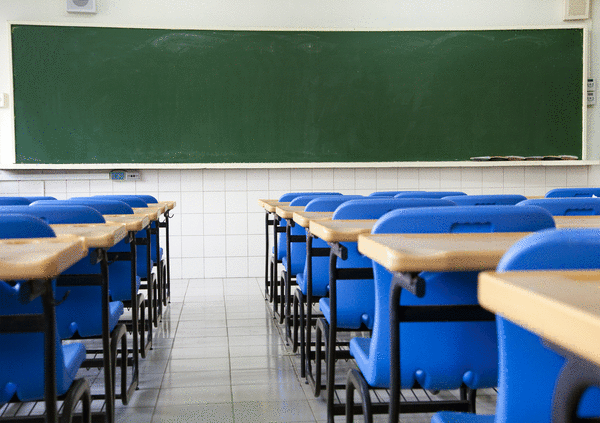
America’s education system is in historic decline. According to the latest report card on 12th graders, students finishing high school have fewer skills and less knowledge in core academics than their predecessors a decade ago.
The learning losses revealed in that report, September’s National Assessment of Educational Progress, show that vast numbers of high school seniors don’t even meet the most basic thresholds in reading or math. And although the disruptions of COVID didn’t help, studies now show student achievement had been falling long before the pandemic.
It hardly seems like an accident that the nation’s decline in literacy and math is happening simultaneously with its decline in democracy. We are in the age of disinformation and outrage-bait. The damage to Americans and our critical thinking skills is only going to get worse with the power of artificial intelligence.
We need an education moonshot — a radical new focus on developing breakthrough solutions that redefine education to meet the digital age and elevate the value of critical thinking.
Today’s teenagers can produce a TikTok video in minutes, but how many of them will learn to analyze the president’s false claim that Tylenol causes autism? How many American adults understand the value of discerning the reliability of a post that’s gone viral? And while anyone can sound off on social media, how often are students taught to consider the consequences of their words?
The future of democracy is going to depend on our ability to think critically and disagree civilly. But distinguishing fact from fiction takes work — and requires a level of reading comprehension that Americans are losing.
Since America’s economy shifted a century ago from farms to factories and offices, education has been the method by which we have trained our workforce, provided upward mobility and cultivated good citizenship. Americans invested in public education because we understood that when Americans have strong cognitive skills, we are better workers and citizens — and society benefits.
But our fragmented media landscape and the dominance of social media have left us polarized and divided. As the gap between the rich and everyone else has widened, the gaps in student achievement have followed. Instead of reducing income inequality, education is now exacerbating it.
Our policymakers are not meeting the moment. The Trump administration’s dismantling of the Department of Education as an antidote to failing student achievement is a prime example of the wrong answer to a deepening problem.
We’ve already seen the implications of the decline in the public’s critical thinking skills. The vaccine misinformation advanced by the president and his science-denying Secretary of Health and Human Services is taking its toll on vaccination rates. The June research letter published in the Journal of the American Medical Association found that the vaccination rate for measles, mumps and rubella has fallen from 94% in 2019 to 91% in 2024, an alarming drop; the level needed to protect society from outbreaks is 95%.
But an electorate with good reading skills isn’t only important to preserve public health. It’s essential to democracy — because there are those in our midst who believe that if they can exploit the decline in education, they can control the agenda.
As we’ve seen with authoritarian systems across the globe, strongmen do not welcome critical thinking. On the contrary, authoritarians want to control thinking and stifle dissent. They dictate curricula and demand that teachers comply with their political agenda. But this is no longer only happening in countries like Russia, Hungary and China; it’s happening here.
Consider the “Stop WOKE Act” in Florida, the conspiracy-laden curriculum in Oklahoma schools, and the crusade by Christian nationalists to get the Ten Commandments into grade school classrooms across the country. The wave of book bans from 87 public school districts in 23 states to the U.S. Naval Academy are the hallmarks of totalitarian regimes.
Pulling American schools out of this downward spiral will not be easy. The U.S. education system is radically decentralized and famously complex. The urge to reform it is a constant theme of elected officials. (According to the National Governors Association, nearly every governor discussed their “reforms” aimed at closing gaps in student achievement or addressing needs in workforce development in their state of the state addresses in 2025.)
But we’ve let our national leaders suck up too much attention with the right’s culture wars — such as how teachers use gender pronouns in the classroom or what is taught about slavery — instead of doing the hard work of understanding the problem of student underachievement.
A radical new focus doesn’t mean reinventing everything. Many classic learning models still work well. For example, a 2025 study from the University of Virginia and the American Institutes for Research found that public Montessori preschool programs provide superior early learning outcomes for children ages 3–6 than traditional programs, especially in reading, memory and social understanding. What’s especially reassuring is that these programs also cost school districts less money.
A small Michigan school district has reconfigured its reading program based on science and data. Its third graders have improved their English proficiency on standardized tests by 12%. In Newark, the KIPP charter network created the Evening Learning Program on weeknights for students to help make up for Covid-year losses and to help parents who have evening jobs.
Incentive programs also work, as Tennessee and Chicago each found with plans that offer free community college to students who qualify; high schoolers who graduate with a B average in Chicago and anyone who graduates with a high school diploma in Tennessee.
Then there’s technology, which can both help and hurt student achievement. Students now have more choice and access to quality education through both in-person and online classrooms. Learning has become more engaging for many students with innovations like incorporating gaming technology into curricula.
And AI can offer promising new approaches by serving as a personalized tutor, assisting teachers with better grading and lesson planning, and helping workers learn new skills.But there’s also a glaring downside to technology: It has the potential to make us dumber, conditioning us to think less and think less critically.
Some have suggested that the U.S. should follow Australia and ban all social media for students under the age of 16. Bell-to-bell cell phone bans are a promising start, but a social media ban in our culture is likely impossible to effectively implement. A better approach would be a hybrid system in which policymakers impose strict guardrails on all social media — such as restricting platforms that fail to limit harms to children — and schools include in their curricula skills for building healthy social media habits.
In 1961, when President John F. Kennedy challenged the nation to land a man on the moon and return him safely to Earth, he urged Americans to do those things “not because they are easy, but because they are hard, because that goal will serve to organize and measure the best of our energies and skills.” America responded with characteristic ingenuity. It’s time we tap that American spirit again. Since we can’t rely on the White House to lead on this, it will be up to the states to rekindle those energies and skills and advance an education moonshot. We can’t waste another minute. Kids grow up fast.
_____
This column reflects the personal views of the author and does not necessarily reflect the opinion of the editorial board or Bloomberg LP and its owners.
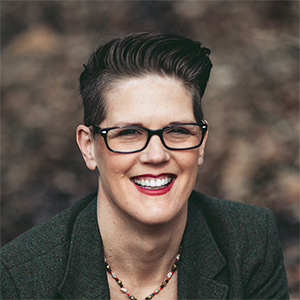
Mary Ellen Klas is a politics and policy columnist for Bloomberg Opinion. A former capital bureau chief for the Miami Herald, she has covered politics and government for more than three decades.
_____
©2025 Bloomberg L.P. Visit bloomberg.com/opinion. Distributed by Tribune Content Agency, LLC.









































Comments