Commentary: Venezuela has been introduced to supposed ally Vladimir Putin's fickle side
Published in Op Eds
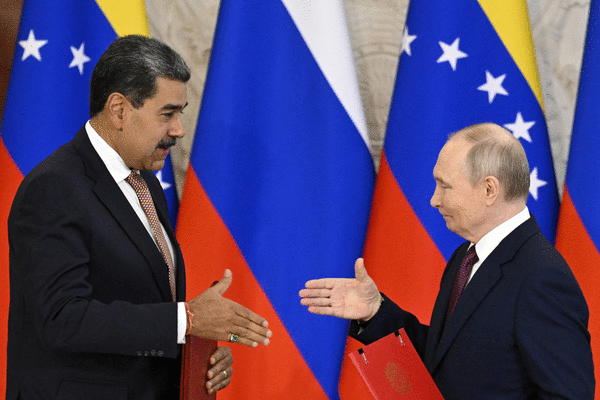
More than a week after Venezuelan dictator Nicolás Maduro was captured and brought back to the United States to stand trial on narcoterrorism charges, officials with the Donald Trump administration are trying to determine how relations with one of South America’s largest countries will evolve in the weeks and months ahead. In between Trump’s threats of more U.S. airstrikes if Venezuela’s post-Maduro government refuses to bend the knee to U.S. demands, Washington and Caracas are exploring a resumption of diplomatic relations after six years in which the United States didn’t have a functioning embassy in Venezuela.
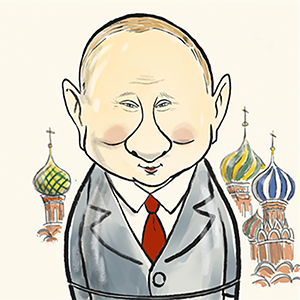
The mood isn’t so sanguine in Moscow. With Maduro’s arrest, Russian President Vladimir Putin watches as yet another one of his partners descends into the depths of despair. In the end, Putin was unable to save Maduro, who traveled to Russia as recently as May to bolster his regime’s ties with Russia. In fact, it was highly unlikely Moscow could play the white knight even if it wanted to.
This isn’t the first time Russia chose to sit on the sidelines as one of its principal foreign partners got into trouble. When Syrian dictator Bashar Assad’s army was disintegrating in the face of a rapid advance by Syrian opposition forces under the command of Ahmad al-Sharaa, all the Russians were willing to do was launch a few symbolic airstrikes and help organize Assad’s getaway to a life in exile. Assad, who relied on the Russian air force to bomb and strafe Syria’s opposition-controlled regions for a decade, suddenly found himself alone, without his main protector, when his family dynasty was on the ropes.
Six months later, in June, Moscow didn’t lift a finger when Israel waged a fierce 12-day war against Iran, destroying Iranian-operated Russian air defense systems in relentless air attacks that wiped out a good chunk of Tehran’s military leadership. The most Putin did was register strong disapproval for the action, which is a bit like a disgruntled customer writing a strongly worded letter to the CEO for bad service.
Maduro now joins the club of Russian allies getting stabbed in the back by Putin. At first glance, this might surprise some people. Under Maduro and Hugo Chávez before him, Venezuela was seen as a great opportunity to show the United States that Moscow still retained the option of projecting its power in ways that the Americans might view as threatening or at least annoying. Indeed, just as the United States and its NATO allies were pressing their advantage on Russia’s periphery, Russia was returning the favor by bolstering a regime in Caracas that regarded Washington as its chief adversary. Russia sold billions of dollars in weapons to the Venezuela army, from tanks and aircraft to air defense missiles, and Russian oil tycoons invested in Venezuelan oil fields.
Yet just as Assad learned in December, it turned out that Maduro was expendable. At the end of the day, the Russians were never going to expose themselves halfway around the world for a man who, while friendly from the Russian perspective, didn’t matter all that much to Russia’s core interests. It also underlined just how cutthroat, transactional and Machiavellian Putin really is — if the costs of support outweigh the benefits, and if the risks are too high, then it’s better to cut bait, change your strategy and hope the person who takes over will be amenable to a positive, productive relationship. This is exactly what Putin is doing in Syria; despite having bombed his forces repeatedly during the country’s 13-year civil war, Putin was more than happy to invite rebel-turned-president al-Sharaa to the Russian capital in October in an attempt to mend fences. Putin sat down with Syria’s foreign and defense minister last month to build on that initial meeting.
This strategy might be more difficult for the Russians to pull off in Venezuela. Delcy Rodríguez, Maduro’s former vice president who took power shortly after her boss was arrested, is now in the unenviable position of having to pacify hard-liners in her government at the same time she mollifies Trump who wants to turn the South American country into an American vassal state. The Trump administration has handed a whole list of demands to Rodriguez: Expel the Russians, Chinese, Iranians and Cubans from your country; hand over your oil industry to the Americans; wage war against the drug traffickers; release all political prisoners; and eventually organize free and fair elections.
Needless to say, getting cozier with Russia runs the risk of emboldening those in the Trump administration who want regime change rather than regime transformation.
Regardless of what Putin’s policy on Venezuela will be from this day forward, Maduro’s capture demonstrates just how fickle the world’s authoritarians can be. The conventional wisdom in U.S. foreign policy circles these days is that dictators are teaming up to undermine the power of democracies, bail each other out when they run into trouble and work to adopt a whole new international system that eviscerates the rules crafted out of the ashes of World War II. The whole “ axis of autocrats” or “ axis of upheaval” sounds almost conspiratorial.
In reality, these dictators are self-interested creatures and will do what they believe is in their own best interest. And if standing to the side as a partner gets pummeled produces some bad press and perhaps a dent in your credibility in the meantime, so be it. Putin is no exception. In the grand scheme, he valued Russia’s equities in Venezuela as undeserving of sustained investment.
Let that be a lesson to U.S. policymakers.
____
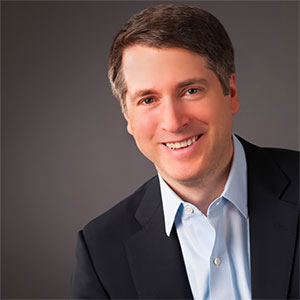
Daniel DePetris is a fellow at Defense Priorities and a foreign affairs columnist for the Chicago Tribune.
___
©2026 Chicago Tribune. Visit at chicagotribune.com. Distributed by Tribune Content Agency, LLC.






Comments