Commentary: Our way of dying is evolving
Published in Op Eds

Illinois recently joined 11 other states in enacting a law that allows physician-assisted suicide. I propose an additional tweak that would make dying more humane for those who might like to let go a bit prior to the six-month window of legality that seems to be the standard.
The American way of dying has been evolving, which I think is good. Growing up post-World War II, I watched from a distance as grandparents struggled to their last gasps, often contorted, writhing, gasping, incontinent, eyes rolled back. Not pretty. Yet, in the waiting line at the visitation, a mourner could observe, approvingly, that, “Old Joe fought the good fight to the very end.”
Society, culture, and the Church continue to feel a need to control the process of dying, apparently on our behalf. It is hard to die of one’s own volition.
Still quite active in my mid-80s, I have dutifully begun some end-of-life planning. To begin, I stopped at the in-home care company in my small city, with questions. I have long had health problems, and I think often about the dementia that has coursed through my family. So, I asked the nurse administrator if I could arrange, at some future time, for nursing care during any possible decision to voluntarily stop eating and drinking (VSED), which is legal.
Yes, of course, she said—so long as you are six months from death. But what if I have no idea how long I would otherwise have left? Oh, no, Medicare won’t reimburse for anything outside six months. (Reimbursement plays a big part in death, I am finding.)
I don’t care about reimbursement, I responded. Well, she countered, a nurse would jeopardize her license if she/he played any part in your process. I didn’t know if the administrator knew what she was talking about in this regard, but I let it drop. Her position provided support, implicitly, for our social mores that one is expected to play by societal rules when dying.
Intrigued, I had my state rep contact the state licensing agency to ask if a nurse would jeopardize her/his license by providing comfort care for a person going through VSED. Here is the answer: “Providing care that aligns with the Nurse Practice Act ensures that a nurse’s license is safeguarded.”
I read the act and its rules, which basically say: Be a professional, ethical nurse. In other words, the state won’t answer until after a nurse takes an action that might be challenged. Since a nurse’s license is worth millions in income over a career, a rational nurse offered an assignment to provide comfort care to a person going through VSED would decline.
I am neither planning nor advocating suicide, yet at some future point, following further significant decline, who knows? I am trying to cope in a world where medical science can keep us technically alive long after the “use by” date on our “containers” has expired.
VSED would not actually be my preferred way of exiting. From what I read, VSED takes a week or two to bring about closure, most of that time spent in a coma. Yet, it seems a more civilized approach than gunshot, suffocation, poison or other gruesome means. Forty-nine thousand persons in America ended their lives by suicide last year, according to the U.S. Center for Disease Control. This figure is greater than the 40,000 people killed in automobile accidents each year. Rates of suicide increase with age, spiking sharply for men my age and above.
“A pill to say goodbye” would be for me the preferable way to go, and there are such pills, generally taken in liquid form, with sugar and alcohol. They are, however, available only to veterinarians for large animal euthanasia, not to mere citizens. Most states that still execute humans now use this method. In effect, we treat inmates on death row, who don’t want to die, more humanely than innocents who may want to die.
Actually, VSED has advantages over a pill. In the first couple of days, VSED is reversible, when a person can say to himself, “What the hell am I doing?” Further, a widely available pill might encourage the children, longing to inherit the family farm, to convince Mom that an early exit is really in everyone’s best interests.
So, I simply propose that nursing care in VSED, as in providing lip balm and other comfort, wouldn’t violate licensure.
The American way of being kept alive is often outlasting “the good life.” Based on evolving attitudes, a pill to say goodbye will one day be legally available, but not for me and my cohort.
____
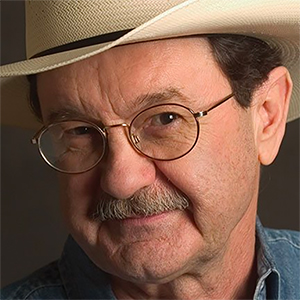
Jim Nowlan worked in senior roles for three Illinois governors, and once served as interim director of the state licensing agency, which today oversees 1.2 million persons licensed to practice their professions and occupations in Illinois. A retired professor of American politics at the University of Illinois at Urbana-Champaign, he lives in Princeton, Illinois.
_____
©2026 Tribune Content Agency, LLC.





















Comments