Commentary: Who are the trespassers?
Published in Op Eds
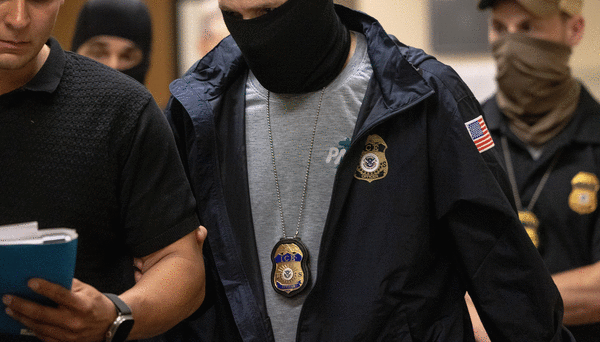
Explaining cruelty to a child is difficult, especially when it comes from policy, not chance. My youngest son, just old enough to notice, asks why a boy with a backpack is crying on TV. He wonders why the police grip his father’s hand so tightly, and why the woman behind them is crying so hard she can barely walk.
Unfortunately, I tell him that sometimes people are taken away, even if they have done nothing wrong. Sometimes, rules are enforced in ways that hurt families. He seemingly nods, but I can see he’s unsure. In a child’s world, grown-ups are supposed to keep you safe, and rules are meant to protect you if you follow them. I wish I had always believed that, too.
This past year, the headlines have not stopped: ICE raids, families separated at airports and bus stations, and two-year-olds holding hands with strangers in crowded detention centers. A kindergartener named Liam was detained, processed, and treated like a problem to fix instead of a child to love. These stories are not new. They are just the latest part of a long, painful history that started before we were born.
As an African American father and pastor, I know that “the talk” is never only about traffic stops. In 2014, writing in Time, I described that conversation Black parents have with their children—a ritual of instruction about how to survive encounters with authority, how to remain visible yet nonthreatening, compliant yet dignified. That talk was born of grief and necessity. It was also born of love.
A decade later, I realize the conversation has widened. The talk is about how this country decides who belongs and who does not; who is presumed a citizen and who is presumed a trespasser; who is granted the benefit of innocence and who must prove humanity on demand. My parents had that conversation with me. I now have it with my own children. Each time, it grows heavier. Each time, it carries more history.
The old story
This is not the first time our country has separated families. Enslaved families in the American South knew the sound of footsteps at night and the sudden loss of a mother, father, or child. Native families saw their children taken to “schools” meant to erase their language and history. The names and uniforms may change, but the message stays the same: some people are not meant to stay together. Some families are treated as expendable.
What troubles me most, as a parent and a pastor, is how ordinary it all seems. Cruelty can look official, with a badge or a clipboard, and is carried out with careful, routine precision. There is no obvious villain, just neighbors doing their jobs and following the law.
Who are the trespassers?
We hear the word “trespass” often in public discourse. People talk about “illegal entry,” “border crossings,” and “violations.” We set boundaries, build walls, and draw invisible lines. But Christian scripture asks us to see trespass in a different way.
When Jesus, our greatest example, teaches his followers to pray, he says, “Forgive us our trespasses, as we forgive those who trespass against us.” This is not the language of courts or borders. It is about relationships, about harm and forgiveness, about crossing lines and restoring love. This prayer calls for humility, not suspicion, and for mercy, not exclusion.
In times of fear, it is easy to think that trespassers are always those on the other side of the line. But the gospel changes this view. The real trespass is failing to see the image of God in the stranger. The real violation is refusing to love our neighbor as ourselves.
On forgiveness and grace
Grace is not a loophole or a technicality. It is a scandal, an undeserved kindness given freely. The Christian story is based on the idea that God’s love is for everyone, without exception: “There is neither Jew nor Greek, slave nor free, male nor female, for you are all one in Christ Jesus.”
What does this mean for us in a time of ICE raids? It means our first loyalty is not to a border, but to a person. It means that when we meet someone, we do not ask for their papers. It means we resist policies that treat people as problems to fix rather than neighbors to love.
Living the prayer
I do not have easy answers for parents who must explain these things to their children. I do not know how to take away the fear in a child’s eyes when they hear a knock at the door. But I do know that our faith gives us ways “we must” to resist and to heal.
We must tell the truth. We cannot heal what we do not name. Our children need to know that injustice is real but so is the strength of standing together and having hope.
We must show mercy. When we pray the Lord’s Prayer around dinner and communion tables, “forgive us our trespasses, as we forgive those who trespass against us,” we commit to a way of life that does not draw hard lines between “us” and “them.” Thus, teaching our children and one another that everyone deserves dignity.
We must act. Faith without works is dead. We can join protests, support immigrant families, and call for policies that respect everyone’s humanity. We can build communities that practice radical hospitality, not only in our churches, but also in our neighborhoods and schools.
Hope beyond the headlines
I wish I could promise my son that the world will always be fair. I cannot. But I can promise him that we will always stand with those who are vulnerable. We will never stop seeing the image of God in every face, no matter what the headlines say.
When I think about the scores of persons detained, and their family and neighbors waiting for news of their whereabouts, I ponder how we are remaining answerable to the words of Jesus: “I was a stranger, and you welcomed me.”
The question for our time is not, “Who are the trespassers?” The real question is, “Will we be the ones who forgive, who protect, who love, even when it costs us something?” May we have the courage to answer with our lives.
____
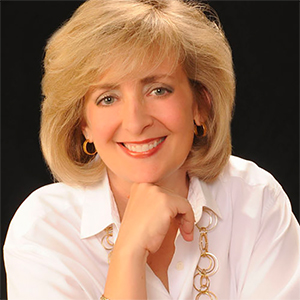
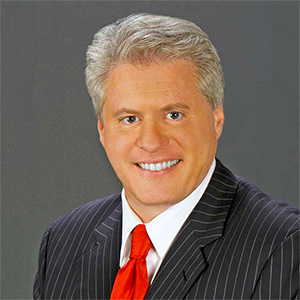
Rev. Dr. F. Willis Johnson is a spiritual entrepreneur, author, scholar-practioner whose leadership and strategies around social and racial justice issues are nationally recognized and applied.
_____
©2026 The Fulcrum. Visit at thefulcrum.us. Distributed by Tribune Content Agency, LLC.














Comments