Aaron Brown: Strict new voter proposals have us searching for our true ID
Published in Op Eds
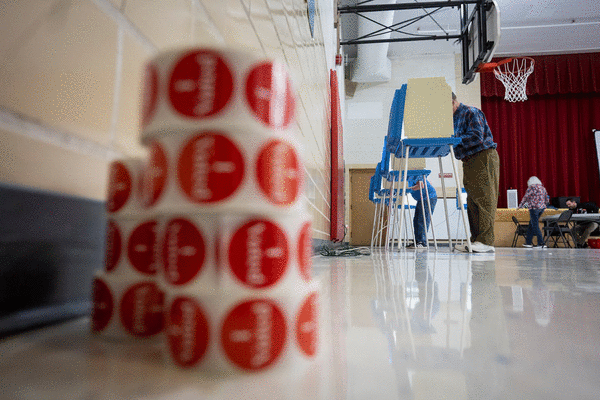
MINNEAPOLIS — When Kathy Magnuson was young, she signed her Social Security card with pride, if not precision, by her maiden name: “Kathy A. Brown.”
She got married in 1963 and signed her new card more formally, “Kathleen A. Magnuson.” A later replacement card got the full treatment, “Kathleen Ann Magnuson.” These name variations mingled across her official documents for decades to follow.
Recently, Magnuson exerted significant energy to prove these names refer to the same person: herself, now 82, a retired teacher’s aide from Stillwater, Minnesota. It was annoying, she said, but also concerning. That’s because complicated new voter identification requirements — such as those proposed in the so-called SAVE Act — risk impeding our most fundamental rights as Americans, starting with people like her.
Nowadays, Magnuson lives with her husband of 62 years on Ely Lake, just south of Eveleth, Minnesota. Late last year she applied for and received an enhanced ID when she renewed her driver’s license. Then early this year she found out that her application was being audited because of a discrepancy between the “A” and the “Ann” in her records.
The necessary paperwork was in a safety deposit box, which Magnuson visited several times over the span of a week, first to get what she needed to request a certified birth certificate. Then, when everything seemed to be in order, she learned that her marriage certificate was never properly stamped. To square everything, she would have to travel three hours to Washington County to receive a stamp on a piece of paper that originated during the Kennedy administration.
At this point, Magnuson said she unleashed a “tirade” over the phone. Though, after talking to her myself, I suspect that this diatribe was mostly a polite one. Nevertheless, her feelings are understandable, especially as we watch the U.S. Senate deliberate over the SAVE Act.
“If everybody had to go through all this to vote, it would be a crazy impediment,” she told me.
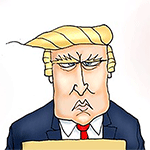
The SAVE Act, a GOP proposal fervently backed by President Donald Trump, would require additional proof of citizenship to register to vote and would require a matching photo ID at the time of voting. This means that those with contradictory paperwork like Magnuson’s, or those who moved recently, could very easily be denied a ballot.
That’s not to mention the millions of Americans who, unlike Magnuson, don’t have an elevated level of state identification or passport.
Magnuson said she has voted in every presidential and midterm election since she was 21. Her concern is that if she faced the same request for documents on Election Day, she could never have retrieved the papers in time to vote.
Voting is a fundamental right at stake in this debate, but not the only one. We find ourselves in an escalating battle over privacy, free movement and the nebulous term that defines our lives, “identification.”
That word took on added meaning for Magnuson amid the federal “surge” this year. Her daughter is an adopted Korean-American woman. Her two adult granddaughters commute into the Twin Cities every day. They carried proof of citizenship just to get to work and back these past few months.
“This mom and grandma can’t help but wonder where this is all going,” said Magnuson.
You don’t have to be a mom or grandma to have the same question.
Clearly, we might anticipate a less free, more rigid system of living as Americans. I can’t help but think how much that would have incensed a lot of the conservatives I know a few years ago, even as Republicans in Congress fall over themselves to greenlight Trump’s restrictive legislation.
I remember when President Bill Clinton and First Lady Hillary Clinton proposed a universal health care plan in the 1990s. Some may remember the stock news footage of Hillary holding up a proposed health care ID card that would cover your care anywhere in the country. At the time, our family didn’t have health insurance. Nevertheless, the idea drove my libertarian dad nuts, in part because of the idea of having to carry around a federal ID.
Many Americans carry passports to travel overseas or to meet security requirements, but passports only prove citizenship, not residency. That’s why states have long used multiple measures for eligible voters to register at the correct address and vote with relative ease.
The SAVE Act is less a voting bill, more a not-voting bill. Rhetoric claiming that illegal immigrants are currently allowed to vote is a loud and easily refutable lie.
Voter fraud is a serious crime, always prosecuted in the extremely rare instances it occurs, but denying eligible voters their sacred franchise is a constitutional offense. This bill is another strategic attack on democracy by those who would have us adopt the authoritarian habits of the current regimes in Russia and China.
The history of the U.S. is messier than its nostalgia. We are a nation of self-governing, tax-skeptical pirates who legally changed the word “pirate” to “entrepreneur” some time ago. It was literal smugglers who fanned the flames that led to the Boston Tea Party, and good for us that they did. For all our flaws, real or perceived, no place offers the opportunity that we enjoy in the United States.
That’s why policies like the SAVE Act are so nefarious. They proclaim trust-building and systemic improvement but are instead motivated by power and exclusion. Vastly more legitimate voters will be affected than illegitimate ones, just as far more innocent, legal Minnesota residents were swept up in Operation Metro Surge than hardened criminals.
The Senate has a chance to stop this legislation and should. Right now it looks like Republicans don’t have the votes to break the filibuster. Nevertheless, the serpent will return. We will have to prove who we are in more ways than one.
_____
©2026 The Minnesota Star Tribune. Visit startribune.com. Distributed by Tribune Content Agency, LLC




































Comments