Commentary: Let plants take root on your plate
Published in Op Eds
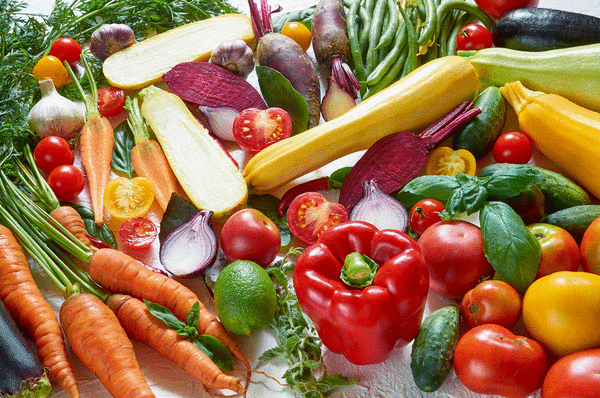
National Nutrition Month drifts in each March like the first warm breeze after winter, inviting us to pause, look at our plates and pose a simple question: What truly nourishes us?
Study after study and expert after expert point to the same answer: Choosing vegan foods is one of the most powerful ways to fine-tune nutrition while protecting long-term health.
We can get everything we need from plants—yes, including more than enough protein. Beans, lentils, tofu, tempeh, nuts, seeds and whole grains are rich in protein and come bundled with fiber, antioxidants and other nutrients that animal-derived ingredients cannot offer. Instead of weighing the body down with saturated fat and cholesterol, plant foods help fuel it.
Research shows that many people in high-income countries already consume about 150% more protein than their bodies need—largely from animal-derived foods—while missing out on the fiber and protective nutrients found in plant foods.
According to the Academy of Nutrition and Dietetics, people who go vegan significantly reduce their risk of contracting several major diseases. They can decrease their risk of diabetes by 62%, reduce the risk of hospitalization for heart attack by 33%, cut the risk of heart disease by 29% and reduce the risk of all types of cancer by 18%. Men who go vegan can also reduce their risk of prostate cancer by 35%.
Newer research echoes the same message. A large study following more than 190,000 people for over a decade found that those who ate the most plant protein had significantly lower risks of several kinds of cancer, including lung, kidney and colorectal cancer. The more plant protein people ate, the lower their overall cancer risk became.
Other research suggests that replacing animal protein with plant protein may even help people live longer by reducing the risk of cardiovascular disease and premature death.
Younger generations are leading the charge toward vegan food. Surveys consistently show that millennials and Gen Z are embracing vegan meals at higher rates than older generations, helping drive the explosion of vegan options now filling grocery store shelves and restaurant menus. From oat milk lattes to Beyond Burger, eating vegan has never been easier.
Of course, human health is only part of the story. Every vegan meal also spares animals from suffering. In the meat, egg and dairy industries, animals are treated like mere things rather than living, breathing, feeling beings. Workers pack chickens into crowded sheds, confine pigs to crates so small they cannot turn around and take calves from their mothers so that humans can steal the milk meant for them. Choosing vegan foods is a simple but powerful act of compassion.
National Nutrition Month reminds us that our daily choices shape our health. But they also shape the world around us. So this March, the invitation is simple: Go vegan. Your body—and animals—will greatly benefit.
_____
Rebecca Libauskas is a climate research specialist for the PETA Foundation, 501 Front St., Norfolk, VA 23510; www.PETA.org.
_____
©2026 Tribune Content Agency, LLC.





















































Comments