Editorial: Democrats need a better affordability agenda
Published in Op Eds
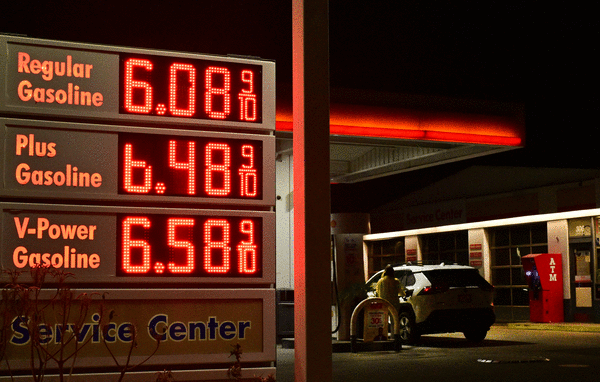
As midterm elections approach in November, voters have one thing on their minds: Life is too expensive. Democrats are wise to campaign on “affordability.” Unfortunately, many of their ideas are likely to make matters worse.
Most poll respondents now rank some variant of “high prices” as their top concern, with good reason. Inflation, though down from pandemic-era highs, has stubbornly exceeded the Federal Reserve’s 2% target for five straight years. In certain subcategories — groceries, health care, housing — voters report acute distress.
Democrats have responded with a bevy of modish but misguided ideas: Cap prices, freeze rents, subsidize demand, blame the rich. Such populism may prove satisfying in the short term but won’t do much to counteract inflation; in many cases, it’s likely to worsen it. Better to advance an affordability agenda that is both popular and right on the merits.
Start with tariffs. Last year, the average rate on imports rose to 13% from 2.6%, with nearly 90% of the burden falling on Americans: a tax of $1,000 per household. Although the Supreme Court invalidated some of the duties in February, the White House hopes to quickly replace them. Democrats should commit to scrapping these taxes, which not only raise consumer prices but also slow growth, stifle competition and invite retaliation.
On health care, the party’s top priority is boosting Obamacare subsidies. That may hearten beneficiaries but won’t rein in prices. A plausible cost-control agenda should also be on offer: Embrace “site-neutral” reimbursement rates; consider tax-advantaged savings accounts; expand consumer choice, including a public option; embark on an all-points effort to improve price transparency. In short: Support competition over blandishments.
A similar story prevails with housing. Subsidizing mortgages or capping rents won’t broadly improve affordability. Nor will demonizing investors and landlords. Instead, focus on expanding supply: Tie federal funds to zoning reform, ease land-use rules, streamline environmental reviews, ditch senseless restrictions on manufactured housing, and otherwise encourage building where people want to live.
A final priority should be restraining government debt, which is on track to exceed 120% of gross domestic product by next decade. Such profligacy slows real income growth, deters hiring, discourages innovation and drives up interest rates. An unlikely theme for an election year? Perhaps. But large majorities are worried about the issue; candidates ignore it at their peril. Supporting a fiscal commission would be a good place to start.
Plenty of other productive ideas are available. Embrace permitting reform to reduce building costs and bolster green energy. Scrap union-labor requirements, which boost construction prices. Roll back domestic-content rules that waste tax dollars. Repeal the benighted Jones Act, which raises energy and shipping costs. Abolish occupational-licensing rules that restrict services supply and punish consumers. End biofuel mandates, which harm the environment and inflate grocery bills. And more.
When voters worry about their wallets, incumbents usually get the blame. Democrats are right to capitalize on this advantage. Just be careful: Populist policies that sound good today could be a terrible burden in two short years.
____
The Editorial Board publishes the views of the editors across a range of national and global affairs.
©2026 Bloomberg L.P. Visit bloomberg.com/opinion. Distributed by Tribune Content Agency, LLC.


















































Comments