Commentary: Iranians, facing war, repression and ruin, are not defined by their leaders
Published in Op Eds
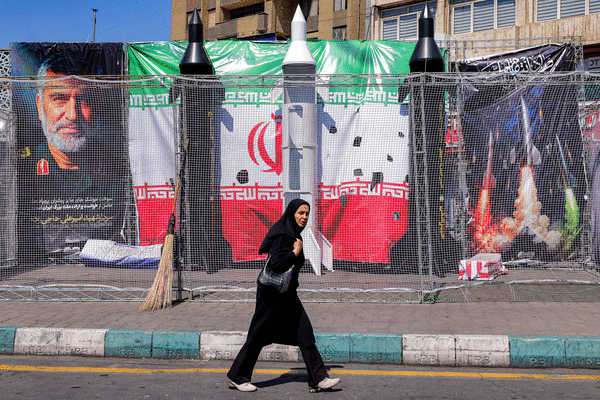
More than a month into the U.S.-Israeli war against Iran, ordinary Iranians are living under a double siege: external bombardment and internal repression. For some, this war has brought only fear — fear of what comes next, fear of whether basic life can continue, fear of how much more cities and families can endure. For others, enduring this hardship has come to seem like the only remaining path toward the eventual defeat of a dictatorship that has long denied Iranians freedom.
In his address last week, President Donald Trump said the war’s objectives were nearly achieved and suggested that the conflict could continue for another two to three weeks if Iran did not comply with U.S. demands. He offered no clear end date and little clarity about what kind of political order might follow. Even as he indicated that regime change was not the formal aim of the war, the deaths of senior Iranian figures and the severe degradation of state infrastructure have already produced something close to it in practice: not democratic transition but violent destabilization.
That reality, however, remains far removed from the assumptions shaping much of the outside commentary. Even after the killing of senior figures, the Islamic Republic is not simply evaporating. Many loyal political and security actors remain in place, and many of them are deeply invested in the system’s survival. These are not marginal figures. They are the regime’s ideologically trained core — individuals who, over decades, have benefited from privilege, patronage and access unavailable to ordinary citizens. While most Iranians have struggled under sanctions, corruption and economic decay, these regime loyalists have remained a protected class. They have every reason to fight for the preservation of the Islamic Republic — not only out of ideology but out of material and familial interest.
As bombing has continued, more and more of Iran’s hidden missile cities and military infrastructure have come into public view, revealing how much of the country’s oil wealth was diverted into militarization over the last 47 years. At the same time, citizens with no ties to power, no access to privilege and no role in building this war machine are enduring the war with virtually no shelter, no warning systems and no meaningful protection. Human rights lawyer Nasrin Sotoudeh recently captured this reality with painful clarity in an interview, warning that the government’s “stupid stubbornness” has left civilians exposed to death — and then she was promptly arrested.
This is the reality for millions of Iranians: a state that built underground fortresses for missiles but not safe refuge for its people.
From the outset of the war, the Iranian regime has restricted internet access, denying citizens basic access to information while allowing insiders to circulate official narratives. Businesses, universities and schools have largely shut down, deepening economic strain as prices of essential goods rise sharply. At the same time, repression has intensified: Arrests have increased, espionage charges expanded and executions continued.
Nothing in the structure of the Islamic Republic suggests that its view of the citizen has changed under wartime pressure. If anything, the opposite is true. The regime understands that if it loosens repression now, the pressures of war could converge with social rage and produce a new wave of anti-government protest. That is why checkpoints have multiplied in cities, why fear is being weaponized and why even reports of minors being used in security roles are so alarming. Human rights reporting has described the militarization of cities and the use of minors in armed patrols, a practice that is both dangerous and unlawful.
It is in this context that Trump’s remarks have landed so heavily. In reporting surrounding his address, he was also described as threatening to send Iran back to the “Stone Age.” Whether or not that line survives as an official formulation of U.S. war aims, many Iranians — inside and outside the country — heard it as one of the most demeaning descriptions of their homeland in recent memory to come from a powerful American leader.
This matters because Iran is not reducible to its rulers. Iran is one of the world’s oldest civilizations. Long before many modern states existed, Iranian scholars, physicians, poets and mathematicians made enduring contributions to science, medicine, astronomy and literature. To respond to the Islamic Republic’s brutality by speaking of Iran itself as if it belongs to ruin is to mistake a regime for a civilization.
The people most opposed to the Islamic Republic are themselves trapped inside a system shaped by indoctrination, violence and contempt for human life. They are held hostage by a state that, as Trump himself has argued, has shown extraordinary cruelty toward its own people. But the fact that the regime behaves with such brutality does not diminish the depth, dignity or historical weight of the society it rules.
That is why the central question is not only how this war ends, but what vision of Iran survives it. If the Islamic Republic remains in place, it is likely to emerge weaker institutionally but harsher politically — more brittle, more punitive and more dependent on force. If it collapses, Iran could face a dangerous period of vacuum, fragmentation and legal disorder before any legitimate alternative can take hold.
In either case, ordinary Iranians will bear the heaviest burden.
The country that Trump and others describe in the language of prehistory is not defined by the ideology of a militarized ruling class. It is defined by a society whose cultural memory, intellectual traditions and democratic aspirations long predate the Islamic Republic and will almost certainly outlast it. When that regime finally falls, what will matter most is not the rubble it leaves behind, but whether the world is prepared to see Iran not as a target and not as a threat, but as a nation whose people still have the capacity to build something freer and better from the ruins.
____
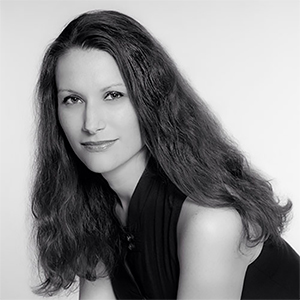
Pegah Banihashemi, a native of Iran, is a legal scholar and journalist in Chicago whose work focuses on human rights, constitutional and international law, and Middle East politics.
___
©2026 Chicago Tribune. Visit at chicagotribune.com. Distributed by Tribune Content Agency, LLC.
































Comments