Repeated government lying, warned Hannah Arendt, makes it impossible for citizens to think and to judge
Published in Political News



In Minneapolis, two recent fatal encounters with federal immigration agents have produced not only grief and anger, but an unusually clear fight over what is real.
In the aftermath of Alex Pretti’s killing on Jan. 24, 2026, federal officials claimed the Border Patrol officers who fired weapons at least 10 times acted in self-defense.
But independent media analyses showed the victim holding a phone, not a gun, throughout the confrontation. Conflicting reports about the earlier death of Renée Good have similarly intensified calls for independent review and transparency. Minnesota state and local officials have described clashes with federal agencies over access to evidence and investigative authority.
That pattern matters because in fast-moving crises, early official statements often become the scaffolding on which public judgment is built. Sometimes those statements turn out to be accurate. But sometimes they do not.
When the public repeatedly experiences the same sequence – confident claims, partial disclosures, shifting explanations, delayed evidence, lies – the damage can outlast any single incident.
It teaches people that “the facts” are simply one more instrument of power, distributed strategically. And once that lesson sinks in, even truthful statements arrive under suspicion.
And when government stories keep changing, democracy pays the price.
This is not a novel problem. During the U.S. Civil War, for example, President Abraham Lincoln handled hostile press coverage with a blunt mix of repression and restraint. His administration shut down hundreds of newspapers, arrested editors and censored telegraph lines, even as Lincoln himself often absorbed vicious, personal ridicule.
The Iran-Contra scandal in the 1980s brought similar disingenuous attempts by the Reagan administration to manage public perception, as did misleading presidential claims about weapons of mass destruction in the 2003 leadup to the Iraq War.
During the Vietnam era, the gap between what officials said in public and what they knew in private was especially stark.
Both the Johnson and Nixon administrations repeatedly insisted the war was turning a corner and that victory was near. However, internal assessments described a grinding stalemate.
Those contradictions came to light in 1971 when The New York Times and The Washington Post published the Pentagon Papers, a classified Defense Department history of U.S. decision-making in Vietnam. The Nixon administration fiercely opposed the document’s public release.
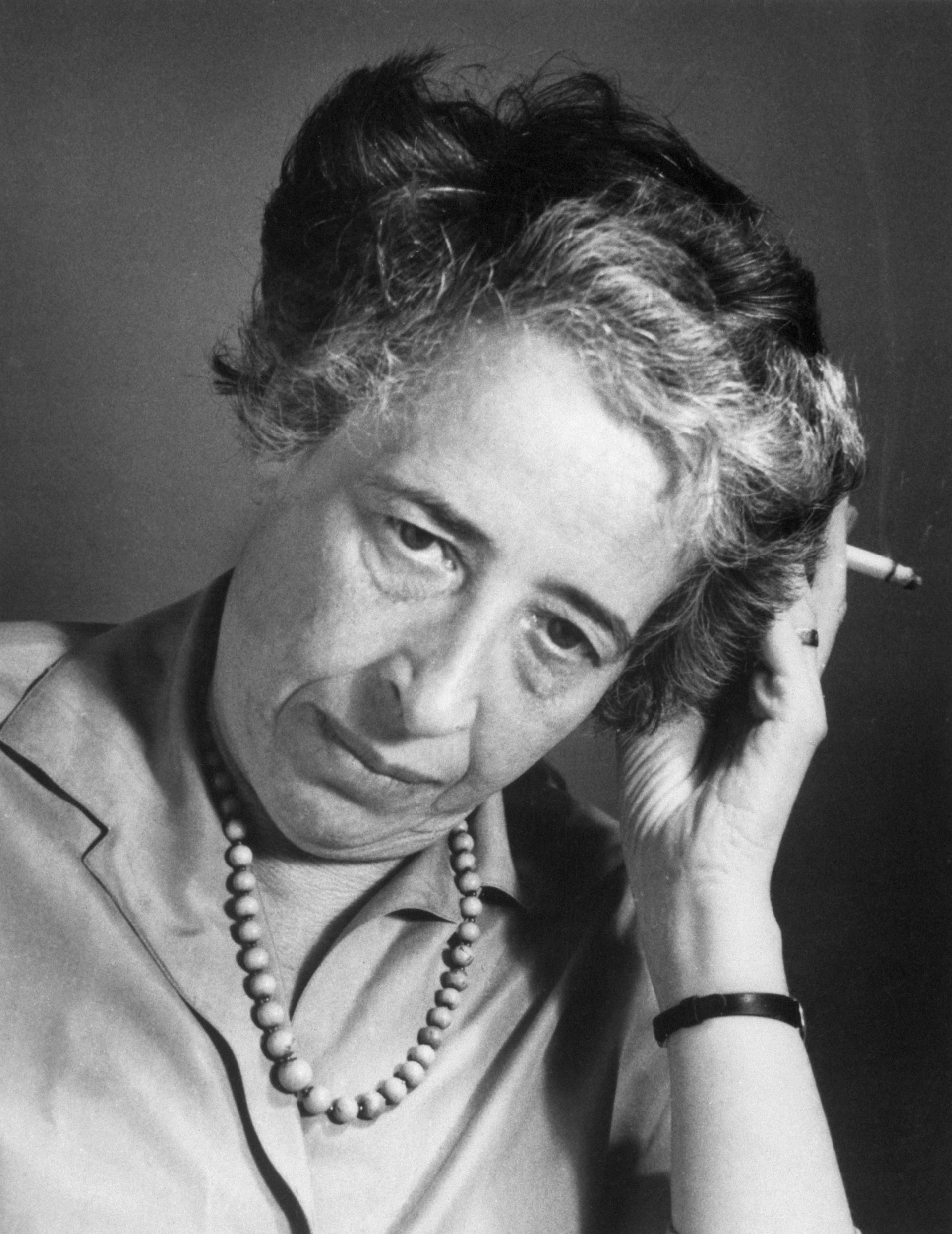
Several months later, political philosopher Hannah Arendt published an essay in the New York Review of Books called “Lying in Politics”. It was also reprinted in a collection of essays titled “Crises of the Republic.”
Arendt, a Jewish refugee who fled Germany in 1933 to escape Nazi persecution and the very real risk of deportation to a concentration camp, argued that when governments try to control reality rather than report it, the public stops believing and becomes cynical. People “lose their bearings in the world,” she wrote.
Arendt first articulated this argument in 1951 with the publication of “The Origins of Totalitarianism,” in which she examined Nazism and Stalinism. She further refined it in her reporting for The New Yorker on the 1961 trial of Adolf Eichmann, a major coordinator of the Holocaust.
Arendt did not wonder why officials lie. Instead, she worried about what happens to a public when political life trains citizens to stop insisting on a shared, factual world.
Arendt saw the Pentagon Papers as more than a Vietnam story. They were evidence of a broader shift toward what she called “image-making” – a style of governance in which managing the audience becomes at least as important as following the law. When politics becomes performance, the factual record is not a constraint. It is a prop that can be manipulated.
The greatest danger of organized, official lying, Arendt warned, is not that people will believe something that is false. It is that repeated, strategic distortions make it impossible for citizens to orient themselves in reality.
“The result of a consistent and total substitution of lies for factual truth is not that the lie will now be accepted as truth and truth be defamed as a lie,” she wrote, “but that the sense by which we take our bearings in the real world … [gets] destroyed.”
She sharpened the point further in a line that feels especially poignant in today’s fragmented, rapid and adversarial information environment:
“If everybody always lies to you, the consequence is not that you believe the lies, but rather that nobody believes anything any longer,” she wrote. “A lying government has constantly to rewrite its own history … depending on how the political wind blows. And a people that no longer can believe anything cannot make up its mind. It is deprived not only of its capacity to act but also of its capacity to think and to judge.”
When officials lie time and again, the point isn’t that a single lie becomes accepted truth, but that the story keeps shifting until people don’t know what to trust. And when this happens, citizens cannot deliberate, approve or dissent coherently, because a shared world no longer exists.
Arendt helps clarify what Minneapolis is showing us, and why the current federal government posture matters beyond one city.
Immigration raids are high-conflict operations by design. They happen quickly, often without public visibility, and they ask targeted communities to accept a heavy federal presence as legitimate. When killings occur in that context, truth and transparency are essential. They protect the government’s legitimacy with the public.
Reporting on the Pretti case shows why. Even as federal government leaders issued definitive claims about the victim’s allegedly threatening behavior – they said Pretti approached agents while pointing a gun – video evidence contradicted that official account.
The point isn’t that every disputed detail in a fast-moving, complicated event causes public harm. It’s that when officials make claims that appear plainly inconsistent with readily available evidence – as in the initial accounts of what happened with Pretti – that mismatch is itself damaging to public trust.
Distorted declarations paired with delayed disclosure, selective evidence or interagency resistance to outside investigations nudge the public toward a conclusion that official accounts are a strategy for controlling the story, and not a description of reality.
Politics is not a seminar in absolute clarity, and competing claims are always part of the process. Democracies can survive spin, public relations and even occasional falsehoods.
But Arendt’s observations show that it is the normalization of blatant dishonesty and systematic withholding that threatens democracy. Those practices corrode the factual ground on which democratic consent is built.
The U.S. Constitution assumes a people capable of what Arendt called judgment – citizens who can weigh evidence, assign responsibility and act through law and politics.
If people are taught that “truth” is always contingent and always tactical, the harm goes beyond misinformation. A confused, distrustful public is easier to manage and harder to mobilize into meaningful democratic participation. It becomes less able to act, because action requires a shared world in which decisions can be understood, debated and contested.
The Minneapolis shootings are not only an argument about use of force. They are a test of whether public institutions will treat facts and truth as a public good – something owed to the community precisely when tensions are highest. If democratic life depends on a social contract among the governed and those governing, that contract cannot be sustained on shifting sand. It requires enough shared reality to support disagreement.
When officials reshape the facts, the damage isn’t only to the record. The damage is to the basic belief that a democratic public can know what its government has done.
This article is republished from The Conversation, a nonprofit, independent news organization bringing you facts and trustworthy analysis to help you make sense of our complex world. It was written by: Stephanie A. (Sam) Martin, Boise State University
Read more:
A government can choose to investigate the killing of a protester − or choose to blame the victim and pin it all on ‘domestic terrorism’
Deception and lies from the White House to justify a war in Venezuela? We’ve seen this movie before in run-ups to wars in Vietnam and Iraq
Karoline Leavitt’s White House briefing doublethink is straight out of Orwell’s ‘1984’
Stephanie A. (Sam) Martin does not work for, consult, own shares in or receive funding from any company or organization that would benefit from this article, and has disclosed no relevant affiliations beyond their academic appointment.















































Comments