Trump’s war against Iran is uniquely unpopular among US military actions of the past century
Published in Political News
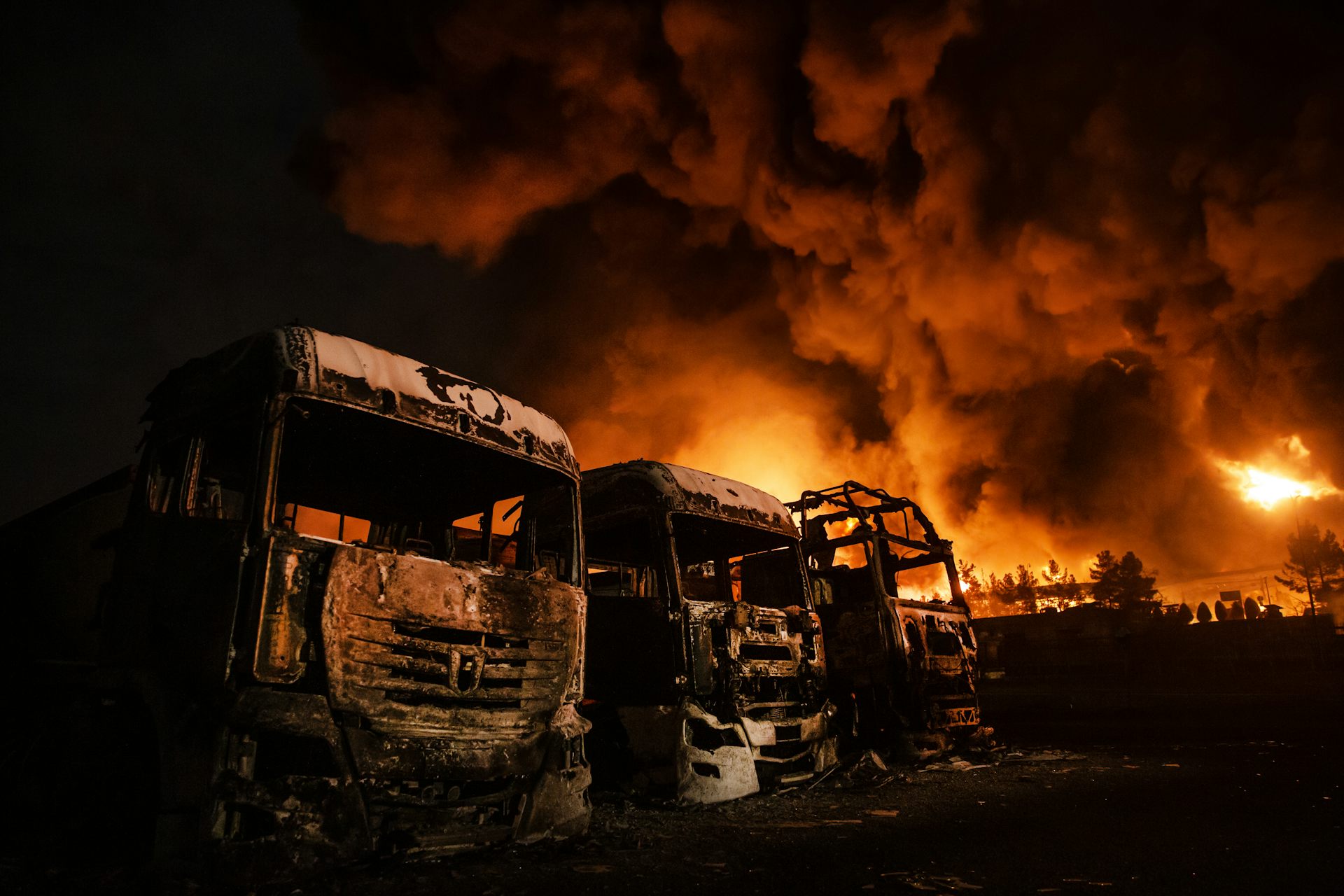


It’s clear that regime change is among the biggest objectives of the U.S. war in Iran.
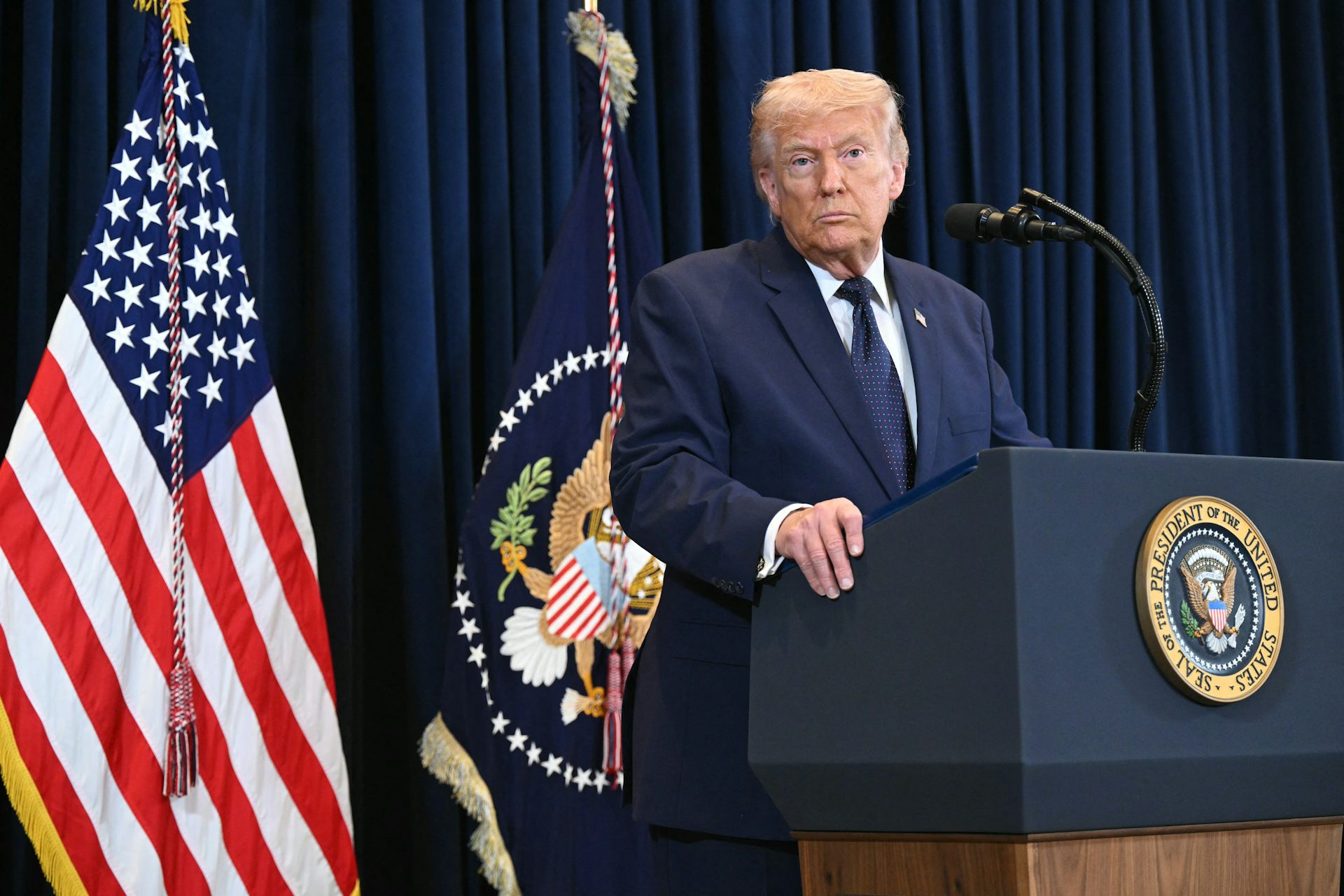
“I have to be involved in the appointment” of Iran’s next leader, President Donald Trump said on March 5, 2026.
Trump has also said he might put U.S. boots on the ground to get the job done.
Trump now joins a long list of modern U.S. presidents – from Franklin Roosevelt to Harry Truman, Lyndon Johnson, George W. Bush and Barack Obama – who started wars to either overthrow hostile regimes or support embattled friendly governments abroad.
For all the parallels to history, though, Trump’s Iran war is historically unique in one critically important way: In its early stages, the war is not popular with the American public.
A recent CNN poll found that 59% of Americans oppose the war – a trend found in poll after poll since the war began.
As an expert on U.S. foreign policy and regime change wars, my research shows that what’s likely generating public opposition to the Iran war today is the absence of a big story with a grand purpose that has bolstered public support for just about every major U.S.-promoted regime change war since 1900. These broad, purpose-filled narratives generate public buy-in to support the costs of war, which are often high in terms of money spent and lives lost when regime change is at stake.
In the 1930s and ’40s, a widely accepted – and largely true – story about the dangers of fascism spreading and democracies falling galvanized national support in the United States to enter and then take on the high costs of fighting in World War II.
Likewise, in the 2000s a dominant narrative about preventing a repeat of the Sept. 11, 2001, attacks and stopping terrorism brought strong initial public support for the war in Afghanistan, with 88% support in 2001, and the war in Iraq, with 70% support in 2003.
With no comparable narrative around Iran today, Trump and Republicans could face big problems, especially as costs continue to rise.
Iran has been a thorn in the side of many American presidents for a long time. So, what’s missing? Why no grand-purpose narrative at the start of this war?
Two things.
First, grand-purpose narratives are rooted in major geopolitical gains by a rival regime – the danger to the U.S. For the anti-fascism narrative, those events were German troops plowing across Europe and the Japanese attack on Pearl Harbor. For the anti-terrorism narrative, it was planes crashing into the World Trade Center and the Pentagon.
Gains like these by rivals prove traumatic to the nation. They also dislodge the status quo and provide the opportunity for new grand-purpose narratives with new policy directions to emerge.
Today, most Americans see no existential danger around Iran. A Marist poll from March 3, 2026, found that 55% of Americans view Iran as a minor threat or no threat at all. And the number who see Iran as a major threat, 44%, is down from 48% in July 2025.
By contrast, 64% of Americans saw Iraq as a “considerable threat” prior to the 2003 U.S. war in Iraq.
The poll numbers on Iran aren’t surprising. Iran is far from a geopolitical menace to the United States today. To the contrary, it’s been in geopolitical retreat in the Middle East in recent years.
In the summer of 2025, Iran’s nuclear nuclear enrichment facilities were significantly damaged – “completely and totally obliterated,” according to Trump, though there is no confirmation of that claim – during the 12-Day war between Iran and Israel.
And in recent years, Tehran has lost a major ally in Syria and witnessed its proxy network all but collapse. Iran has also faced crippling economic conditions and historic protests at home.
As the polls show, none of that has sparked a grand-purpose narrative.
The second missing factor for narrative formation today is any strong messaging from the White House.
In the months prior to World War II, Roosevelt used his position of authority as president to give speech after speech, setting the context of the traumatic events of the 1930s, explaining the dangers at hand and outlining a course going forward. Though less truthful in its content, Bush did the same for nearly two years before the Iraq War.
Trump did almost none of this storytelling leading up to the Iran war. Five days before the war started, the president devoted three minutes to Iran in a nearly two-hour State of the Union Address.
Prior to that, he made a comment here and there to the press about Iran, but no storytelling preparing the nation for war. Likewise, since the war began, the administration’s stated reasons for military action keep shifting.
No wonder 54% of Americans polled disapprove of Trump’s handling of Iran and 60% of Americans say Trump has no clear plan for Iran. Also, 60% disapprove of Trump’s handling of foreign policy in general.
By comparison, Americans approved of Bush’s handling of foreign policy by 63% in early 2003.
Absent a cohesive, unifying story, it’s also no surprise there is lots of political fracturing today.
Partisan divides run deep – Democrats and independent voters strongly oppose the war. But Trump’s MAGA coalition is cracking too, with people like Tucker Carlson and Marjorie Taylor Greene sharply criticizing the war.
If he opts for it, there is an off-ramp for Trump from the Iran war. It’s one he knows well.
When U.S. leaders get caught up in costly regime change wars that outrun national support, they tend to back down, often with far fewer political costs than if they’d continued their unpopular war.
When the disaster referred to as Black Hawk Down hit in Somalia in 1993, killing 18 U.S. Marines, President Bill Clinton opted to end the mission to topple the warlords that ruled the country. Troops came home six months later.
Likewise, after the Benghazi attack killed four Americans in Libya in 2012, Obama pulled out all U.S. personnel working in Libya on nation-building operations.
And just last year, when Trump realized that U.S. ground troops would be necessary to topple the Houthi militant group in Yemen, he negotiated a ceasefire and ended his air war in that country with no significant political fallout.
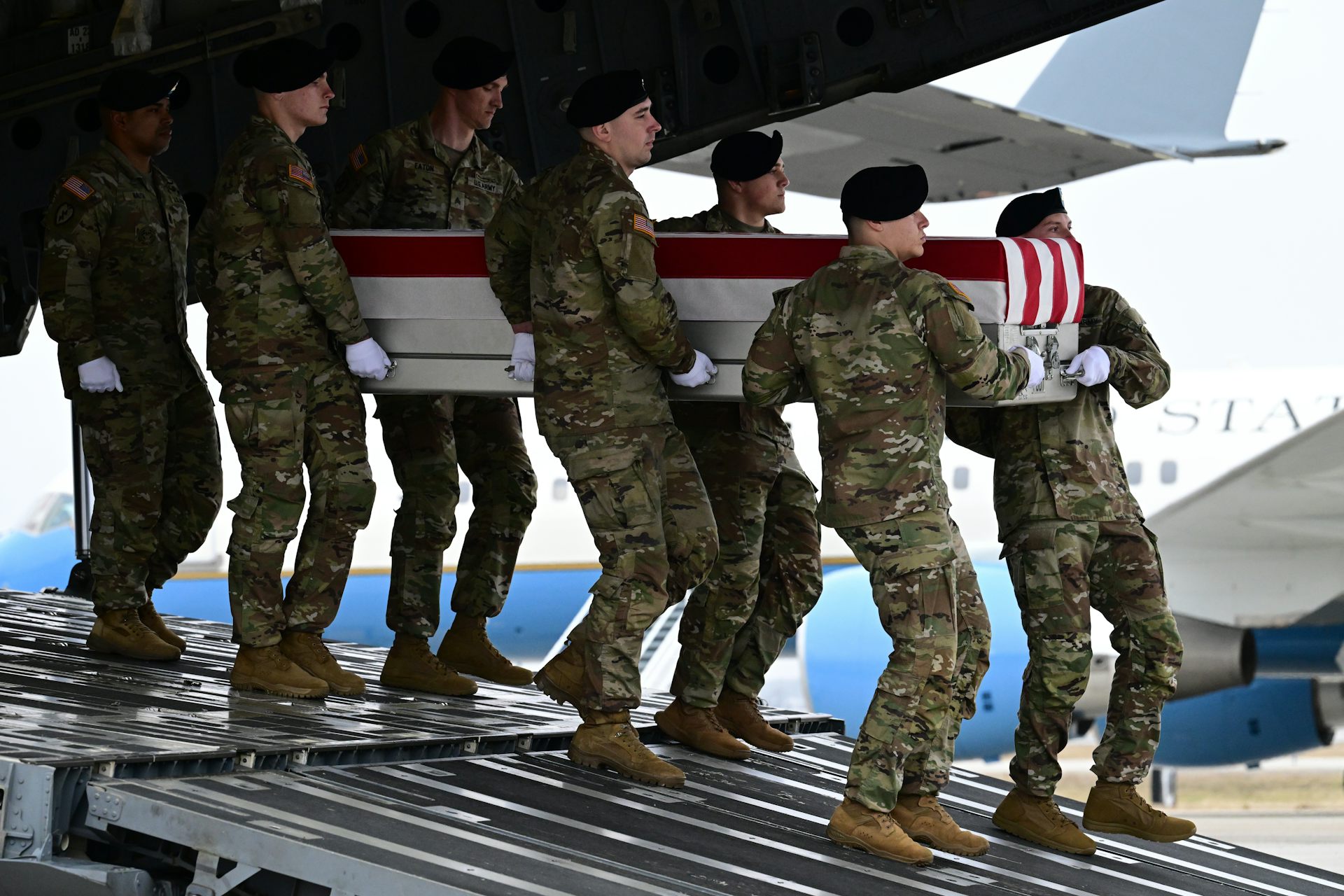
With Trump’s Iran war, gas prices keep rising, more soldiers are likely to die, and stocks are highly volatile.
Backing down makes a lot of sense. History confirms that.
This article is republished from The Conversation, a nonprofit, independent news organization bringing you facts and trustworthy analysis to help you make sense of our complex world. It was written by: Charles Walldorf, Wake Forest University
Read more:
I’ve studied MAGA rhetoric for a decade, and this is what I see in Hegseth’s boasts, action‑movie one‑liners and gloating over dominance
Persian Gulf desalination plants could become military targets in regional war
Operational secrecy kept the US from making evacuation plans – and that means Americans in the Mideast could wait days
Charles Walldorf is a Senior Fellow at Defense Priorities.


















































Comments