Chicago credit downgraded, which will mean higher borrowing costs
Published in Business News
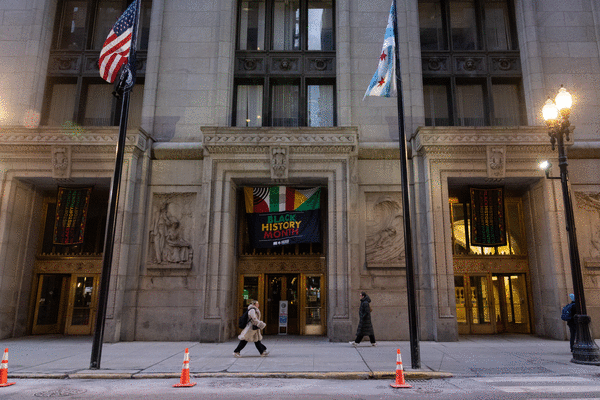
Two ratings agencies have downgraded the city of Chicago and kept their negative outlooks intact, citing the city’s back-to-back budget shortfalls since 2023, reliance on “non-structural solutions” to patch up holes, stubborn gaps in future years, and the ongoing fight between the Mayor’s Office and the City Council stymieing a long term solution.
The downgrades from Fitch and Kroll are a fate both Mayor Brandon Johnson and aldermen said repeatedly they were working to avoid during last year’s budget debate, each saying the other’s proposals would trigger one.
Fitch and Kroll are two of a small group of influential agencies that rate the city’s debt and creditworthiness. Wednesday’s downgrades, in conjunction with one last year from S&P and trade activity already pushing up the city’s interest rates, is the latest signal that taxpayers will likely have to foot a larger bill to pay back the city’s debt. Those ratings take a range of factors into account, including how much power the city has to raise and spend money on its own, how much is saved in reserves, how various taxes are performing, and the strength of the local economy.
“The City remains investment grade with all four major credit rating agencies,” the Johnson administration said in a release, and “has continued to achieve strong investor participation in its bond financings.”
The statement went on to include a “told-you-so,” pinning part of the fault on opponents who passed budget tweaks against Johnson’s wishes. Those include “the continued lack of structural revenue sources as well as risks” from several revenue sources the council coalition backed, according to Johnson.
“The City, nonetheless, remains financially stable with adequate near-term liquidity and fully capable of meeting all debt service obligations,” and the rating doesn’t change day-to-day operations, the statement said.
In their own statement sent late Wednesday, the “budget accountability coalition” on the council that opposed Johnson on the 2026 spending plan pointed the finger back.
“If the Johnson administration spent as much time focused on addressing concerns raised by credit rating agencies as it has tried to deflect the blame it owns for this downgrade, we may have avoided this unfortunate day altogether,” their statement said. “Chicago’s credit challenges are the result of ongoing budget mismanagement, not the City Council’s amendment to 1.6% of the Mayor’s proposed FY26 budget that ultimately made it more financially responsible.”
Sparring between Johnson’s administration and council members resulted in a mixed bag of budget fixes — some from Johnson, some from aldermen — that were “less prudent or fiscally reliable,” Fitch said.
Among Johnson’s proposals, Fitch pointed to borrowing for retroactive pay for firefighters and a reliance on new tax revenues that might end up in court, an allusion to the mayor’s social media tax. Among the council’s proposals the rating agency cited were plans to package and sell city-owned debt and counting on sunnier revenue projections that may not materialize.
In all, the city’s budget decisions boost the risk leaders will further tap reserves that are meant for emergencies, according to Kroll. If the city does raid those funds, which include leftover money from the sale of the Skyway and parking meters, that could trigger a further downgrade, Kroll said.
Both agencies credited the city for sticking to its supplemental pension payment, which Johnson had initially reduced and the council coalition worked to fully restore. Neither agency found fault with Johnson’s plan to break the payment up. While a positive for city finances in the long run, continuing to make those payments puts extra strain on the rest of the budget, their ratings noted.
Neither agency seemed confident the city would make major cuts, nor were there any clear upcoming sources of revenue, they said. Fresh money from the state or taxes approved by voters do “not appear likely in the near term,” Fitch wrote, and it was also clear a property tax increase does not have political support.
The downgrades moved the city’s overall — or issuer default — rating to BBB+ from A-.
©2026 Chicago Tribune. Visit at chicagotribune.com. Distributed by Tribune Content Agency, LLC.








Comments