Rights group alarmed by US strikes in the Caribbean; Colombian family sues
Published in News & Features
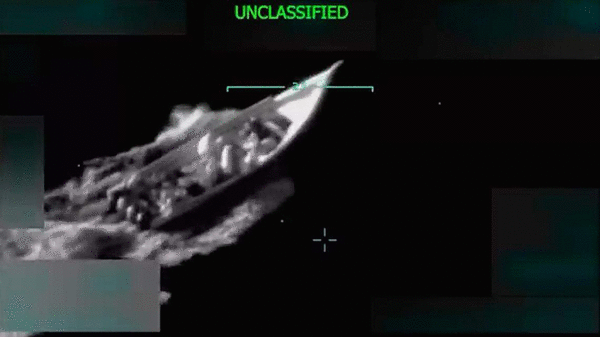
The Inter-American Commission on Human Rights is expressing “deep concern” over a wave of U.S. air and naval strikes in the Caribbean Sea and eastern Pacific that have killed more than 80 people since early September, as the first formal complaint tied to one of those attacks lands before the organization.
Earlier this week, the family of a Colombian fisherman believed to have been killed in a U.S. strike filed what advocates say is the first petition challenging the operations at the human-rights commission. The complaint, submitted Tuesday by U.S. human rights attorney Dan Kovalik, claims that Alejandro Carranza died when U.S. forces attacked his boat off the coast of Colombia on Sept. 15.
The complaint accuses the United States of carrying out an extrajudicial execution and demands compensation and an end to the lethal strikes.
“These deaths violate international law. They violate U.S. law. We want this to stop, and we believe this is at least a first step to making that happen,” Kovalik told CNN. The filing names U.S. Defense Secretary Pete Hegseth as responsible for ordering the attack and says the decision was “ratified” by President Donald Trump. The Pentagon referred questions to the president’s office.
The complaint comes as the human rights group, part of the Organization of American States, says that publicly available information points to 15 air and maritime strikes by the U.S. on non-state vessels since September — though recent data suggests the figure has now climbed to at least 22 — with more than 83 people killed and only three survivors.
In a statement this week, the commission urged Washington to ensure cross-border security operations comply with international human rights law. The U.S., it said, must safeguard the right to life, regulate the use of force, guarantee due process and maintain accountability, regardless of where operations occur or the legal status of those targeted.
The first publicly acknowledged strike came Sept. 2, when U.S. authorities destroyed a vessel near Venezuelan waters, killing 11. A second strike followed Sept. 15 — the same incident cited in the Colombian family’s complaint — reportedly killing three. A third on Sept. 19 left another three dead.
The operations continued through October. On Oct. 3 a strike allegedly killed four. Between Oct. 16 and 17, the U.S. targeted a low-profile boat in the Caribbean, killing two and capturing two survivors. On Oct. 22, two more strikes in the eastern Pacific reportedly killed five.
One of the deadliest episodes came Oct. 27, when four boats were destroyed in the eastern Pacific, reportedly killing as many as 14 people. Mexican authorities later rescued one survivor. Another strike on Oct. 29 reportedly left four dead.
The pattern stretched into November. The commission says a Nov. 1 strike in the Caribbean killed three. A Nov. 4 incident in the eastern Pacific killed two more, and two strikes on Nov. 9 allegedly killed six. By Nov. 10, U.S. officials reported two additional vessels destroyed, pushing the death toll above 83.
While acknowledging the threat posed by transnational criminal organizations, the human-rights commission warned that countries remain bound by human rights obligations even when acting beyond their borders. Under Inter-American jurisprudence, authorities must show that lethal force is lawful, necessary and proportionate — and must investigate any death that occurs during security operations.
The commission reiterated that military involvement in public security should be exceptional and closely supervised by civilian authorities. Deploying armed forces against alleged criminal groups far from U.S. territory, it said, raises the risk of arbitrary killings, weak oversight and violations of due process.
©2025 Miami Herald. Visit at miamiherald.com. Distributed by Tribune Content Agency, LLC.






Comments