Minneapolis united when federal immigration operations surged – reflecting a long tradition of mutual aid
Published in News & Features
I’ve been living in Minneapolis and working on my doctoral dissertation about local religious communities since 2019.
It’s given me a chance to personally witness how the COVID-19 pandemic, the aftermath of the killing of George Floyd by police officers, and the surge in federal law enforcement presence have fostered grassroots networks of what’s known broadly as “mutual aid.”
Simply put, mutual aid is when communities work together to distribute resources people need to survive, whether it’s food, shelter, clothing or help paying bills. Unlike charity or government assistance, mutual aid is decentralized, grassroots-led and not channeled through nonprofits or government agencies.
One reason why mutual aid flourishes in Minnesota is that it has deep roots in the state.
Citing an already prosecuted case of fraud in which some of the perpetrators were Somali American citizens residing in Minnesota, the Trump administration dispatched Immigration and Customs Enforcement and Customs and Border Protection agents to the Twin Cities in late 2025.
Within weeks, the number of federal agents in what the Department of Homeland Security dubbed “Operation Metro Surge” had topped 3,000, outnumbering those in local police forces and ushering in widespread fear and uncertainty.
Local mutual aid networks quickly mobilized in response to these federal operations. Immigrant advocacy organizations have organized constitutional observer trainings and distributed “know your rights” information on flyers.
As in other cities, including Los Angeles and Chicago, “ICE Watch” volunteers in Minneapolis sound 3D-printed whistles and car horns to alert neighbors during ongoing raids. Constitutional observers document key details and provide support to neighbors.
The participants come from every walk of life.
Churches and sex shops alike have pivoted away from their routines to distribute food, diapers, cash and other household items that immigrant households need. Residents with disposable income have organized targeted “cash mobs” to support struggling local businesses.
Crowd-sourced campaigns have directed rent money to families whose breadwinners are afraid to go to work.
Federal agents have targeted schools and bus stops, apprehending adults and children. Parents and neighbors across the region have begun patrolling school drop-off zones to shield students from federal immigration actions.
Read more:
The local grassroots resistance to Operation Metro Surge came as no surprise to me. Mutual aid has deep roots in Minnesota, and this history is closely connected to the violence of European settlement and American expansion.
Minnesota’s harsh winters have always demanded cooperation and neighborliness, not merely as an expression of “Minnesota Nice” – the state’s reputation for a warm, if guarded, way of interacting – but as a survival strategy that predated the first European arrivals in the 17th century.
Generosity, respect and compassion are central values among Dakota and Ojibwe people, Minnesota’s original inhabitants.
From when French fur trappers and Catholic missionaries first made their way to the Great Lakes in the 17th century until the onset of a population boom in the mid-19th century, Indigenous inhabitants sustained relatively stable and mutually beneficial relations with colonial powers.
The North Star State’s Minnesota Nice reputation has long encompassed progressive politics; a polite, if guarded, interpersonal demeanor; and a hearty neighborliness formed out of necessity during frigid winters.
After Minnesota gained statehood in 1858, a series of broken treaties, armed conflicts and several laws forced Indigenous people onto reservations, opening up large swathes of land for white settlement. Immigrants from countries like Sweden, Norway and Germany settled in Minnesota in hopes of better opportunities than they had back home. Catholic and Lutheran churches and mutual benefit societies preserved cultural heritage, combated isolation and shaped the new state’s religious culture for generations.
In 1850, 6,100 people lived in the Minnesota Territory. By 1900, the state’s population had reached more than 1.75 million residents, 37% of whom were foreign-born.
Beginning in the 1970s, Minnesota welcomed Somali and Hmong refugees, as well as immigrants from Latin America. Robust social services and Catholic and Lutheran refugee settlement agencies have helped to integrate new arrivals, many of whom fled their countries of origin in response to economic crises and geopolitical instability.
While more than 4 in 5 Minnesotans today are white, the Minneapolis-St. Paul region remains far more diverse in terms of race, religion and national origin.
The seven-county region is 72% white, 10% Black or African American, 8% Asian or Pacific Islander, 7% Latino and just under 1% Native American, according to the 2022 American Community Survey. White people make up just over 50% of the population in both Minneapolis and St. Paul. At just under 20%, Black people constitute a higher share of population in Minneapolis. In St. Paul, about 1 in 5 people are Asian, mainly Hmong and other people of Southeast Asian descent.
Minnesota’s religious landscape is changing too. Since 2000, for example, the share of Muslim Minnesotans has grown from 1% to 3%.
Hmong and Somali Minnesotans play an increasingly prominent role in Twin Cities politics. The Trump administration has harangued the region’s Somali American elected officials, including Rep. Ilhan Omar of Minneapolis, especially during its immigration crackdown.
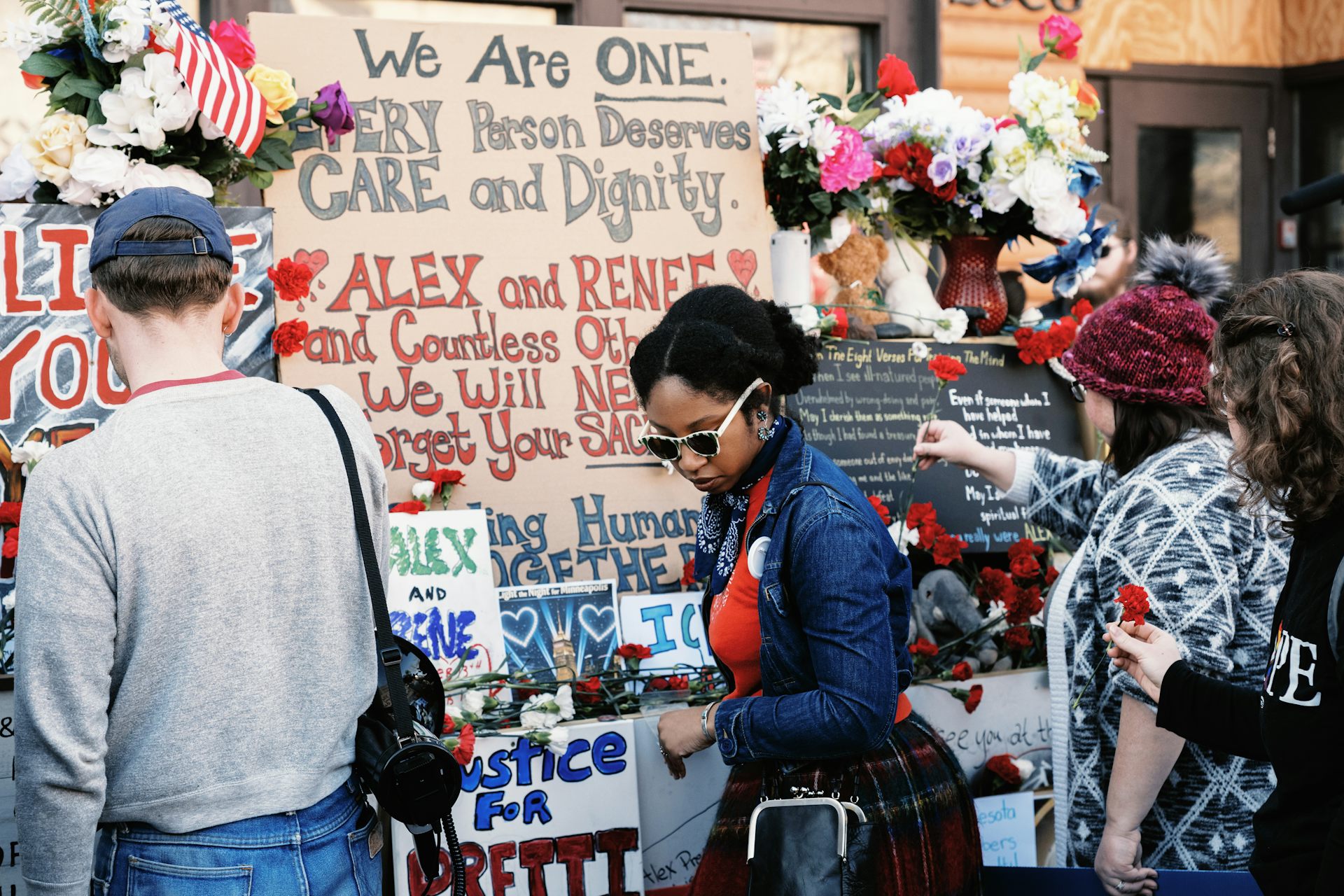
The fatal shooting of Minneapolis resident Renee Good on Jan. 7, 2026, by ICE agent Jonathan Ross further galvanized the local resistance. While it is unclear if Good was acting as part of a local ICE Watch group, attendance at observer trainings increased in the following weeks.
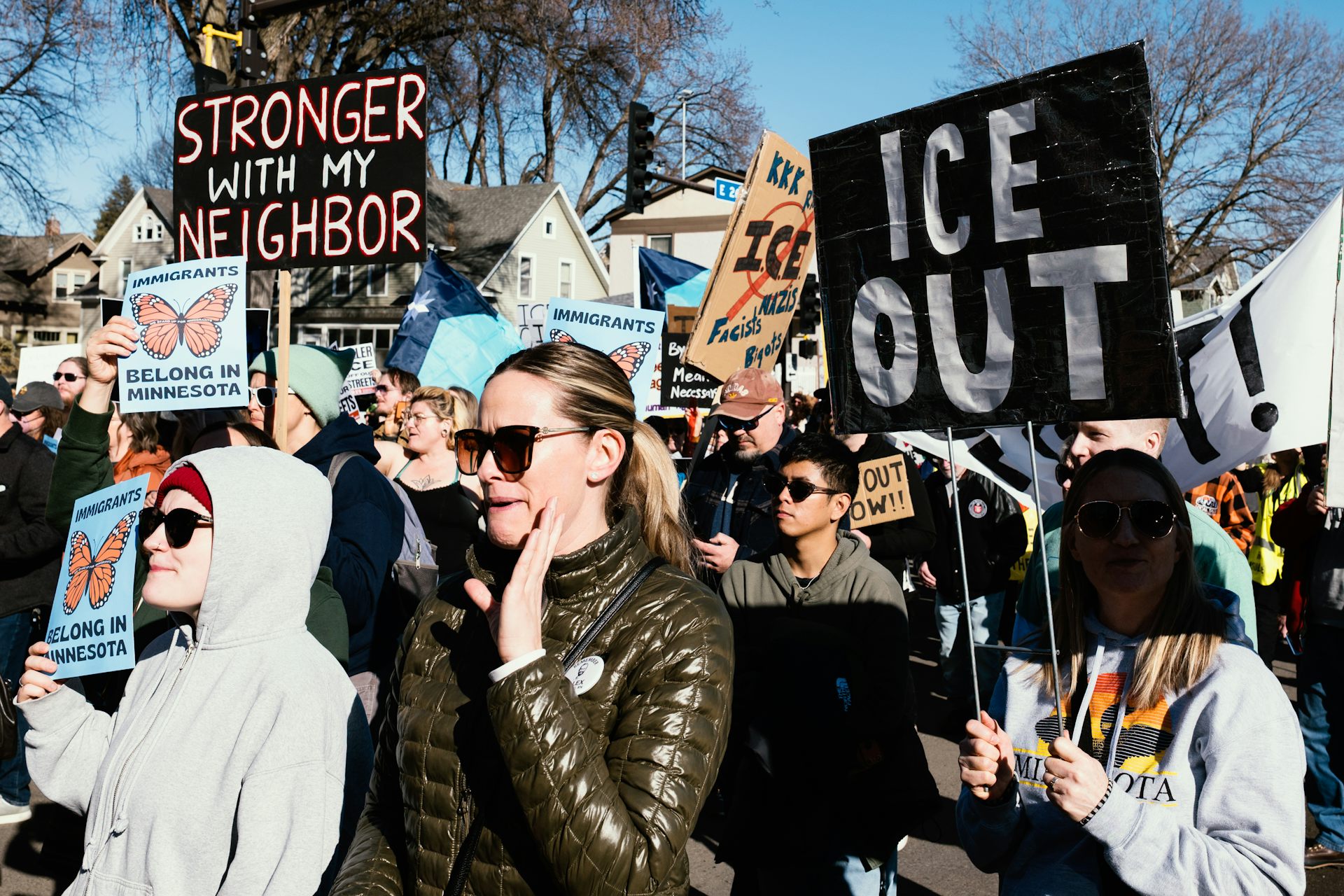
A few weeks after Good died, on Jan. 23, more than 50,000 people marched in frigid weather through downtown Minneapolis to demand “ICE out!”
In what organizers billed “A Day of Truth and Freedom,” over 700 local businesses closed in solidarity. An estimated 100 clergy were arrested outside the city’s airport, where they decried daily deportation flights to detention facilities.
The outrage increased when, the next morning, border patrol officers shot and killed Alex Pretti, a South Minneapolis Veterans Administration nurse who was documenting ICE actions at the intersection of 26th Street and Nicollet Avenue.
In response, local businesses sheltered people from the chemical that agents deployed. Residents of the neighborhood opened warming stations and distributed granola bars, hot water and hand warmers to mourners.
One organizer insisted they were not accepting payments for these goods and services, although donations were welcome.
The federal government said it had detained over 4,000 people as of Feb. 4. With public pressure welling up, Tom Homan, Trump’s border czar, announced on Feb. 12 that Operation Metro Surge would come to an end.
As of Feb. 25, ICE is less visible in South Minneapolis. But locals across the region are well aware of the ongoing presence in suburban areas, where agents are reportedly using new tactics.
Even if the immigration agents do completely clear out, the damage caused will surely be long-lasting.
Children like 5-year-old Liam Conejo Ramos, who was taken from his suburban Twin Cities home and flown to a detention facility in Dilley, Texas, have received inadequate food and limited access to recreation while held there, according to ProPublica’s investigative reporters. The American Academy of Pediatrics has called attention to the lasting harms of juvenile detention.
South Minneapolis’ Lake Street corridor, home to over 1,000 immigrant-owned small businesses, has lost over US$46 million in revenue since December. Local leaders estimate that the citywide economic damage exceeds $200 million.
But Minneapolis residents are carrying on the state’s long-standing tradition of solidarity through mutual aid.
This article is republished from The Conversation, a nonprofit, independent news organization bringing you facts and trustworthy analysis to help you make sense of our complex world. It was written by: Daniel Cueto-Villalobos, University of Minnesota
Read more:
Crowdfunded generosity isn’t taxable – but IRS regulations haven’t kept up with the growth of mutual aid
‘Which Side Are You On?’: American protest songs have emboldened social movements for generations, from coal country to Minneapolis
When civil rights protesters are killed, some deaths – generally those of white people – resonate more
Daniel Cueto-Villalobos receives funding from the Lilly Endowment.







Comments