Outfit Rewearing: The Quiet Rebellion Against Fast Fashion
Published in Fashion Daily News
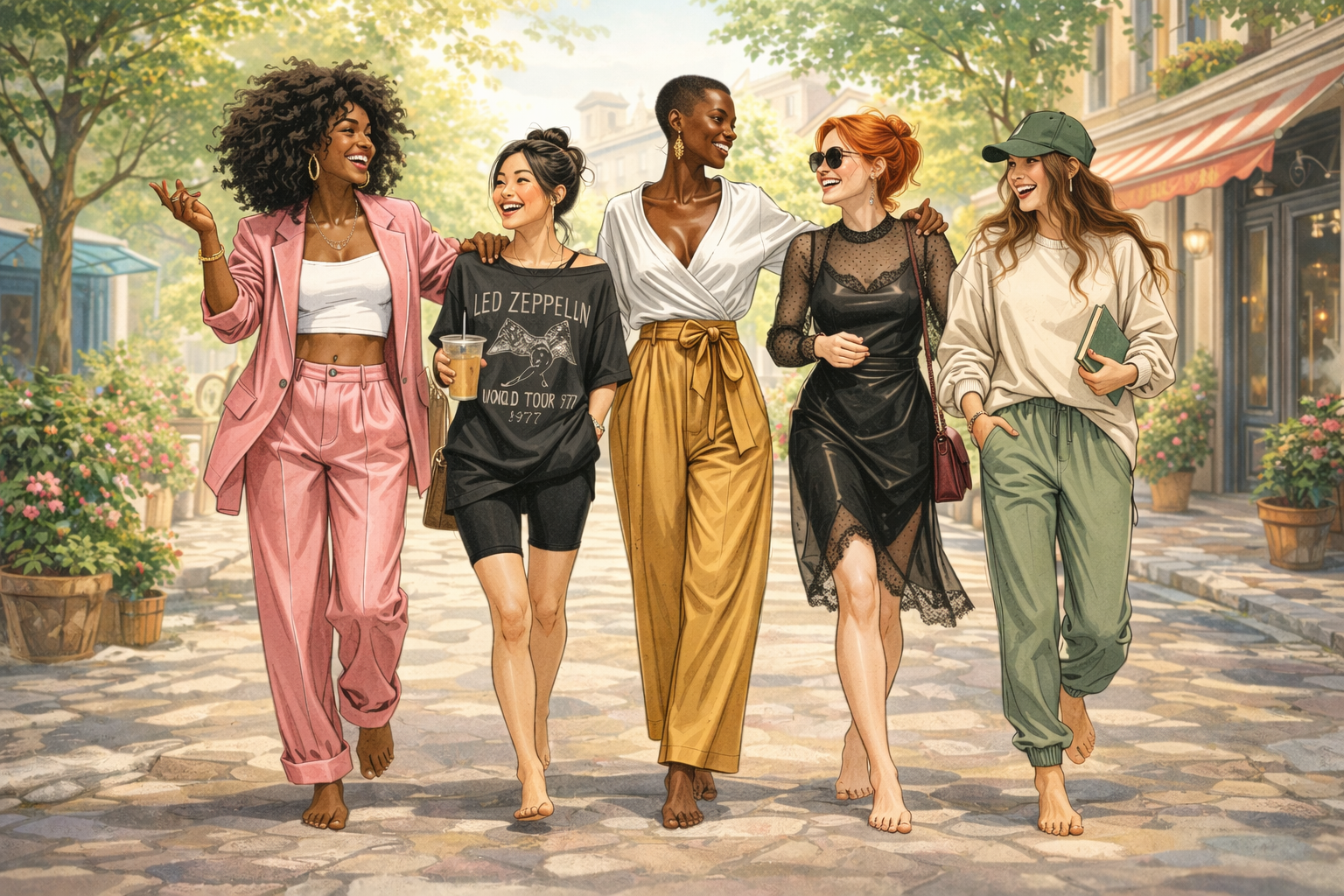
Outfit repeating used to carry a quiet stigma. Wearing the same shirt to two events in the same week—or worse, posting it twice online—could feel like a small social misstep. Fashion, particularly in the age of social media, has long rewarded novelty. New purchases, new looks, new combinations presented as if wardrobes were endlessly refreshed.
But that expectation is beginning to shift. Across everyday life and digital spaces alike, more people are embracing outfit rewearing not as a fallback, but as a conscious choice. What once suggested limitation is increasingly understood as intention, practicality, and even quiet resistance.
The Culture of Constant Newness
Fast fashion has reshaped how people think about clothing. With inexpensive garments arriving in rapid cycles, the barrier to acquiring something new has nearly disappeared. Trends move quickly, and wardrobes can change just as fast.
At the same time, social media has amplified the pressure to present fresh looks. Outfits are documented, shared, and archived, creating a sense that repetition is visible—and therefore undesirable. Even if no one is explicitly tracking what someone wears, the perception of being seen can influence behavior.
This combination of accessibility and visibility has created an environment where clothing is often treated as temporary. Items are worn a handful of times, then quietly retired in favor of something new. The result is a cycle that feels normal, even when it is unsustainable.
The Shift Toward Rewearing
Outfit rewearing challenges that cycle in a subtle but meaningful way. It does not rely on sweeping declarations or strict rules. Instead, it shows up in small decisions: choosing the same jacket again, repeating a favorite outfit for a different occasion, or posting a familiar look without explanation.
This shift is partly driven by transparency. As audiences become more aware of how curated online images are, there is growing appreciation for authenticity. Seeing the same outfit styled in different ways feels more relatable than a constant stream of new purchases.
There is also a practical dimension. Rewearing reduces the need for constant decision-making. When people rely on pieces they know work well, getting dressed becomes easier and more efficient. The wardrobe becomes less about possibility and more about reliability.
Wardrobes as Working Systems
At its core, outfit rewearing reframes the purpose of a wardrobe. Instead of serving as a collection of individual, one-time looks, it becomes a system designed for repeated use.
Certain items take on foundational roles. A well-fitting pair of jeans, a versatile jacket, a comfortable pair of shoes—these pieces anchor multiple outfits. Over time, they become familiar tools rather than occasional choices.
This system encourages a different kind of creativity. Instead of constantly adding new items, people experiment with combinations, layering, and context. A single piece can appear casual in one setting and polished in another, depending on how it is styled.
The emphasis shifts from acquisition to use. Value is measured not by how new something is, but by how often it earns its place in rotation.
The Environmental Reality
Behind the cultural shift toward rewearing is a growing awareness of the environmental impact of fast fashion. The industry’s reliance on rapid production, synthetic materials, and frequent disposal has significant consequences, from resource consumption to waste.
Outfit rewearing offers a practical response. It extends the life of clothing, reduces the demand for constant production, and encourages more thoughtful purchasing decisions. Importantly, it does so without requiring perfection.
Not everyone will overhaul their wardrobe or stop buying new clothes entirely. But choosing to wear items more often—repairing them, caring for them, and integrating them into daily life—can make a meaningful difference over time.
This approach is sustainable because it is incremental. It fits into real lives rather than demanding a complete transformation.
The Psychology of Familiar Clothes
Rewearing is not just a logistical or environmental choice; it also has psychological benefits. Familiar clothing can create a sense of ease. When people know how something fits and feels, they are less likely to second-guess their appearance.
This reduces a subtle but persistent form of stress. Getting dressed becomes less about evaluation and more about execution. Time and energy are freed up for other priorities.
There is also a deeper layer of identity. Repeatedly wearing certain items can reinforce a personal style that feels consistent and authentic. Instead of chasing trends, individuals develop a look that reflects their preferences and routines.
In this way, repetition becomes a form of expression. It signals confidence in one’s choices rather than a lack of options.
Changing Social Norms
As more people embrace outfit rewearing, the social expectations around clothing are evolving. What once might have drawn attention now often goes unnoticed—or is even appreciated.
Public figures have contributed to this shift by openly repeating outfits at events or in media appearances. But the broader change is happening at the everyday level. Friends, coworkers, and online communities are normalizing the idea that clothing is meant to be worn, not cycled out.
This normalization reduces the pressure to constantly present something new. It allows people to prioritize comfort, function, and personal preference over perceived expectations.
Over time, the question is no longer why someone is repeating an outfit, but why repetition was ever discouraged.
A Quiet Form of Resistance
Outfit rewearing is not an overt protest. It does not rely on slogans or dramatic gestures. Its impact comes from consistency.
Each time someone chooses to rewear an outfit, they are stepping slightly outside the expectations of fast fashion culture. They are prioritizing use over novelty, familiarity over constant change.
This makes rewearing a form of quiet resistance. It does not reject fashion outright, but it challenges the assumption that value lies in newness. It redefines what it means to participate in fashion at all.
What Endures
Fashion will continue to evolve, and new trends will always emerge. But the growing acceptance of outfit rewearing suggests a broader recalibration.
Clothing is being reconsidered not just as a means of self-expression, but as a resource—something to be used, maintained, and appreciated over time. The focus is shifting from accumulation to longevity.
In this context, rewearing is not a limitation. It is a practice that aligns with how people actually live: repeating routines, revisiting favorites, and finding value in what already exists.
And in a culture built on constant turnover, that simple act—wearing something again—can carry more meaning than it first appears.
========
Eliza Thornbridge is a lifestyle and culture journalist who writes about fashion, sustainability, and everyday habits. Her work explores how small choices reflect broader cultural shifts. This article was written, in part, utilizing AI tools.






Comments