Andreas Kluth: Race is the elephant in the room of US foreign policy
Published in Op Eds
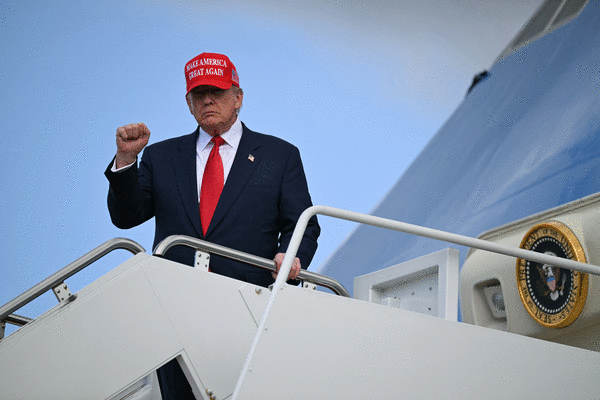
Muted yet deafening are the many dog whistles suggesting that American foreign policy under President Donald Trump is at least in part based on race, and specifically on white Christian nationalism.
Nobody in the administration has said so baldly. In fact, all involved reject the idea with well-rehearsed indignation. “I am, by the way, the least racist president you’ve had in a long time,” Trump recently remarked, as he refused to apologize for posting a video that depicted the Obamas as apes in a jungle.
And yet the signs are too ubiquitous to ignore, at the top of the administration as down below. One example from the nether regions is the nomination of Jeremy Carl to become Assistant Secretary of State for International Organizations in the State Department, a role that mainly involves interacting with the United Nations, which the administration holds in contempt.
Carl is a right-wing firebrand who played a minor role in the first Trump administration and has more recently gained, depending on your vantage, kudos or notoriety for his theory that “Anti-White Racism Is Tearing America Apart,” as his book’s subtitle puts it. He believes, for example, that a “White genocide” is underway and endorses the Great Replacement Theory (according to which elites in America and Europe are intentionally encouraging immigration to replace indigenous whites).
Carl’s confirmation hearing in the Senate Foreign Relations Committee the other day turned into what one senator called a “heartbreaking” spectacle. One by one, the Democrats confronted Carl with his own quotes and views. Carl squirmed away from some of his earlier remarks minimizing the Holocaust but stood by his views on anti-white persecution and the Great Replacement.
In one tense exchange, a senator wanted him to define the white identity that Carl claims is being erased. Carl couldn’t, or perhaps didn’t want to be explicit. Instead he mumbled about worship, food and music, without ever once explaining how their “White” styles are at risk of being erased.
“Sir, you have no decency, you have no honor,” concluded Cory Booker, a Democratic senator of color; “I’ve never seen such a blatantly racist individual.” A Republican colleague, John Curtis, said after the hearing that he will oppose the nomination, mainly for Carl’s “insensitive remarks about the Jewish people.”
Even if Carl doesn’t get confirmed and never comes near the United Nations, it’s remarkable that he could get this far. Some of his code words, moreover, have wider currency in the administration. Its National Security Strategy, for instance, is scathing toward European allies for allegedly abetting their own “civilizational erasure” by allowing non-European immigration.
That document in turn echoes speeches given by Vice President JD Vance in which he makes common cause with far-right European parties such as the Alternative for Germany, parts of which espouse the Great Replacement Theory and related concepts such as “remigration.”
Even members of the administration who used to be considered moderate have adjusted their rhetoric. When Marco Rubio, the national security adviser and secretary of state, recently addressed the Munich Security Conference, the audience at first breathed a sigh of relief because he was less confrontational than Vance had been a year earlier. And yet Rubio too presented a narrative of Western civilization as exclusively European and Christian, even citing two of his own 18th-century ancestors in Italy and Spain and somehow skipping over his parents, who immigrated from Cuba in 1956.
At the very top, meanwhile, the president seems quite clear about how he views different parts of the world. In December, he told a crowd about a meeting he was in: “And I say, ‘Why is it we only take people from s---hole countries,’ right? Why can’t we have some people from Norway, Sweden? Just a few? Let's have a few from Denmark. Do you mind sending us a few people? Send us some nice people. Do you mind? But we always take people from Somalia, places that are a disaster, right? Filthy, dirty, disgusting, ridden with crime."
This worldview also finds expression in policies. For example, Trump has dramatically lowered the annual cap on refugees the U.S. accepts, from 125,000 to 7,500, and has reserved those spots largely for Afrikaners from South Africa.
That makes a kind of sense once you grasp that the administration has extended the narrative about White genocide espoused by Carl to South Africa. Afrikaners, you see, are descended from Dutch settlers and look a lot more like Danes, Norwegians or Swedes, and lot less like, say, Somalis.
____
This column reflects the personal views of the author and does not necessarily reflect the opinion of the editorial board or Bloomberg LP and its owners.
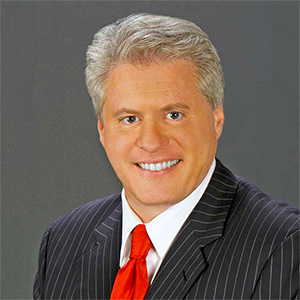
Andreas Kluth is a Bloomberg Opinion columnist covering US diplomacy, national security and geopolitics. Previously, he was editor-in-chief of Handelsblatt Global and a writer for the Economist.
©2026 Bloomberg L.P. Visit bloomberg.com/opinion. Distributed by Tribune Content Agency, LLC.

































Comments