Some Indiana taxpayers not as thrilled by Bears stadium plan as lawmakers
Published in Football
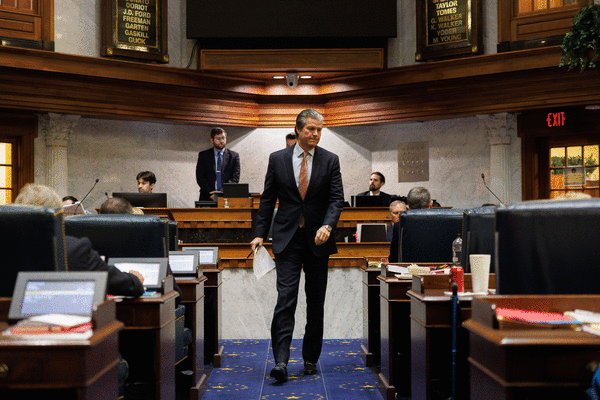
CHICAGO — In the rush by the Indiana legislature to bring the Chicago Bears to the state, lawmakers gushed over the proposal.
One sponsor said they’d be “honored” to welcome the Bears owners. Another called the legislation “a major historical event.”
One group was conspicuously absent from comments at the capital in Indianapolis: taxpayers who opposed the plan.
The lack of dissent was unusual since the measure to build a new Bears stadium in Hammond, Ind., would involve a series of new taxes: a 1% food and beverage tax in Lake and Porter counties, a 5% tax increase on hotel rooms in Lake County and a 12% admissions tax. The plan would also involve toll roads and creating a special taxing district to funnel new tax proceeds to the stadium project.
The silence in opposition was also striking because northwest Indiana residents recently had literally taken to the streets to protest skyrocketing utility bills. Some said they had to choose between paying utility bills or grocery bills.
So it turns out that, when asked, some Indiana residents are not thrilled about the new taxes to help pay for a Bears stadium.
Chuck Pullen, a radio host on WJOB-AM in Hammond, said it was jolting how state lawmakers did nothing to lower utility charges, but acted immediately to help the Bears.
“A lot of blue-collar people in the area are struggling to get by,” Pullen said. “They’re asking, where’s our local and state government to help us? And why do the Bears get this special treatment?”
Americans for Prosperity in Indiana, a libertarian group, initially was neutral on the bill.
But since the tax increases were disclosed, Legislative Director Graham Renbarger said, the organization came out against the measure.
The group sent a letter to state senators urging them to defeat the measure.
“… It exposes taxpayers to massive financial risk while delivering little public benefit,” the group wrote. “Decades of economic research show stadium subsidies fail to generate net growth, and this proposal repeats the same mistakes — granting broad powers, open-ended liabilities, and special treatment for a private sports franchise at taxpayer expense.
“We welcome the Bears and private investment coming to Indiana, but it should not be on the back of state and local taxpayers.”
Still, the measure passed almost unanimously, with bipartisan support. Even the eight lawmakers who voted against it had little or nothing to say in opposition.
The measure had the support of Gov. Mike Braun, House Speaker Todd Huston and most local elected officials, so opponents may have realized they were going to get steamrolled. The measure also comes with the bonus for Republicans of bringing an NFL franchise to a red state from blue state Illinois, and embarrassing a potential Democratic presidential candidate, Gov. JB Pritzker.
In response, an Illinois House committee approved a measure to let the Bears negotiate tax breaks with local governments, but the General Assembly won’t take up that proposal until March 18, and some lawmakers remained against the proposal.
Not all northwest Indiana residents share their lawmakers’ enthusiasm for the Bears plan, according to Kevin Mejia, of East Chicago, Ind., who helped organize recent utility protests in Hammond and Merrillville.
He asked his 31,000 followers on Facebook what they thought of the Bears plan, and the overwhelming response was negative.
“The residents are not happy,” he said. “A lot don’t want more taxes. Some think they shouldn’t have to pay when the rest of the state doesn’t. It’s creating more of a burden we can’t withstand.”
Northwest Indiana generally has a lower income than the rest of the Chicago area. The poverty rate in Hammond is 19%, and in nearby Gary and East Chicago it’s closer to 30%, the U.S. census reports, likely leaving some unable to afford to go to any Bears games. In Lake County, nearly one-third of seniors said they had to choose between food and medical care, according to a 2021 study by Northwest Indiana Community Action.
The area around the stadium also has other issues. Northwest Indiana and Wolf Lake in particular, where the stadium is to be sited, were a dumping ground for years, with a Superfund site and refinery nearby.
In August, Hammond suffered severe flooding, closing roads and filling basements, so residents are wondering how the sewer system will handle a stadium filled with more than 60,000 visitors.
And then there is uncertainty over the siting of a stadium and how it would affect residents.
“People are wondering, is my house going to become a parking lot for a stadium,” Pullen said. “They’re not getting any answers.”
Under the Indiana proposal, the Bears would contribute $2 billion for the stadium and the state would pay up to $1 billion. The Bears would lease the stadium for up to 35 years, operating it and keeping revenue from all events, and could buy the facility after that.
In the capital of Indianapolis, the new stadium could potentially siphon off events and revenue from Lucas Oil Stadium, home of the Indianapolis Colts. That stadium, which was built with similar taxes that would finance the new Bears facility, still carries about $463 million in debt more than 20 years after construction began. Similarly, Illinois still owes $467 million for the 2003 renovation of Soldier Field.
Though Bears officials deny it, skeptics wonder if Indiana lawmakers are being played by the Bears for leverage to get a better deal in Illinois and the team ultimately will wind up in Arlington Heights. The team paid $197 million to buy the former Arlington International, and has proposed a $5 billion multiuse development there.
They say they need a tax deal and help with an estimated $855 million in infrastructure to make it happen. Pritzker has said the state won’t pay for the stadium but will help pay for infrastructure like roads and utilities.
On the Illinois side of the border, one former local politician is hoping a plea from fans can move the needle.
Standing in front of Soldier Field with a trio of supporters behind him, former Gov. Pat Quinn on Wednesday announced the launch of BearDownforIllinois.com, an online petition drive to implore owners to keep the team in Illinois.
With the petition, the hope is to give fans the opportunity to band together and get their two cents in the conversation.
“We, Bears fans, understand that with passion and an ability to organize, we can tell the owners … that the only place to be is Illinois,” Quinn said.
Chicago native and longtime Bears fan Lucas Richards, who was among the small group of supporters that stood behind Quinn as he kicked off the petition drive, said he doesn’t want to see the team move to Indiana — and doesn’t think they will.
“It would turn off a lot of their current season ticket holders who would live very far away from there,” the 26-year-old Lakeview resident said. “Personally, I think it’s a publicity stunt with Hammond.”
____
©2026 Chicago Tribune. Visit at chicagotribune.com. Distributed by Tribune Content Agency, LLC.





Comments